
Hourly ·
Washington wants an outsider to run Nvidia. The ousted founder is already working the phones.
The board is courting Arm's Rene Haas, the Treasury Secretary wants a stranger, and Jensen Huang is already calling allies about a comeback — all in the same weekend.
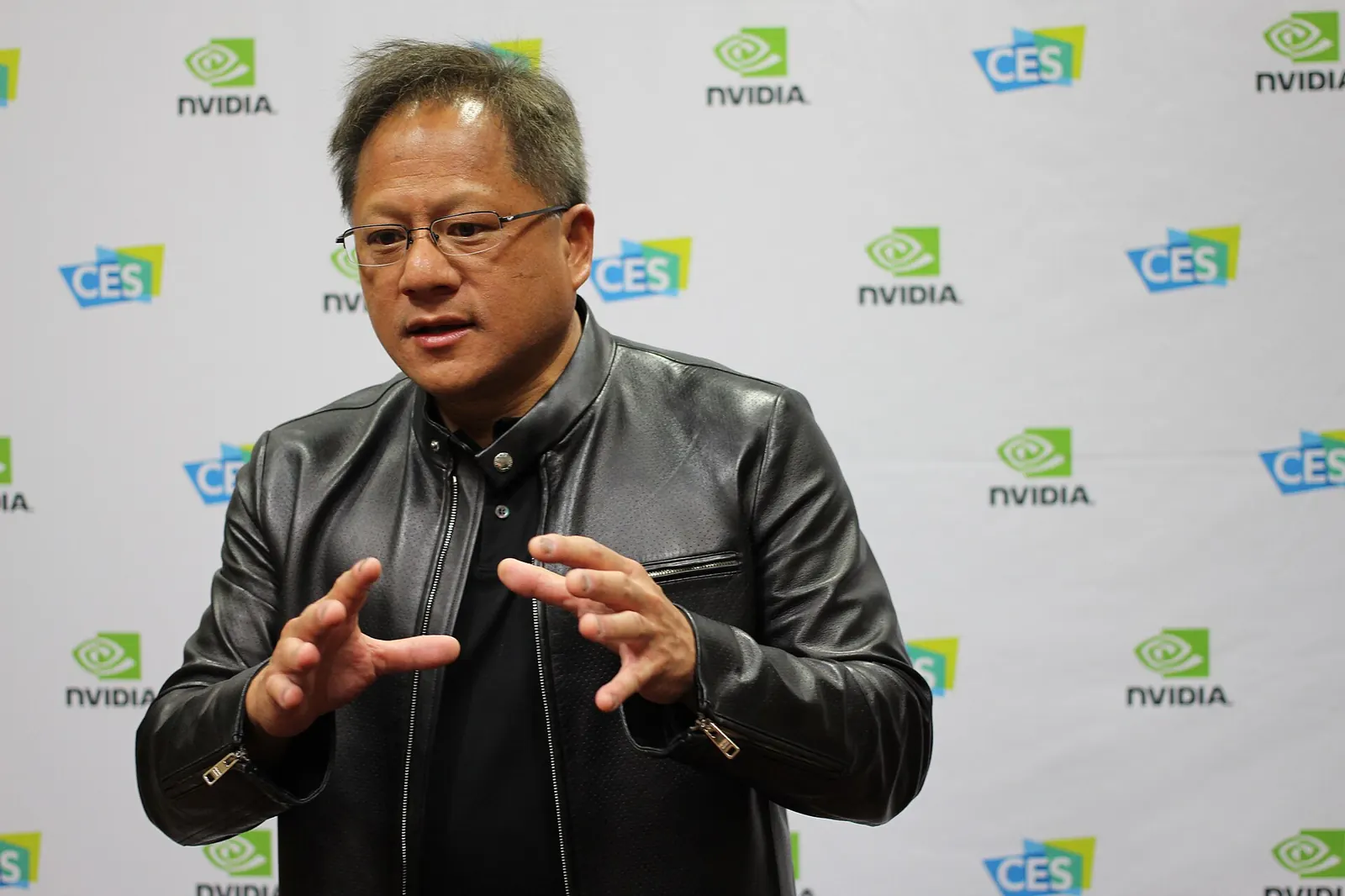
On Thursday night, Nvidia's board announced that Jensen Huang had resigned as chief executive, ending a 33-year run at the company he co-founded, and named chief financial officer Colette Kress to run it while directors searched for a permanent replacement. By Sunday morning, the Treasury Secretary of the United States was on Fox News arguing that the replacement should come from somewhere else entirely. By Sunday night, the Financial Times was reporting that Huang had been discussing a return to the job with close allies.
Three parties spent the weekend bidding for the same chair.
The resignation followed reports of a second extramarital affair, Fortune reported. One of the relationships was with a technology executive described in press accounts as a suspected Chinese intelligence source, a connection that turned a private scandal into a national-security story in the space of a week. Megaspeed, the company where she had worked, said this weekend that Alice Huang left the company "effective Aug. 30, 2025, and currently has no role with the company," and that it does not comment on her private matters. The statement answered a question nobody had quite asked yet, which is how most of this week has gone.
Scott Bessent, the Treasury Secretary, used his Sunday morning television slot to say the quiet part in plain language. "This makes me think that, as the board conducts a search for a new leader, that they need to go outside the company," he said on Fox News. "They need a dramatic shakeup."
His reasoning was specific, and it was not about the affair. Bessent said Nvidia's reported accounts showed sales to China collapsing and then a surge of sales to Singapore. "I have seen reporting that only 1 percent of the chips sold in Singapore remained in Singapore," he added, describing shell companies and warning signs the company may have ignored. He then set a clock: the board and its outside counsel, he said, should answer questions about the company's export-compliance culture within the next ten days.
That is a strange thing for a Treasury Secretary to demand of a private board, and it reframes the search. The question is no longer only who can run Nvidia. It is who can be trusted to explain it.
The board, for its part, is already looking outward. The Financial Times reported Friday that directors had approached Rene Haas, chief executive of the British chip designer Arm, about the job. Haas has led Arm since 2022, spent seven years at Nvidia more than a decade ago, and is said to have strong relationships with Huang and with some of the directors now deciding his successor's identity. Arm declined to comment. It is, in other words, exactly the compromise the word "outside" usually conceals: a candidate from beyond the building who knows where the wiring runs.
And then there is the man himself. According to the Financial Times, Huang has discussed the possibility of returning as chief executive with close allies, as some Silicon Valley figures and Nvidia employees try to pressure the board into reversing course. Not everyone in his circle is encouraging him. One ally conceded to the paper that "having an affair with a subordinate is a fireable offense," which is the sort of sentence that tends to end a comeback rather than launch one.
The crowd is louder than the allies. A public letter demanding that Nvidia "bring Jensen back" passed 150,000 signatures over the weekend. Elon Musk signed it and said on X that hiring Huang "would be an honor." Epic Games chief executive Tim Sweeney backed it too. The count is not a vote, and it is not entirely real either: Business Insider found entries signed "Tim Cruise, Hollywood actor" and "Xi Jingping," the latter presumably not the president of China.
The more telling number is smaller. Darrel Dai, a robotics research engineer at Nvidia, announced on X on Sunday that he was leaving the company, not because he believed Huang was innocent but because nobody had told him what happened. "What I find difficult to accept is having to come to terms with his departure before receiving an explanation that helps me understand it," he wrote. "I have felt that engineers' perspectives matter here. On this decision, I have not felt heard."
That gap is the part the board has to close, and it is the part it appears least equipped to close. Fortune spent the weekend asking three former Fortune 500 chief executives and a governance consultant what they made of the episode, and their answer was unanimous and unkind. Nvidia, they said, had no succession plan worth the name. Kress has spent 25 years in Big Tech finance, 13 of them at Microsoft, and joined Nvidia in 2013; her published resume includes no job running a business or owning a profit-and-loss statement. "It seems like a knee-jerk, panic reaction where the board's saying, 'We've got to name someone,'" one of the former chief executives said.
The structural details are worse than the anecdote. Huang turns 64 in February and was already the oldest chief executive in the Magnificent Seven. Nvidia has a single class of stock carrying one vote per share, so unlike Musk at SpaceX or Mark Zuckerberg at Meta he never held control through super-voting shares; he owned about 3.5 percent. Of the seven directors besides him, none has served as chief executive of a Fortune 500 company and four have been on the board between 13 and 29 years. And Huang oversaw roughly 60 direct reports, which he described as a flat organization and which the executives described as a reason no lieutenant was ever tested at scale.
"This is preposterous," one of them said of the absence of a plan. Another put it more simply: "The board wasn't paying attention to how the company was run."
Nvidia peaked at a valuation of $5.8 trillion in early October, a number no company had reached before. It is now being asked, by the Treasury, to justify how it sold chips; by its own employees, to explain itself; and by a segment of its own shareholders, to undo the resignation that created the vacuum. The board has ten days to answer Washington and an indefinite period to answer everyone else.
The outside candidate and the returning founder are not really opposing answers. They are the same admission, arrived at from different directions: that a company which grew faster than any other in history never built the bench to survive the man who grew it. Whichever name goes on the door, that is the finding of this week.
武昌希望任命一位外部人士执掌英伟达。前CEO已经开始联系人脉。
英伟达的董事会正试图聘请一位外部人士来领导公司,前首席执行官已经开始了与人脉的联络活动。
武昌希望任命一位外部人士执掌英伟达。前首席执行官刘扬已经开始了与人脉的联络活动。周四晚上,英伟达的董事会宣布了刘扬将辞去CEO职务的消息。与此同时,英伟达的董事会正在试图聘请Arm的Rene Haas担任新CEO,而美国财政部长也期望能够任命一位新人来执掌公司。另外,在同一个周末,刘扬还开始联系他的人脉以期卷土重来。图片来源:Maurizio Pesce, CC BY 2.0 ( license )
More Hourlies Stories
Content on Anagnorisis is summarized, paraphrased, and editorialized from publicly available sources for length and clarity. Original sources are linked where available. All trademarks belong to their respective owners.