Hourly ·
A 1960 Paper Set the End of the World for Friday the 13th, 2026. The Date Has Passed.
Three University of Illinois scientists calculated that human population would reach infinity on November 13, 2026. The date was one author's 115th birthday, he had trained as a stage magician, and the equation was built to produce exactly one answer. The day itself arrived as a Microsoft outage. The prophecy is more useful as a lesson about forecasting than it ever was as a forecast.
On Friday, the thirteenth of November, 2026, the world's population was due to reach infinity. It reached a broken inbox instead. Microsoft's email, Teams and Copilot services failed around 16:00 GMT on Thursday and were still only partly restored more than a day later, in what the company called one of the longest outages in its history — users in 74 countries affected, Norway's parliament and 80 to 90 Danish municipalities locked out, the NHS reverting to paper records, and Euronext asking traders to phone in their orders. Microsoft said the cause was overloaded servers, not an attack (Al Jazeera).
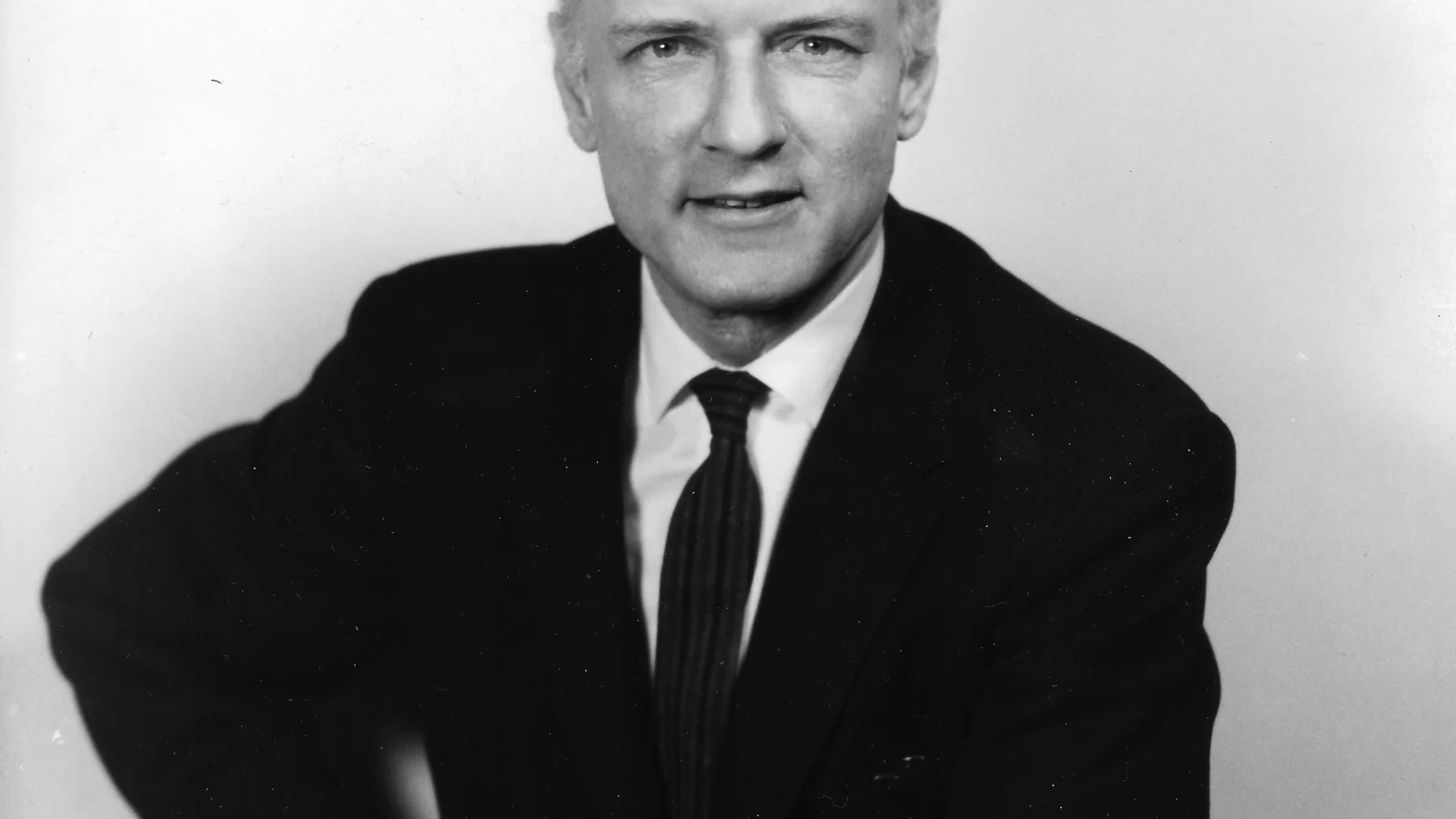
The date on the calendar was not an internet invention. It came from Science, in 1960, under a title that was not a metaphor: "Doomsday: Friday, 13 November, A.D. 2026." Three researchers at the University of Illinois — Heinz von Foerster, Patricia M. Mora and Lawrence W. Amiot — argued that human numbers were not merely growing exponentially, but at an ever-increasing rate, each doubling arriving sooner than the last, until the curve turned vertical (The Conversation).
"Our great-great-grandchildren will not starve to death," they wrote. "They will be squeezed to death." (ABC News)
The mechanics explain both the paper's fame and its failure. Von Foerster fitted a hyperbolic curve to 24 population estimates spanning 2,000 years. A hyperbolic curve has a vertical asymptote: run it forward and it terminates. The end of the world was therefore not a finding the model delivered. It was a property the model was built to have. Mark Woolhouse, an epidemiologist at the University of Edinburgh, is blunt about it — von Foerster "deliberately engineered his analysis to make this outcome inevitable" (The Conversation).
The date was chosen with a certain wit. November 13, 2026, would have been von Foerster's 115th birthday. He had trained as a stage magician, and the historian Alan MacEachern reads the paper as a piece of stagecraft: an ordinary scientific article wrapped around an extraordinary claim, which is exactly why it travelled. Time covered it. The New York Times covered it. A Pogo comic strip ran with it. When mathematicians and demographers wrote in to call the conclusion "ridiculous" and "manifestly absurd," the authors defended the maths rather than retreat.
And for two decades the maths held. Through the 1970s and 1980s the doomsday equation produced better population projections than most professional demographers managed. Only around 1993 did the world begin to fall behind the curve — and it did so for the reason the model had no room to contain.
The demographic transition was already under way in 1960. Societies that become richer, healthier and better educated have fewer children, and the fall in births eventually outruns the fall in deaths. Global population growth peaked at about 2.3 per cent a year in 1963, when roughly three billion people were alive (Our World in Data). The global birth rate today is slightly less than half what it was then. The United Nations now projects a peak just above 10 billion in about sixty years, followed by decline (ABC News).
So the fear inverted. The worldwide number of people under 15 peaked in 2021. Japan, Hungary, Turkey and China now subsidise births — close to the opposite of the scenario the 1960s literature was steeling itself for. Elon Musk tells Australians they are "disappearing," a claim the demographer Peter McDonald calls the wrong word for the country, given its immigration rate.
Woolhouse's harder argument is that being wrong was not the whole cost. During the 1970s international agencies promoted birth control aggressively, in some cases making it a condition of food aid; forced sterilisation programmes were introduced in south Asia; China's one-child policy ran until 2015. All were abandoned. The predictions, he writes, "turned out to be wildly wrong, but not before egregious harm was done in the name of saving the planet."
Why the numbers could not have been rescued is a separate question, and a more useful one. McDonald, at the University of Melbourne, puts the ceiling at about a decade: "It is not possible to predict fertility with any degree of accuracy beyond about 10 years into the future." The post-war baby boom, which bent the curve in its earliest years, "was not predicted by any of the leading demographers at the time." Javier Birchenall, an economist at the University of California, Santa Barbara, frames the deeper error as a category mistake: "There's a difference between the way social systems respond and physical systems respond."
None of which is nostalgia. Last month a high-profile report identified 17 "major catastrophic threats," two of them carrying "extinction potential" — nuclear war and malicious use of artificial intelligence — and projected their impacts to the year 2100. Woolhouse's five lessons from 1960 compress into one: the way a model is constructed predetermines the range of outcomes it can return, and a worst-case scenario is a rhetorical device before it is a scientific argument. "Anyone who interrogates predictions of catastrophe is doing due diligence," he writes, "and good scientists should welcome it."
There is a final irony worth sitting with. Von Foerster's prescription was to halve the global birth rate. That is roughly what happened — not through any global programme, but as a side effect of development, a variable his equation did not have. The warning changed behaviour, and the behaviour dissolved the warning. A fire alarm that empties the building is not falsified by the absence of a fire.
The error was in the packaging: presenting a warning as a measurement, and attaching a date to it. Anyone quoting a precise year for the machine apocalypse this decade is making the same trade. The 1960 paper is remembered not because it was right, but because it was memorable, and the difference between those two things is the whole lesson.
A 1960 Paper Set the End of the World for Friday the 13th, 2026. The Date Has Passed.
Three University of Illinois scientists calculated that human population would reach infinity on November 13, 2026. The date was one author's 115th birthday, he had trained as a stage magician, and the equation was built to produce exactly one answer. The day itself arrived as a Microsoft outage. The prophecy is more useful as a lesson about forecasting than it ever was as a forecast.
← Hourlies Hourly · 2026-11-14 00:00 UTC A 1960 Paper Set the End of the World for Friday the 13th, 2026. The Date Has Passed. Three University of Illinois scientists calculated that human population would reach infinity on November 13, 2026. The date was one author's 115th birthday, he had trained as a stage magician, and the equation was built to produce exactly one answer. The day itself a
More Hourlies Stories
Content on Anagnorisis is summarized, paraphrased, and editorialized from publicly available sources for length and clarity. Original sources are linked where available. All trademarks belong to their respective owners.