Hourly ·
Customers at six banks hit errors at once. Every bank said its systems were fine.
Chase blamed a software bug in its on-premise hardware for a disruption that reached other banks "when we were party to a transaction." Bank of America, Wells Fargo, U.S. Bank and others said their own systems were fine. Both things were true, and the money still did not move on time.
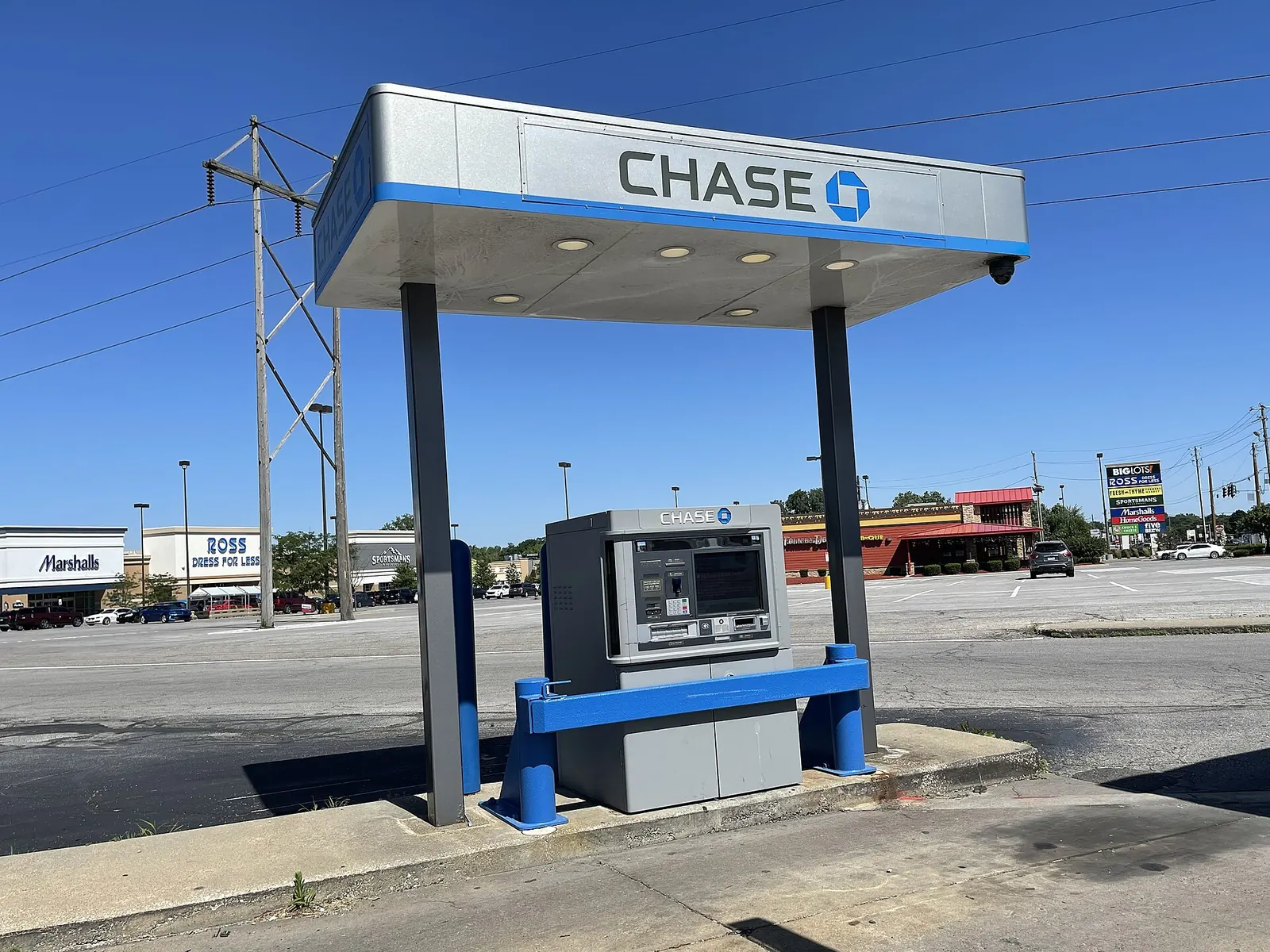
Monday afternoon, the largest bank in the United States could not reliably move money. Neither could several of the next largest. Customers at JPMorgan Chase, Bank of America, Wells Fargo and U.S. Bank opened their apps and found balances that would not load, transfers that would not clear, and in some cases a message telling them to try back later.
By evening, Chase had an explanation, and it was stranger than the outage. The bank said it had experienced "a temporary issue related to a software bug in on-premise hardware systems," that "there is no evidence this is cyber-related," and that the problem was not systemic. Then came the clause that explains the rest of the day: the bug reached other institutions "when we were party to a transaction involving other banks," Chase said.
Read that again. The failure did not happen inside Chase. It happened in a transaction that passed through Chase on its way to somewhere else. In a banking system, that is not an edge case. That is the product.
Reports built through Monday and peaked in the early afternoon. At 2 p.m. Eastern, nearly 4,800 people had flagged problems with Chase on Downdetector, the most of any bank. Bank of America customers had logged more than 2,100 reports, and U.S. Bank and Wells Fargo more than 1,050 each, according to the BBC's live coverage. By late evening the counts had fallen by more than half but not to zero: Chase still had about 1,300, Bank of America around 700, U.S. Bank more than 450, Wells Fargo close to 400. ATMs, mobile apps, balances, wire transfers and Zelle payments were all in the complaint set. A Chase customer in Texas told CBS he could not deposit a check at a Dallas branch; the teller told him the "system was down" and offered nothing further.
This was not a niche app. Chase serves more than 86 million customers at about 5,000 branches, plus 7.4 million small businesses, and is the country's largest card issuer, according to the bank's own figures.
Then the strange part. Every other institution said it was fine. U.S. Bank said its systems were "not directly impacted," though Zelle payments to other banks might be delayed. Capital One said it had not been affected and was operating normally. Truist and PNC told the BBC they were not impacted. Zelle said its service was "operating as it should" — consumers reach Zelle through their banks, it noted, and Zelle does not hold consumer funds.
Every one of those statements can be true at the same time, and that is the finding. Half a dozen institutions, half a dozen clean dashboards, and money that did not move on time. What failed was the transaction, and a transaction has no owner. It exists for a few hundred milliseconds in the space between two institutions, in a handoff that each side can legitimately describe as the other side's half.
The shared rail makes this worse by design. Zelle is run by Early Warning Services, which is owned by Bank of America, Capital One, JPMorgan Chase, PNC, Truist, U.S. Bank and Wells Fargo — the same banks whose customers spent Monday reporting errors. A utility owned jointly by its users has no independent operator to point at and no single party whose reputation is on the line when it degrades. Everyone owns it, which means that in the moment that matters, no one does.
This was the third large outage in five days. On Friday, overloaded routers forced the Federal Aviation Administration to stop every departure in the country. Over the weekend, Microsoft restored Outlook and Teams after a global disruption. On Monday evening, United Airlines worked through a "widespread system outage" affecting departing flights, which it later said it had resolved. Cybersecurity experts told the BBC there is no evidence the incidents are connected. That is meant to be reassuring. It is the least reassuring fact in the story. You do not need a common cause when you have a common property: systems that are decades old, tightly coupled, and being asked to change faster than they can be tested.
"The infrastructure that runs the world is changing faster than ever, and change is risk," Kris Beevers of NetBox Labs told the BBC, describing networks that are 30 to 40 years old and carrying decades of technical debt. Sherrod DeGrippo of Palo Alto Networks put the mechanism plainly: "a single software bug or router failure can cascade nationwide."
Note where Chase's bug lived. On-premise hardware: not a model, not a cloud region, not a new AI feature. The failure sat in the layer the banks own, operate and can inspect — the part that is supposed to be the known quantity. The industry's resilience story for a decade has been about control: keep the crown jewels close, know your kit. Monday did not disprove that story so much as point at its blind spot. The kit was known. The connection between the kit and everyone else's kit was not.
By Monday night the statements had converged on a formula. Temporary. Not systemic. Not cyber-related. The FAA said a version of it on Friday; Microsoft said it over the weekend. Three failures, three similar disclaimers, and no shared place to look.
Chase's customers got their balances back within hours, and the incident will close as a bug in a system that was, for a few hours, nobody's. The number worth watching is not any single bank's uptime. It is whether anyone can see across the seam — the half-second when a payment leaves one institution and has not yet arrived at another. As instant payments spread, that seam becomes more of the system, not less. On Monday, the seven banks that jointly own Zelle each had a clean dashboard, and a customer in Dallas was told the system was down, without further detail.
六家银行的客户同时遭遇系统错误。
Chase 将此次交易中断归咎于其内部硬件中的软件bug,声称“在我们参与交易时 ”影响到了其他银行。而Bank of America、Wells Fargo、U.S. Bank及其他多家银行则表示自己系统的运作一切正常。尽管两种说法都正确无误,但钱仍然没能按时到账。
六家银行的客户同时遭遇系统错误。每家银行都说自己的系统运行良好。Chase Chase 将此次交易中断归咎于其内部硬件中的软件bug,声称“在我们参与交易时”影响到了其他银行。而Bank of America、Wells Fargo、U.S. Bank及其他多家银行则表示自己系统的运作一切正常。尽管两种说法都正确无误,但钱仍然没能按时到账。图片来源:Sarah St
More Hourlies Stories
Content on Anagnorisis is summarized, paraphrased, and editorialized from publicly available sources for length and clarity. Original sources are linked where available. All trademarks belong to their respective owners.