
Hourly ·
Trump says the Iran war is effectively over. The blockade is the part that isn't.
The president told reporters the war is “militarily effectively over” after meeting Qatar’s prime minister. The blockade, the frozen assets and the tanker attacks are all still in place — and the UAE is exporting more oil than it did before the fighting started.
For eight months, the operative question about the American war with Iran was when the bombing would resume. On Monday afternoon, Donald Trump walked into the White House briefing room after a meeting with Qatar's prime minister, Sheikh Mohammed bin Abdulrahman bin Jassim Al Thani, and answered it in the past tense. "Iran militarily is effectively over," he said. "We're just keeping it the status quo."
The status quo, however, is not peace. It is a war fought at the speed of shipping. Thousands of American troops remain in the waters off Iran. The naval blockade of Iranian ports is intact, and by the president's own account it is his proudest instrument. Limited strikes have continued — at least twice in the past week, including against Iranian air defences, according to the Associated Press — and on Saturday the US military fired on and disabled a commercial vessel it says was trying to run that blockade. Trump gave no hint of drawing down the force that enforces it.
"We're keeping it going. We have the greatest military blockade ever," he said. He described Iran as "decapitated," said he still wants a long-term guarantee that the nuclear programme is defanged, and noted that US forces are "locked and loaded, ready to go for any reason that changes." He also said targets for a resumption had already been chosen, including 38 bridges.
What changed on Monday was not the war. It was the politics around it. Trump's Republican Party lost both chambers of Congress last week, in an election shadowed by an eight-month-old conflict that pushed fuel prices up and fed through to nearly every sector of the global economy. Vice-President JD Vance said afterwards that the war was a key reason for the defeats. On the same day Trump spoke, Republican congressman Thomas Massie moved to force a vote to impeach Defence Secretary Pete Hegseth over his conduct of the war. The president had spent weeks hinting he would resume strikes once the election was past, and the US continued moving troops to the region in the run-up to the vote, according to the Guardian.
The words also have a history. The war began on 28 February. In June, Washington and Tehran signed a 14-point memorandum in Islamabad, mediated by Pakistan, and then spent months arguing over its implementation while the fighting resumed. Trump has said a final deal was imminent "dozens of times" over the course of the war, the Guardian notes — a record that makes "effectively over" a statement about intent rather than outcome. His secretary of state, speaking to reporters on Sunday before leaving for a G7 meeting in Paris, was blunter. "I wouldn't say we're on the verge of a breakthrough," Marco Rubio said, describing Iran's terms as unrealistic.
Tehran's position has not moved in the direction Washington wants. President Masoud Pezeshkian said on Monday that Supreme Leader Mojtaba Khamenei had instructed officials to end the country's state of "neither war nor peace," and that Iran was ready to talk. "We can negotiate with dignity and resolve the issue with dignity," he said. "However, we will not surrender to force and bullying." Before any nuclear negotiations, Iran wants the blockade on its ports lifted, sanctions removed, frozen assets released, compensation for war damage, and an end to hostilities across the region, including Israeli operations in Lebanon.
Mediators have been circulating a two-day package that would test whether any of that is bridgeable: the United States lifts the naval blockade and releases some frozen Iranian funds; Tehran takes steps toward renewed nuclear inspections and reopens the Strait of Hormuz; then broader talks begin. Washington has not accepted it.
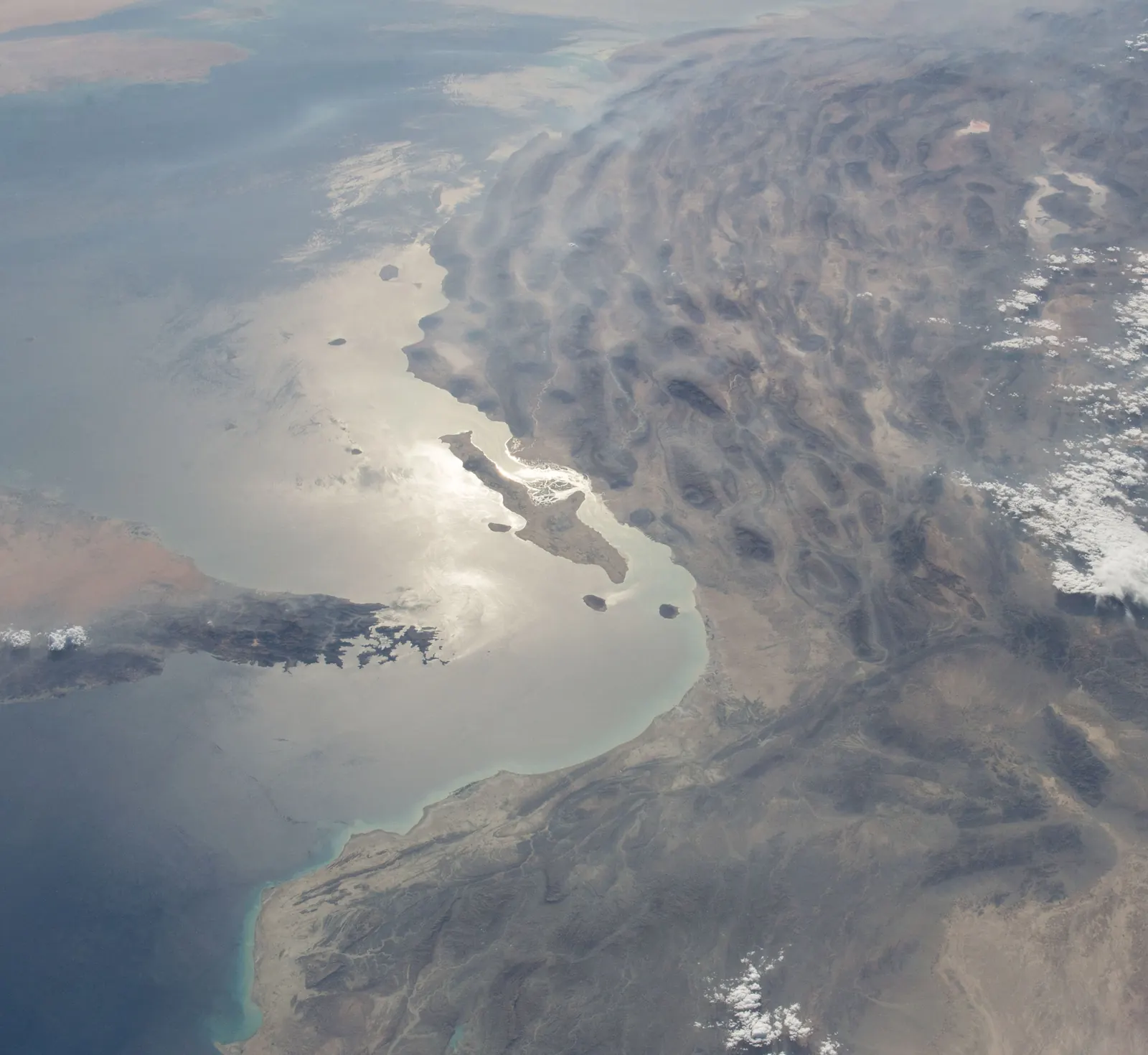
The Strait is where the arithmetic of this war is written. Before the fighting, the waterway carried the equivalent of roughly one-fifth of global petroleum liquids consumption and more than one-fifth of global liquefied natural gas trade, according to the US Energy Information Administration. US Central Command says it has escorted more than 3,000 commercial vessels through the strait in six months and cleared primary routes of Iranian mines. But attacks on shipping accelerated sharply in October and continued into November, and Iranian authorities claimed on Sunday that a tanker had struck a mine east of the strait.
"If you need a heavy US military presence just to let an oil tanker go through, to me that's the definition of not open," Amos Hochstein, a former senior adviser to President Joe Biden now at TWG Global, told Fox News Digital at the ADIPEC energy conference in Abu Dhabi. "There has been a hot conflict in the Strait of Hormuz on almost a nightly basis. Tankers are getting fired on, tankers are getting hit."
The blockade is also leaking economically, and not only for Iran. The Emirates has spent the war building a way around the chokepoint: crude can move through its pipeline to Fujairah, on the Gulf of Oman, outside the strait. Ali Rashid Al Nuaimi, who chairs the defence committee of the UAE's Federal National Council, said the result is that the country now exports more than it did before the war. "Before the war started on February 28th, we used to export 3.1, 3.2 million barrels a day," he said. "Now we are exporting almost 4.4." Energy minister Suhail Al Mazrouei said in early November that exports had at times exceeded pre-war levels.
That helps explain why the Gulf's preference, as Trump described it on Truth Social, is not for a settlement but for the arrangement that exists. The leaders of Qatar, Saudi Arabia, the United Arab Emirates, Bahrain and Kuwait, he wrote, would prefer "the status quo, in other words, a continuation of the Greatest Naval Blockade in History." Iranian oil stays off the market, prices stay high, and their own barrels keep moving through pipes that bypass the danger.
So the war is ending the way it ran: as a declaration, not an agreement. The offensive phase may be over; the siege is not. Six months of escorts, nightly attacks, a disabled freighter and a blockade that five Gulf states would like to keep are not the architecture of a peace. They are the architecture of a permanent pressure campaign that no longer needs to drop bombs to be a war — which is precisely the condition Pezeshkian named, and precisely the one his country says must end.
Sources: Fox 34 News — AP: Trump after meeting with Qatari PM says he believes war with Iran is militarily 'effectively over', The Guardian — Trump says US war in Iran 'effectively over' as he plays down escalation concerns, Fox News — Trump meets key Iran war mediator as UAE reveals major oil export surge despite conflict, Anadolu Agency — Iran open to negotiations to end 'no war, no peace' situation: President, US EIA — World Oil Transit Chokepoints
Trump says the Iran war is effectively over. The blockade is the part that isn't.
The president told reporters the war is “militarily effectively over” after meeting Qatar’s prime minister. The blockade, the frozen assets and the tanker attacks are all still in place — and the UAE is exporting more oil than it did before the fighting started.
← Hourlies Hourly · 2026-11-10 00:00 UTC Trump says the Iran war is effectively over. The blockade is the part that isn't. The president told reporters the war is “militarily effectively over” after meeting Qatar’s prime minister. The blockade, the frozen assets and the tanker attacks are all still in place — and the UAE is exporting more oil than it did before the fighting started. Image: NA
More Hourlies Stories
Content on Anagnorisis is summarized, paraphrased, and editorialized from publicly available sources for length and clarity. Original sources are linked where available. All trademarks belong to their respective owners.