
Hourly ·
America is about to lose the measles-free status it has held since 2000
A commission of the Pan American Health Organization meets this week to review whether the United States still counts as having eliminated measles. The case count has already answered the question.
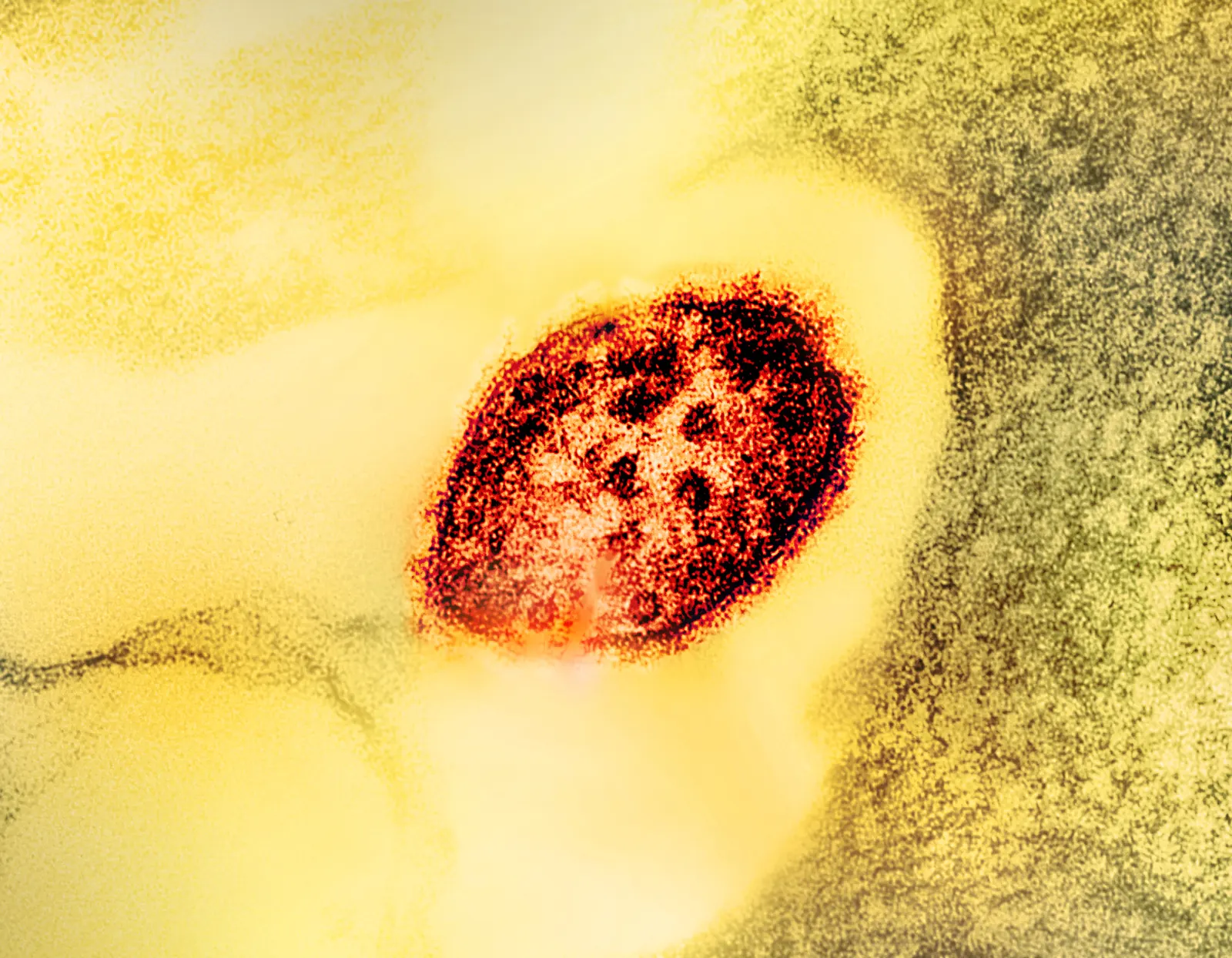
The Measles and Rubella Elimination Regional Monitoring and Re-Verification Commission meets in Washington from Tuesday to Friday. It is a closed technical meeting of independent epidemiologists, virologists, paediatricians and immunisation experts, and its agenda is narrow: review the national reports submitted by countries in the Americas, examine the evidence for 2025 and the first half of 2026, and classify each country's elimination status. Its conclusions will go to the director of the Pan American Health Organization.
One of those classifications is not really in doubt. The United States is expected to lose the measles elimination status it has held since 2000.
Elimination is a specific term. It does not mean measles has disappeared; it means there is no uninterrupted chain of transmission of a single viral genotype and lineage inside a country for twelve months or longer. The Americas as a region lost its measles-free status in 2025, when the commission concluded that endemic transmission had been re-established in Canada. Canada is currently the only country in the region classified as endemic. The United States is expected to join it this week.
The case count has already made the argument. As of 5 November, the Centers for Disease Control and Prevention had recorded 5,182 confirmed measles cases in the United States in 2026, against 2,289 for the whole of 2025. There have been 43 outbreaks this year. Ninety-six per cent of cases are outbreak-associated, and 11 per cent — 562 people — were hospitalised. Forty-one per cent of patients are adults; 18 per cent are children under five. Ninety-six per cent were unvaccinated or had unknown vaccination status. Only five states have reported no cases at all: Arkansas, Hawaii, Mississippi, Nevada and New Hampshire.
The deaths are harder to count than they should be. State health departments have reported at least eight measles deaths this year. The CDC's official toll is four, because the agency is not automatically adding deaths confirmed by state officials while it works with the Council of State and Territorial Epidemiologists on a standard definition. Three of those state-reported deaths came in a single week this month: a child in New York, the first measles death there in 30 years; an infant in Wisconsin, the first in that state since 1990; and a young mother in Pennsylvania. In 2025 there were three measles deaths. Before that, the most recent was in 2015.
The geography is not uniform, but the pattern is. Pennsylvania has recorded 1,487 cases and six deaths. Wisconsin has 477 cases, a 35-year high. Minnesota has 139, and 115 of them are in Todd County, a rural county of 26,060 people. Kentucky has 204 cases, Indiana 134, New York 210. In Pennsylvania, two-thirds of cases are adults — an unusual feature that reflects a large unvaccinated population and waning herd immunity rather than a single school outbreak.
The arithmetic underneath is simple. Two doses of the measles, mumps and rubella vaccine are 97 per cent effective. Measles is among the most transmissible viruses known, and holding it off requires roughly 95 per cent coverage. Kindergarten coverage in the United States was 92.4 per cent in the 2025-26 school year, down from 95.2 per cent in 2019-20. Only ten states reached 95 per cent. "I think we're going to see measles again next year, and the year after that, and the year after that, until we get on top of vaccinating our populace," Paul Offit, an infectious disease specialist at Children's Hospital of Philadelphia, said on a briefing this week. He believes measles is now endemic in the United States.
There is a strange split in the official response. The director of the National Institutes of Health, Jay Bhattacharya, said on Face the Nation in August that it is "very important that parents vaccinate their kids" against measles and the other standard childhood diseases. The CDC, meanwhile, is publishing case counts that lag state health departments and a death toll that does not include deaths the states have already confirmed. The disagreement is not about the science. It is about who owns the number.
Elimination status is not eradication, and losing it does not change the virus. It changes the frame. A country with elimination status treats each outbreak as an importation to be contained. A country without it is documenting sustained transmission inside its own borders, and every subsequent case is evidence of a system that is no longer holding. The commission's full report will take weeks. The case counts will not.
Sources: CDC — Measles Cases and Outbreaks, CIDRAP — US measles total for 2026 tops 5,100 cases, CIDRAP — A baby in Wisconsin has died from measles, the 3rd such US death this week, PAHO — Measles and Rubella Elimination Regional Monitoring and Re-Verification Commission to hold sixth annual meeting in November, CBS News — As measles outbreaks grow in the U.S., maps and charts show a record number of cases in 2026
America is about to lose the measles-free status it has held since 2000
A commission of the Pan American Health Organization meets this week to review whether the United States still counts as having eliminated measles. The case count has already answered the question.
← Hourlies Hourly · 2026-11-09 00:00 UTC America is about to lose the measles-free status it has held since 2000 A commission of the Pan American Health Organization meets this week to review whether the United States still counts as having eliminated measles. The case count has already answered the question. Image credit: NIAID, CC BY 2.0 ( license ) The Measles and Rubella Elimination Regional M
More Hourlies Stories
Content on Anagnorisis is summarized, paraphrased, and editorialized from publicly available sources for length and clarity. Original sources are linked where available. All trademarks belong to their respective owners.