Hourly ·
SpaceX's Starship Reaches Orbit for the First Time
A 14th test flight put the largest rocket ever built into orbit for the first time, even as an engine failure forced SpaceX to cut the mission short.
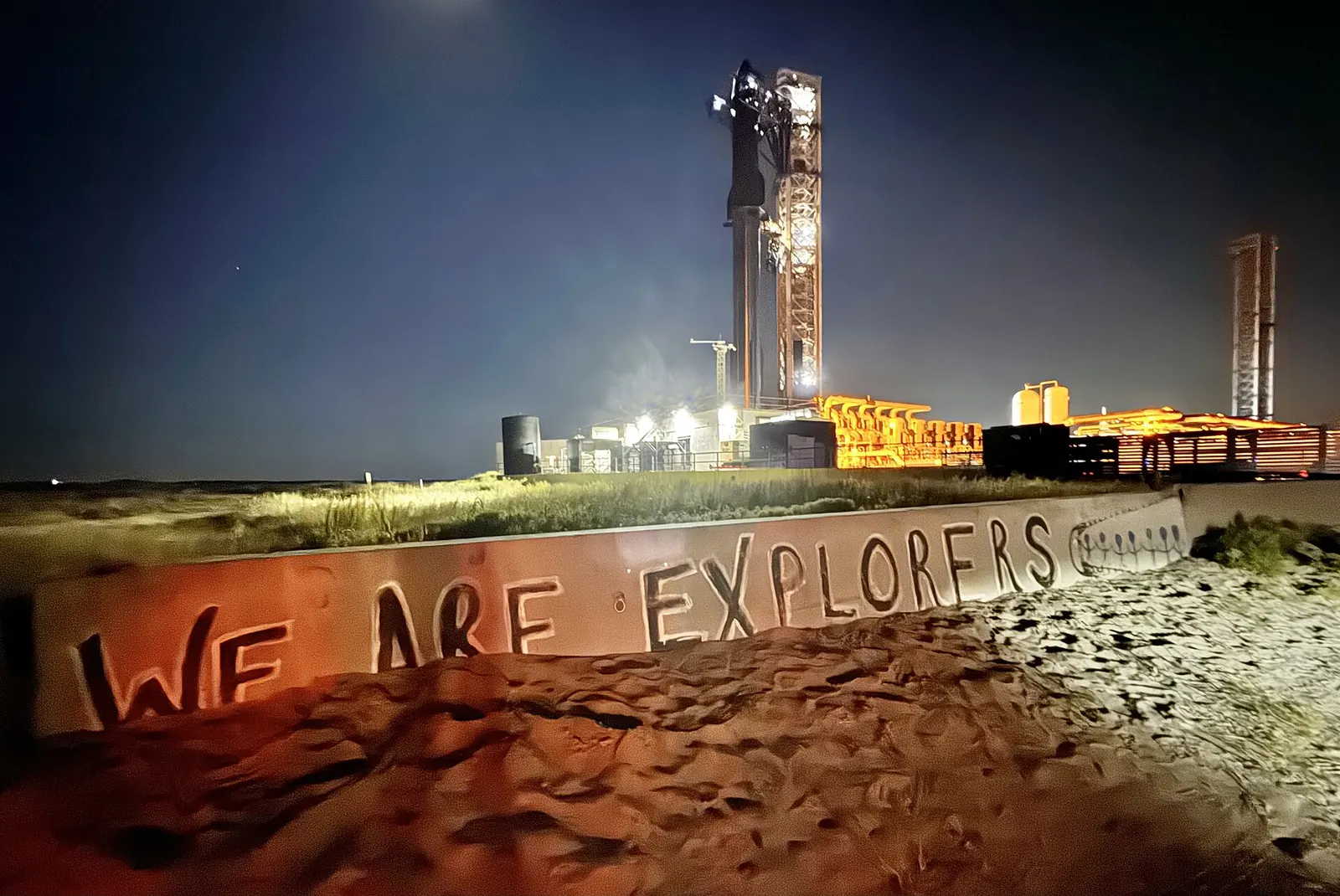
SpaceX sent its Starship rocket into Earth's orbit for the first time on Monday, a milestone flight that keeps the company and NASA on the path toward putting people back on the moon.
The vehicle — standing more than 120 metres tall, the largest and most powerful ever flown — lifted off from SpaceX's Starbase facility in South Texas at 7:48 a.m. local time, opening its 14th test flight and its first attempt to circle the planet instead of arcing back down on a suborbital trajectory. An engine failed during the ascent and briefly threatened the attempt, but mission controllers judged it safe to fire the burn that pushed the Ship upper stage onto an orbital path. "Starship is in orbit," the engineer narrating SpaceX's livestream announced as applause broke out at the company's control centre.
The stakes were different from anything SpaceX had tried before. Starship climbed to roughly 171 miles (275 km) and, to stay in orbit, had to reach about 28,000 km/h (17,400 mph). Suborbital tests are designed so that a mid-flight failure drops debris into the Indian Ocean, far from land; a full orbit carries risks that are much harder to contain. "This is an important milestone for SpaceX, with Starship successfully reaching orbit, and at the first attempt," said Martin Barstow, a professor of astrophysics and space science at the University of Leicester. The achievement "marks the beginning of the transition from the testing and development phase to becoming a working vehicle able to deliver the large payloads needed to return to the moon," he added.
Once in space, the Ship deployed 26 next-generation Starlink V3 broadband satellites over a 30-minute stretch — the first members of a constellation SpaceX has said could eventually reach some 100,000 spacecraft. Three of them carried cameras and scanned the Ship's heat shield, imagery engineers will study as they try to harden the vehicle for re-entry.
The flight did not go entirely to plan. SpaceX had wanted the Ship to complete about six orbits and splash down west of Chile nearly 10 hours after liftoff, but it brought the vehicle home early: re-entry began about two hours and 40 minutes into the mission, and the Ship splashed down intact in the northern Pacific roughly three hours after launch, then toppled over and exploded in the waves. The Super Heavy booster, which returned to an offshore landing in the Gulf of Mexico about seven minutes after liftoff, was not caught by the launch tower's arms this time.
For NASA, the result offers breathing room. The agency has selected Starship as the first crewed lander for its Artemis programme, which aims to build a base near the moon's south pole over the next five years. Under the current plan, the Ship would carry astronauts to low Earth orbit on Artemis III in mid-2027 and set them down near the lunar south pole a year later. The flight was also a relief for investors after SpaceX's high-profile stock market debut in June, when the share price jumped in the offering before giving back some of those gains.
Plenty remains unproven. SpaceX still wants to catch both the booster and the Ship with the tower's "chopstick" arms to make reuse faster, and it has yet to demonstrate the orbital refuelling that moon and Mars missions will require. Life-support systems for crew are also still to come. But the box that mattered most this week is now checked.
Sources: Space.com | Space.com | The Guardian
SpaceX的Starship首次达到轨道
第14次飞行将迄今最大型火箭送入轨道,但引擎故障迫使SpaceX提前终止任务。
星舰首次进入轨道 卫星新闻 · 2026-09-29 00:00 UTC SpaceX的星舰火箭首次成功进入了地球轨道,这是该公司自第14次飞行以来取得的一项重要里程碑。然而,在一次发动机故障迫使任务提前结束的情况下。 图片来源:Steve Jurvetson, CC BY 2.0 (许可) 星际飞船周一将其星舰火箭送入了地球轨道,这是 SpaceX公司实现的一个重要里程碑。尽管如此,在一次发动机故障迫使任务提前终止的情况下。
More Hourlies Stories
Content on Anagnorisis is summarized, paraphrased, and editorialized from publicly available sources for length and clarity. Original sources are linked where available. All trademarks belong to their respective owners.