Hourly ·
Anthropic's Claude found a CRISPR-like enzyme system in viral DNA
Roughly 950 Claude agents spent 21 hours combing a DNA database and flagged a previously uncharacterized system Anthropic calls ART — a reverse transcriptase paired with a CRISPR-style array of repeats. CRISPR pioneer Feng Zhang calls it genuinely intriguing.
Anthropic says one of its Claude agents has done something it believes no human researcher had: spotted a previously uncharacterized enzyme system buried in viral DNA whose architecture resembles CRISPR. The company's life sciences group, formed this spring alongside a new in-house wet lab, laid out the finding in a pre-print and named the system ART — array-associated reverse transcriptases.
The search was a swarm. Roughly 950 Claude agents ran for 21 hours and burned about 210 million tokens working through a vast database of DNA sequences, hunting for reverse transcriptases, the enzymes that copy RNA back into DNA. They gathered more than 200,000 of them, flagged 3,500 candidate systems they considered undescribed, and narrowed those to the 20 most compelling, each with a written report.
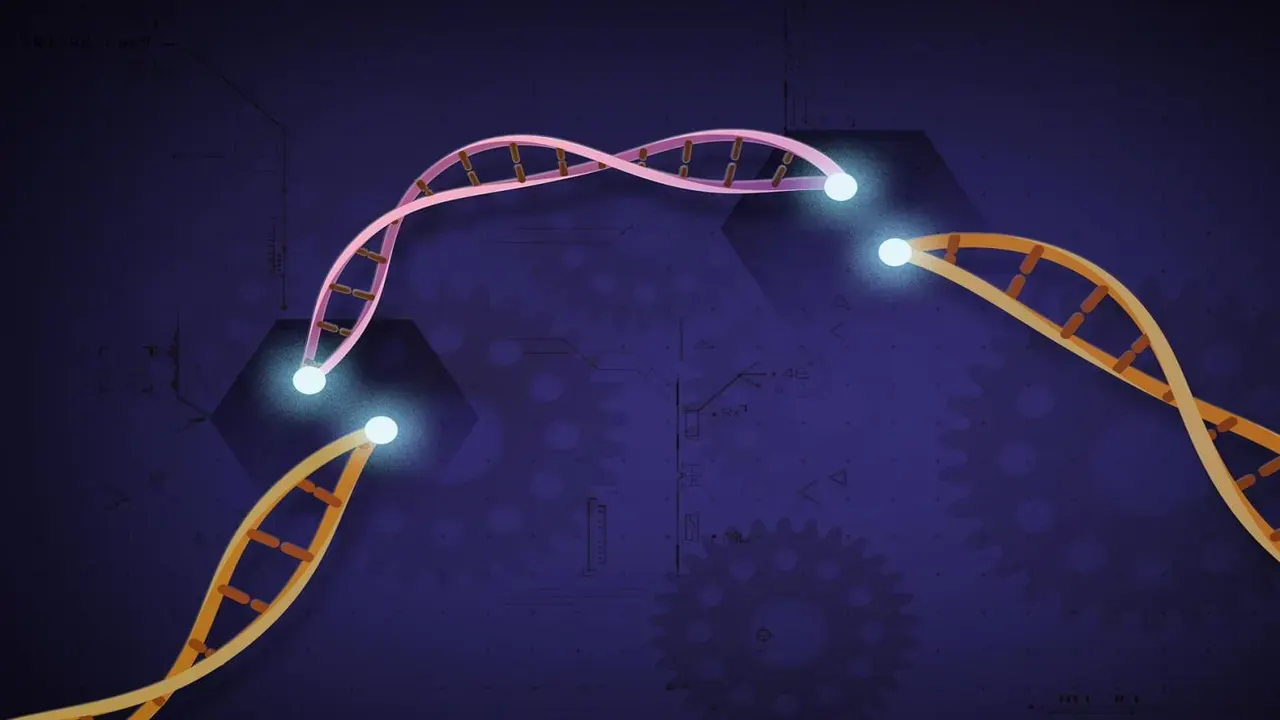
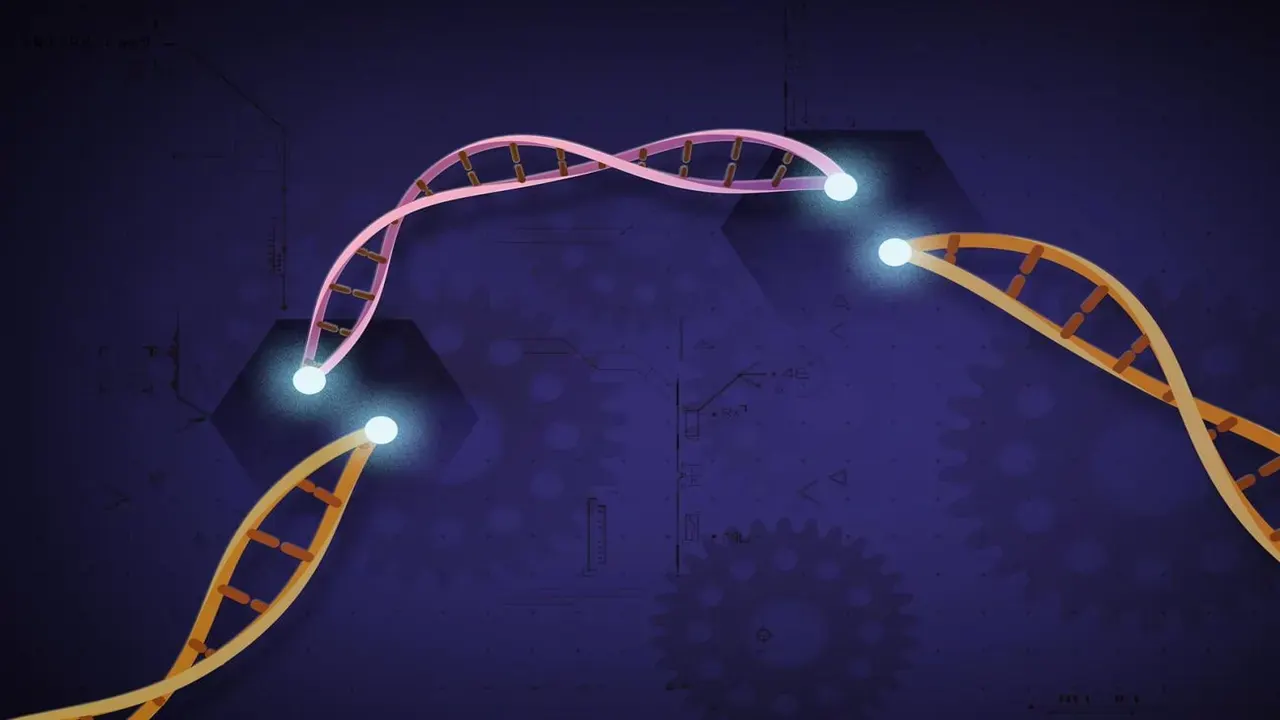
ART lives mainly in bacteriophages, the viruses that infect bacteria, and has three parts: the reverse transcriptase, a partner gene beside it, and a long array of evenly spaced DNA repeats. That repeat layout is the CRISPR echo. CRISPR works in part because its array stores a bank of RNA guides that make the system programmable, and Anthropic says its first experiments show the ART array is also expressed as a set of distinct short RNAs. The underlying enzyme had been seen in previous studies; Claude appears to be the first to notice the two features that define the system.
The caveat is large. Nobody knows what ART does. Anthropic is explicit that its function is uncharacterized and that experiments are still underway, and The Verge notes the company is comparing the discovery to CRISPR without being able to say what it is capable of. What is known: the system's characteristics have only ever been found together in a handful of other systems, and all of those are programmable — the kind that cut, copy, and paste DNA.
Feng Zhang, a CRISPR pioneer at MIT and the Broad Institute, reviewed the pre-print and called the finding genuinely intriguing. This is an exciting example of how AI agents can contribute to biological discovery, he said. I hope this work encourages more scientists to explore how AI can support their research.
Anthropic says every experiment in the lab was run by human scientists, and that the work stays at the lowest biosafety levels with no human pathogens. The larger bet is that AI can compress biology research the way it has compressed other kinds of pattern-finding — a claim that will be judged on whether ART turns out to be a tool or a curiosity.
Sources: Anthropic, The Verge, TechCrunch
Anthropic的Claude在病毒DNA中发现了一种CRISPR类似的酶系统
约950个Claude代理花费了21小时搜索DNA数据库,并标识了一个阿伦提安公司称为ART ART的先前未被描述的系统——一个逆转录酶与CRISPR式的重复数组配对。CRISPR先驱冯 -章称其 genuinely intriguing.
← 日更新 Hourly · 2026-09-25 00:00 UTC Anthropic的Claude在病毒DNA中发现了一种类似于CRISPR的酶系统 Claude大约花费了21小时搜索DNA数据库,并标记了一个被A Anthropic称为ART的新系统,该系统结合了逆转录酶和一种类似CRISPR重复序列的阵列。CRISPR先驱冯·张将其视为真正有趣的现象。Anthropic称其Claude的一个版本已经使用这项技术成功编辑了细菌的DNA。
More Hourlies Stories
Content on Anagnorisis is summarized, paraphrased, and editorialized from publicly available sources for length and clarity. Original sources are linked where available. All trademarks belong to their respective owners.