Hourly ·
Data Centers Lost 46 of 47 Ballot Fights This Year. The AI Boom's Problem Is Now Political.
Forty-one local measures went before voters in ten states on Tuesday, and all but one went against the data centers. Texas, Georgia and Ohio also elected governors who promised to pause the buildout.
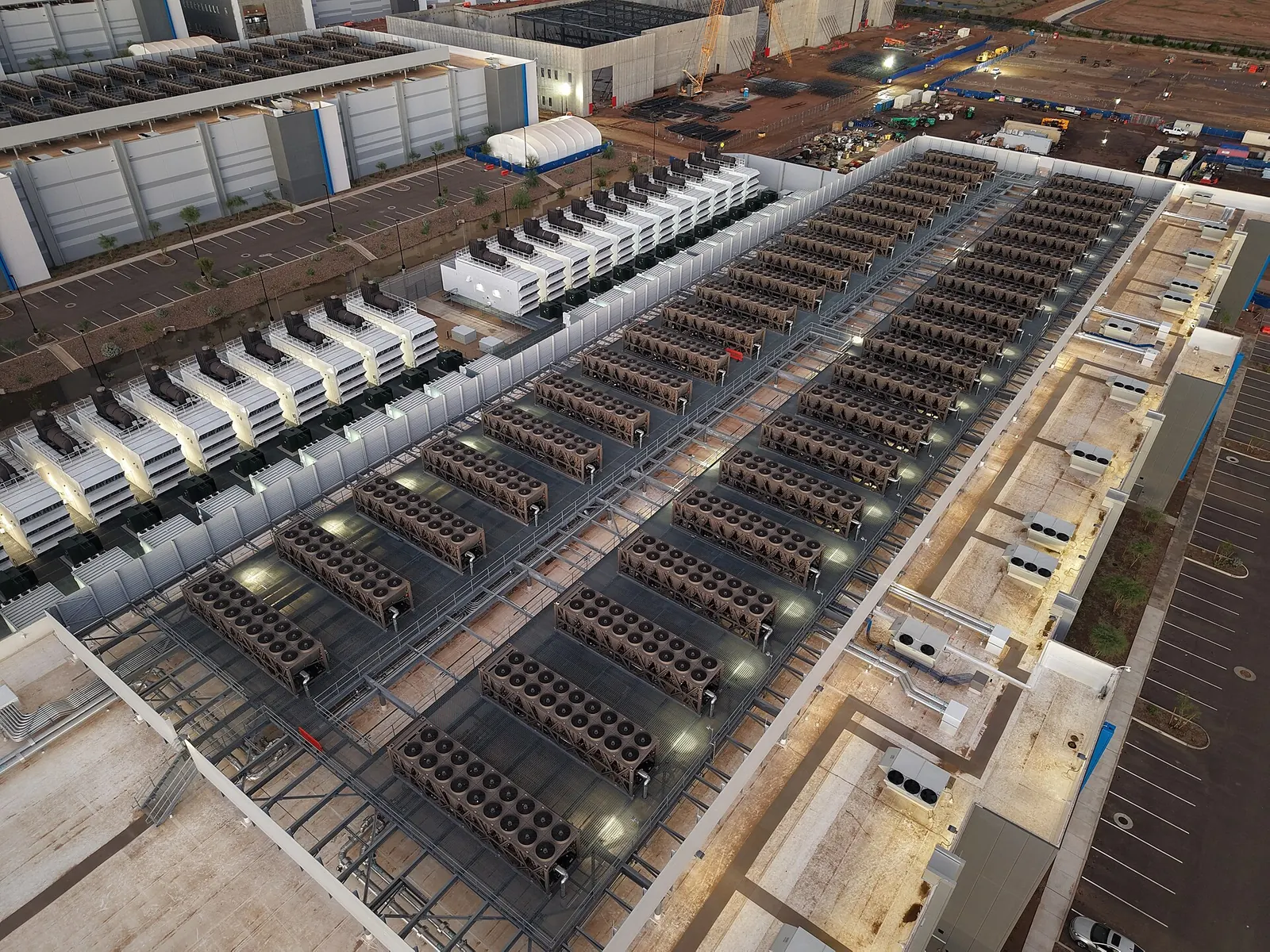
On Tuesday, voters in ten states were asked 41 separate times whether they wanted data centers built near them. Forty times, they said no.
The exception was Harwood, North Dakota, where the question was whether to require extra review of industrial projects, data centers among them. Voters rejected the review. That was the industry's only win of the night.
Ballotpedia counts 47 data-center measures decided so far in 2026 — Tuesday's 41 plus six from primaries and special elections earlier in the year. In 46 of the 47, the majority sided with tighter limits, either by approving restrictions or by rejecting a measure written to smooth development. The count is still settling: Redbud Consulting, running a separate tally for CBS News, had 38 restrictions approved as of Wednesday afternoon. But no tracker has the industry winning more than one.
The margins were not close
Alhambra, California banned data centers outright, 82% to 18%. Edgewater, Florida banned new ones 77 to 23. Bloomington, Illinois advised its city to impose a moratorium 78 to 22; Morgan County, Illinois advised restrictions 88 to 12. Wells, Maine passed a six-month moratorium 82 to 18. Ohio, which alone had 21 of the 41 measures, banned construction in Granville 82 to 18 and Trenton 80 to 20, required hyperscale developers seeking tax incentives in Perry to post financial guarantees, 87 to 13, and made Grove City require voter approval for developments above 20 megawatts, 55 to 45.
Each of these is a zoning ordinance in a town of a few thousand people. Together they are something the industry has not faced before: a local veto that arrives with a mandate-sized margin.
Higher up the ballot, the damage was worse
In Texas, Gina Hinojosa unseated Governor Greg Abbott after campaigning on a temporary ban on data center construction. Texas is expected to account for 25% to 30% of the US data center capacity coming online by 2030, and Gordon Johnson of GLJ Research estimates her win could stall 13 gigawatts of data-center power. Abbott had already suspended data center approvals, which means Hinojosa does not need a new law. "Texas already has a moratorium — Abbott built it," Johnson told CBS News.
In Georgia, Keisha Lance Bottoms won the governor's race and said Wednesday she would sign an executive order pausing new construction, then review the tax incentives that helped make the state the third-largest data center market in the country.
In Ohio, Sherrod Brown beat Senator Jon Husted after casting the incumbent as "the face of data centers," and Amy Acton beat Vivek Ramaswamy for governor on a "conditional moratorium": data centers would have to cover 100% of their utility costs and build with union labor. Ohio is also where OpenAI's PORTS-Pike campus sits — 8 gigawatts, the largest planned AI data center campus in the world, a project that could cost more than $500 billion, with Nvidia backstopping it and first-phase construction due to begin this year.
Nationally, Democrats took the Senate with 54 seats and leads in two more, and crossed 218 in the House. The Associated Press called the House. It is the first time since Barack Obama's second term that a sitting president has had neither chamber of Congress.
Why this was on the ballot at all
Because the bills arrived before the servers did.
In a CNBC voter poll, 56% said data centers were a crucial or major factor in their vote. A CBS News poll this summer found Americans opposed to a new data center in their area by more than two to one. The industry's own arithmetic explains the sensitivity: the largest hyperscalers are each spending hundreds of billions of dollars a year, and all of them except Microsoft have turned cash-flow negative doing it. Dan Ives of Yorkville Ives & Co. framed the question the market is asking — whether the election slows "the planned 800 to 1,000 data centers across the U.S." — and answered it: "a clear YES."
The money lost
Silicon Valley spent more on this election than ever and got less for it.
Crypto, AI and online gambling interests put in more than $377 million. Fourteen of the 20 largest donor groups backed Republicans almost exclusively. Elon Musk, the cycle's biggest individual donor, spent at least $474 million, nearly half of it in Texas, and lost both of the state's marquee races. "Data centers in space looking pretty appealing right now," he posted.
The buildout's political strategy was to buy the map. The map voted anyway.
What the votes do not do
They do not stop the AI buildout, and it is worth being precise about that.
Local zoning governs the next permit, not the project already pouring concrete. Seema Shah of Principal Asset Management notes that higher development costs for new facilities could "increase the value of existing infrastructure that is already powered, permitted, and operational." Oxford Economics expects timelines to stretch rather than capital spending to collapse. And demand has not moved.
What the votes do close is a specific door. The industry's real ask in Washington was never money. It was preemption — a federal statute that would wipe out the patchwork of state AI rules, which Republicans spent two years assembling through a privacy bill, a White House framework and a December 2025 executive order directing the Justice Department to challenge state AI laws in court. Democrats taking Congress makes that statute unlikely before 2029.
There is a detail in that framework worth remembering. It carved out local decisions about where AI infrastructure is placed. Even the industry's own federal shield had a hole in it exactly where Tuesday's votes came through.
What to watch
Four things.
Whether Hinojosa turns Abbott's suspension into a formal moratorium, and whether the 13 gigawatts stay in the ground. Whether Bottoms signs the order and reopens Georgia's incentive agreements. Whether Acton's conditions survive first contact with the PORTS-Pike timeline. And whether Ohio's statewide 25-megawatt amendment, which missed this year's signature deadline and is now aiming at 2027, becomes the template for a national wave.
One market tell: Wednesday's selloff in chips and data-center hardware was about permitting delays, not demand. If it reverses within a week, the Street has decided the votes are noise. If it does not, the constraint has changed.
For two years the limits on the AI buildout were physical — chips, transformers, turbines, water, land. Tuesday added one that is none of those, and it is the only input that renews itself every two years.
Sources: CNBC — Voters rebuff data centers in every ballot measure except one during the 2026 midterms, CBS News — Midterm elections could zap the data center buildout, experts say, Ballotpedia — Data center-related ballot measures, 2026, Al Jazeera — Democrats win Congress: How they did it, and what it means, CNN — 2026 midterm elections live updates, PPC Land — Democrats win Congress: what changes for AI rules, privacy and advertising
Data Centers Lost 46 of 47 Ballot Fights This Year. The AI Boom's Problem Is Now Political.
Forty-one local measures went before voters in ten states on Tuesday, and all but one went against the data centers. Texas, Georgia and Ohio also elected governors who promised to pause the buildout.
← Hourlies Hourly · 2026-11-05 00:00 UTC Data Centers Lost 46 of 47 Ballot Fights This Year. The AI Boom's Problem Is Now Political. Forty-one local measures went before voters in ten states on Tuesday, and all but one went against the data centers. Texas, Georgia and Ohio also elected governors who promised to pause the buildout. Image credit: Rsparks3, CC0 ( license ) On Tuesday, voters in
More Hourlies Stories
Content on Anagnorisis is summarized, paraphrased, and editorialized from publicly available sources for length and clarity. Original sources are linked where available. All trademarks belong to their respective owners.