Hourly ·
Apple Is Now Worth More Than Nvidia. It Got There by Not Building the AI Boom.
Nvidia fell four per cent and Apple fell one, and that was enough to hand the crown to the company that sat out the capex race. In a month when AI and chip stocks shed about $5 trillion, the market started paying for free cash flow instead of ambition.
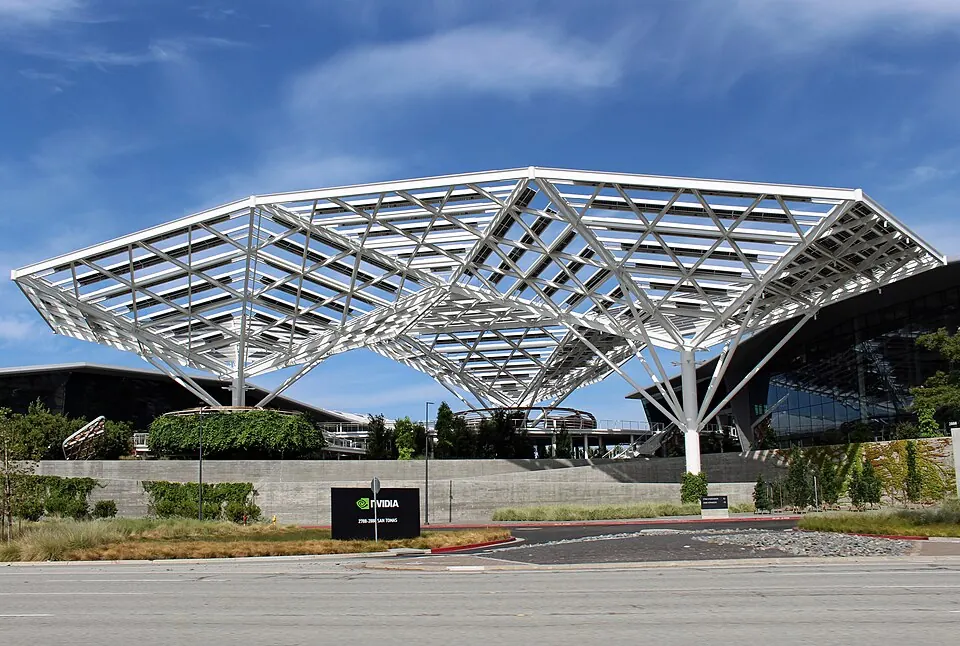
The S&P 500 did not crash on Friday. Apple simply became the most valuable company on earth again, and it did it while falling.
Apple closed with a market capitalisation of $5.03 trillion, down 1.2 per cent on the day. Nvidia closed at $4.93 trillion, down 4.2 per cent. A hundred billion dollars now separates them, and the direction of travel is the point: it is the first time Apple has held the crown since briefly taking it in late July, and it is the cleanest sentence anyone has written about the AI trade all year.
Apple did not win because it shipped something extraordinary. It won because it declined to spend.
The week the invoice arrived
October ended with the worst month for the Nasdaq 100 since March 2025 — down 6.7 per cent — and the damage was concentrated exactly where the enthusiasm had been.
Alphabet had the worst trading day in its history on Thursday after search revenue came in short, and finished October roughly $758 billion lighter, its worst month ever. Intel fell nearly 29 per cent in a single session and more than 45 per cent across the month, its steepest one-month collapse in more than four decades. Micron dropped 5.5 per cent on Friday, Nvidia 4 per cent. CoreWeave and Nebius, the data-centre landlords of the AI boom, are down more than 30 per cent this month.
None of that is a market event in the ordinary sense. It is a repricing of one specific promise: that capital expenditure at this scale converts into revenue fast enough to justify itself.
Where the money actually went
The most useful number of the week is not the size of the losses. It is where the money went instead.
Since early October, 47 AI and chip stocks have shed roughly $5 trillion in market value, according to Yahoo Finance's tally. Over the same stretch, the other 625 large US stocks gained about $1.3 trillion, led by Eli Lilly, Walmart and Exxon Mobil. That is not capital leaving the market. It is capital leaving a thesis and finding somewhere quieter to sit.
Piper Sandler's measure of Wall Street's most-loved stocks tells the same story from the other end. The S&P 500 names with the highest share of analyst Buy ratings have trailed the least-loved names for most of 2026 — a gap of about 13 percentage points, measured year over year, and the third-worst stretch in data going back to 1995, behind only 2001–02 and 2010. Six of the nine most-favoured names are down this year. The exceptions are three build-out plays: Nvidia, Arista Networks and Comfort Systems.
"The Sell Side's MOST favored stocks have underperformed their LEAST favored stocks for the majority of 2026," Piper Sandler chief investment strategist Michael Kantrowitz wrote to clients this week. His conclusion is blunter still: "The AI beta-bubble appears to have already burst."
The private market blinked too
The tell that matters most is not in the index. It is in the funding round.
OpenAI is now seeking to raise up to $20 billion in its latest round, down from an earlier target of about $30 billion, CNBC confirmed on Saturday, following a Financial Times report. The round would value the company at $1.25 trillion post-money. It has not closed. The Friday deadline for investors to commit came and went with some of them cutting their allocations, and the terms remain subject to change.
For two years the private market has been the AI trade's floor — the place where conviction was cheapest to express and least observable. A flagship raise shrinking by a third in the same week that its public comparables lost trillions is the first hard evidence that the two markets are pricing the same doubt.
The balance sheets explain why. Meta posted negative free cash flow of $2.12 billion last quarter. Amazon's outflow swelled to $42.4 billion. Alphabet's reached $9.07 billion. Microsoft remains the only hyperscaler still generating positive free cash flow — and it fell 27 per cent to $18.63 billion and is now turning to the bond market, with a $25 billion debt offering, to keep building.
Apple, meanwhile, is projected to grow free cash flow 38 per cent to $142 billion in the fiscal year that ended on 30 September. Its shares are up 27 per cent in 2026, more than double the gain of second-placed Nvidia.
What the crown is actually rewarding
For three years the standard critique of Apple was that it had no AI story: late to the assistant, thin on models, conspicuously absent from the capex arms race. That critique was correct and, this year, irrelevant.
What the market bought on Friday was not intelligence. It was a balance sheet that does not require the build-out to work. Apple outsources much of the compute it needs, sells AI as a feature inside hardware people were already buying, and converts the difference into cash. In a quarter when three of the four largest cloud spenders burned cash and the fourth borrowed, that is not a laggard's consolation prize. It is the only business model on the list that does not depend on the next announcement.
There is a limit to how far that reading should be pushed. Apple's 27 per cent is a rotation, not a verdict on its products, and rotation is a fickle thing — the same money that arrived because Apple was safe can leave the moment something safer appears. The company still has to ship AI features that work, and its record there is mixed at best.
Two ways to read the same week
The charitable reading is that this is a rotation inside AI rather than an exit from it. Kantrowitz expects investors to migrate toward beaten-down AI companies with stronger underlying businesses as earnings growth slows — pickier about which part of AI they pay for, not done paying.
The harder reading is that the market has changed the question. For two years it asked who might win. This week it asked who can afford to wait, and the answer was the company that spent least. That is not a question about technology at all. It is a question about the conversion rate from capex to revenue, and the hyperscalers just gave the market a strange answer: their capital expenditure figures and forecasts for the quarter came in below analyst estimates even as they insisted the spending would continue.
Both readings point at the same three numbers over the next two quarters: whether AI search monetisation improves, whether 2027 capex guidance goes up or down, and whether OpenAI's round closes at $20 billion or gets trimmed again before it does.
The crown changed hands this week by a hundred billion dollars. It is worth remembering what it was awarded for. Not for building the future — for being able to pay for it in cash.
Sources: Bloomberg — Apple overtakes Nvidia, CNBC — OpenAI pares fundraising goal, CNBC — the AI buildout's cash strain, Yahoo Finance — Wall Street's favorites slump, Yahoo Finance — Alphabet's October wipeout, CNBC — market wrap
Apple Is Now Worth More Than Nvidia. It Got There by Not Building the AI Boom.
Nvidia fell four per cent and Apple fell one, and that was enough to hand the crown to the company that sat out the capex race. In a month when AI and chip stocks shed about $5 trillion, the market started paying for free cash flow instead of ambition.
← Hourlies Hourly · 2026-11-01 00:00 UTC Apple Is Now Worth More Than Nvidia. It Got There by Not Building the AI Boom. Nvidia fell four per cent and Apple fell one, and that was enough to hand the crown to the company that sat out the capex race. In a month when AI and chip stocks shed about $5 trillion, the market started paying for free cash flow instead of ambition. Image credit: Coolcaesar, C
More Hourlies Stories
Content on Anagnorisis is summarized, paraphrased, and editorialized from publicly available sources for length and clarity. Original sources are linked where available. All trademarks belong to their respective owners.