
Hourly ·
Bird flu has killed three Americans. The third one got it from a cow.
A Yakima County resident exposed at a dairy holding infected cattle died on Sunday — the first American killed by the cattle strain of H5N1, in a state that has logged 40 herd detections in under a month.
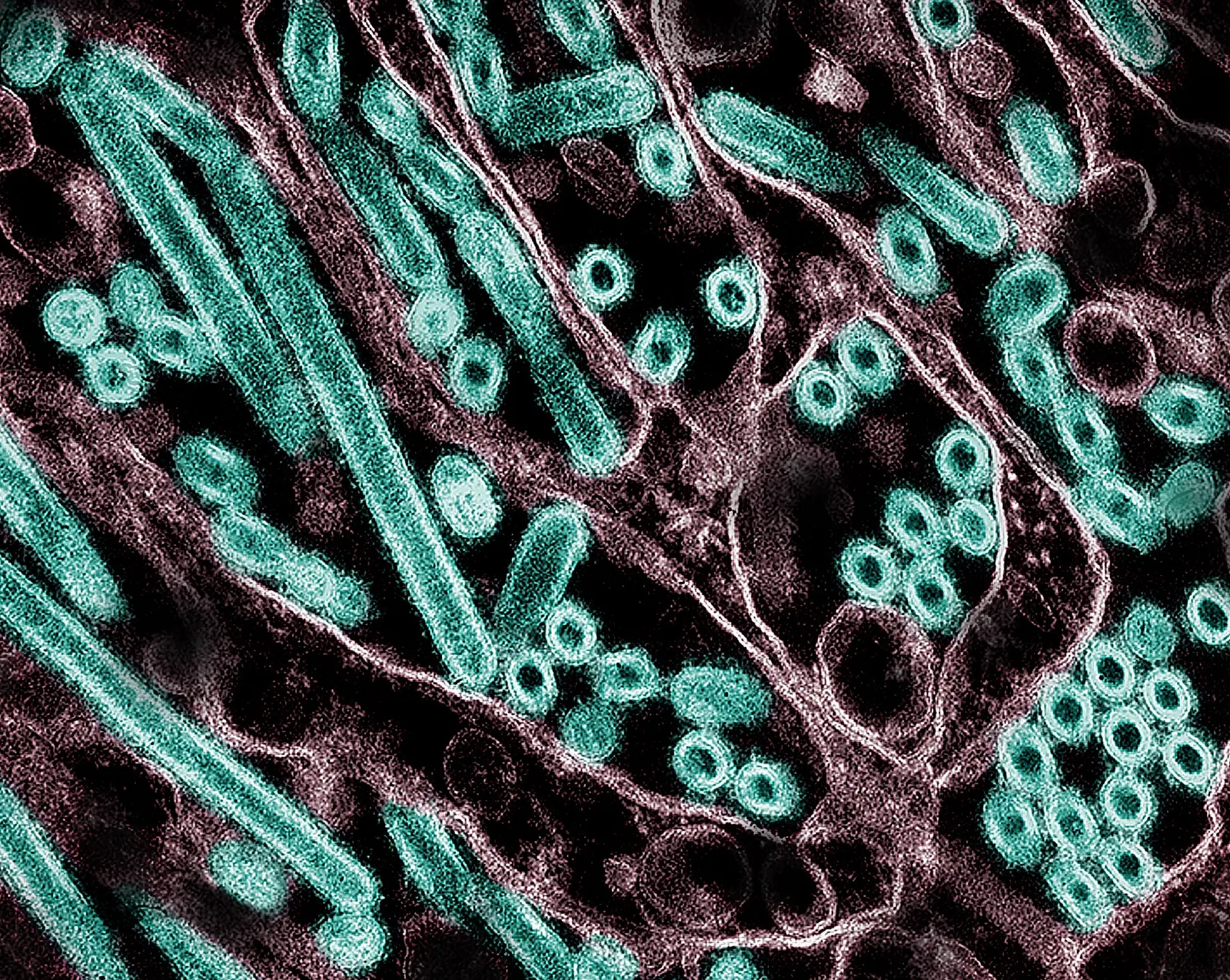
The first two Americans killed by bird flu caught it from birds. The third caught it from a cow.
A Yakima County resident with underlying health conditions died on Sunday from complications of H5N1, county health officials announced. The person had been severely ill and hospitalised as of Friday and had been exposed to avian influenza at a dairy holding infected cattle. Officials said they would not release the person's name, age or gender out of respect for the family.
That single sentence — exposed at a dairy — is the part that matters. It is the first time the United States has lost someone to the strain of H5N1 that jumped into cattle.
Three deaths, two different viruses, one direction of travel
The other two American deaths both came from birds. The first, announced in January 2025, was a 65-year-old Louisiana resident with underlying health conditions who fell critically ill after exposure to infected wild and backyard birds. The second, in November 2025, was an older adult in Washington state, again with underlying conditions, again after exposure to infected backyard birds — that one caused by a rarer cousin of the virus, H5N5.
Both were the outbreak as it had always behaved: a virus that lives in birds, spills into the people who handle them, and stops there.
Sunday's death is the first from the dairy outbreak, which began in March 2024 when highly pathogenic avian influenza was confirmed in US cattle for the first time. It is also the first American bird flu death of 2026, and it arrives with the case count in one county climbing faster than at any point since the cattle outbreak began.
What the numbers look like on the ground
Washington confirmed the virus in dairy cattle on 8 October. In the three and a half weeks since, the state has recorded 40 detections in dairy cows, according to USDA data, and Yakima County alone reports 33 infected herds.
Nationwide, USDA has logged 134 cattle cases this year across Texas, Washington, Idaho, Utah and Kansas. It lists no cases in other domestic livestock, swine included.
In Yakima, three people have now tested positive in under a month — all three exposed to infected herds, all three in the same county. The other two cases were announced alongside the death and, unlike the person who died, were not severely ill and were not hospitalised. The Yakima Health District says it is working with the state health department to trace and monitor close contacts.
Since the start of 2024, more than 70 human infections have been reported in the United States. Three have ended in death. There is still no known person-to-person transmission.
The reassurance is real, and narrower than it sounds
The CDC sequenced the virus from the person who died and found no changes that would make it spread more easily between people or cause more severe illness. That is the single most important fact in this story, and it is genuinely good news.
"Avian influenza can cause severe illness, particularly among people who have underlying health conditions," said Dave Atteberry, health officer for the Yakima Health District. "While this is a serious and heartbreaking outcome, the risk to the general public remains low."
It is worth being precise about what that reassurance is built on. A sequence tells you whether the virus carries the known markers of mammalian adaptation. It does not tell you how many exposures went uncounted. The American case tally of 70-odd over two and a half years is a count of people who were tested, and testing has mostly followed visible illness in people who knew they had been around sick animals. Every one of these outbreaks is measured through that lens, which means the human footprint of H5N1 in dairy country is a floor, not a total.
The other reason the number stays low is luck of anatomy. The virus binds to receptors deep in the lower respiratory tract far more readily than to the cells lining the human upper airway, which is why it kills the people it reaches and rarely reaches anyone else. That is a barrier, not a guarantee. It is also precisely the barrier that a prolonged, wide outbreak in a mammalian species can erode one mutation at a time.
The species that keeps coming up
Last month ProPublica reported that the virus is raging through a mink farm in Utah. Mink are the reason infectious disease people go quiet when they read that sentence: they carry both avian-type and human-type receptors in their airways, which makes them one of the few species where a bird virus and a human virus can meet in the same cell and swap notes.
That has been the standing worry since H5N1 started moving through mammals, and it has not happened yet — a fact worth holding onto rather than arguing with. But the setting matters. Fur farms are dense, genetically uniform populations of a species that is unusually permissive to influenza, and the Utah outbreak is the kind of event that turns a series of dead-end spillovers into a pool of virus with somewhere to go.
What to watch from here
Four things, in order of how quickly they would clarify the picture.
Whether the Yakima herd count keeps climbing past 33. Whether the contacts of the two mild cases clear their monitoring window without symptoms, which would be the strongest evidence yet that this virus still stops at the farm gate. Whether USDA records a detection in a state that has not seen one this year. And whether the sequence of the next human case looks like the sequence of this one, because a virus that kills one person and not the next is a virus whose behaviour is being set by the host, not the pathogen.
For anyone who handles poultry, livestock or dead birds, the guidance has not changed in three years and it is not complicated: respiratory and eye protection, gloves, and a low threshold for getting tested after an exposure.
The thing that changed this weekend is smaller and harder to file away. For two years, the story of H5N1 in America has been a story about a virus that got into the food supply and, so far, mostly spared the people working in it. On Sunday it killed one of them, and it did it through the cattle.
Sources: ABC News — Washington state resident dies from bird flu following exposure to infected cattle, CBC News — U.S. records first human bird flu death since last year, Yakima County — media releases, Yakima County — avian influenza, USDA APHIS — HPAI confirmed cases in livestock, ProPublica — bird flu on a Utah mink farm
Bird flu has killed three Americans. The third one got it from a cow.
A Yakima County resident exposed at a dairy holding infected cattle died on Sunday — the first American killed by the cattle strain of H5N1, in a state that has logged 40 herd detections in under a month.
← Hourlies Hourly · 2026-11-03 00:00 UTC Bird flu has killed three Americans. The third one got it from a cow. A Yakima County resident exposed at a dairy holding infected cattle died on Sunday — the first American killed by the cattle strain of H5N1, in a state that has logged 40 herd detections in under a month. Image credit: NIAID, CC BY 2.0 ( license ) The first two Americans killed by bird fl
More Hourlies Stories
Content on Anagnorisis is summarized, paraphrased, and editorialized from publicly available sources for length and clarity. Original sources are linked where available. All trademarks belong to their respective owners.