Hourly ·
A Suspected Chinese Spy Got Close to Jensen Huang. Washington Knew for a Year.
US intelligence concluded that Alice Huang, an executive at Singapore's Megaspeed, was a Chinese asset who built a close relationship with Nvidia's Jensen Huang. Trump was briefed about a year ago and did nothing. Beijing calls the report a smear.
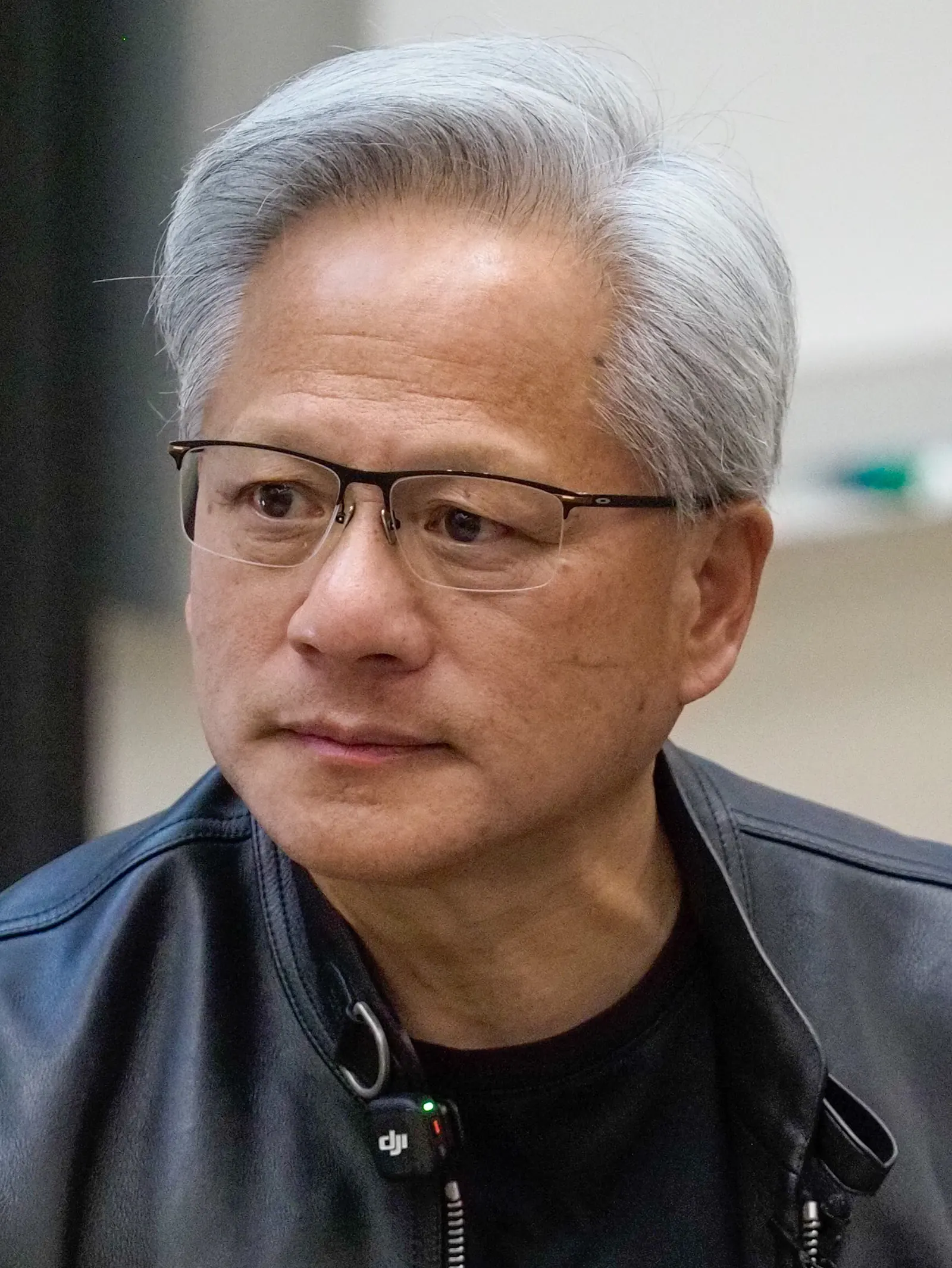
The report landed on Thursday, and by Friday lunchtime Beijing had already called it a smear. US intelligence agencies have concluded that a Chinese businesswoman who built a close relationship with Nvidia chief executive Jensen Huang was gathering information for the Chinese government, BBC News reported.
Her name is Alice Huang, also known as Huang Le. She is an executive at Megaspeed, a Singapore-based data-centre company that had already spent time under American scrutiny over allegations it was helping move restricted Nvidia chips into China. That earlier suspicion is what put her under surveillance. The surveillance is what produced the finding.
The mechanics are the interesting part. According to the reporting, US agencies monitoring Alice Huang intercepted communications between her and an American citizen whose identity was masked in the raw intelligence. The mask was later lifted through a process called "unmasking," and the citizen turned out to be Jensen Huang — the head of the most valuable company in the world, and the most consequential private-sector voice in Washington's argument about how to compete with China on artificial intelligence.
The two Huangs are not related. There is no suggestion in the reporting that Jensen Huang knowingly passed anything sensitive, and officials cited by the Times initially believed he was unaware of what she was allegedly doing. It is also unclear what she is said to have passed, how valuable it was, or when the relationship is believed to have begun.
What was actually taken
Strip out the espionage vocabulary and the alleged loss is not a document. It is context.
Alice Huang ran business with a company that buys and rents out the hardware the AI boom runs on. That gave her a legitimate reason to be in the room with Nvidia's chief executive, repeatedly, over time. What a relationship like that yields is not a blueprint. It is a sense of what the most important supplier in the industry is thinking — where allocations are going, which customers are being prioritised, how the company reads the export rules, and, in this case, potentially how the Trump administration is thinking about all of it.
The Guardian reported that White House officials were alarmed by her access precisely because of how close Jensen Huang has become to President Donald Trump. That is the sharp end of this. Huang is not a bystander in the chip policy fight; he has argued publicly that selling more Nvidia product into China is necessary for American competitiveness, and he has had the president's ear while making that case.
Trump was briefed on the intelligence findings roughly a year ago and chose not to act on them, ABC News reported. That single sentence is doing more work than any of the spycraft around it.
The denial, from three directions
Nvidia's response, from spokesman John Rizzo, is that the interactions were ordinary: "Jensen's interactions with Ms Huang are not unusual or unexpected." Meetings with customers, he said, are part of a chief executive's job, and customers like Megaspeed "receive ordinary business information — not sensitive Nvidia trade secrets — and zero information relevant to national security." The company also said the earlier diversion allegations against Megaspeed were "thoroughly investigated and debunked last year."
Megaspeed said its current leadership took the allegations seriously, had appointed external legal advisers to run an internal investigation, and had told the US government it was willing to cooperate. It is unclear how closely Alice Huang remains involved with the firm. The AFP, attempting to reach the company, called the number listed on its website and reached someone who said they had never heard of it and that the line was residential, the Taipei Times reported.
Beijing's response was quicker and flatter. Foreign ministry spokesman Guo Jiakun told a regular briefing that the report "is based on groundless speculation and is nothing more than an attempt to smear China." At a separate briefing he called the claims "baseless and purely slanderous smears."
The perimeter was built for cargo, not for people
Here is the structural problem the story exposes, and it is bigger than one executive.
American export controls on advanced AI chips are a physical regime. They are enforced at ports, on invoices, through end-user certificates and customs manifests. Since 2022 Washington has restricted sales of the most advanced Nvidia parts to China, and while the Trump administration has loosened some of those restrictions, the machinery of enforcement still assumes the threat travels in a box.
The intelligence that produced this story did not come from a box. It came from watching a person who was already suspected of moving boxes, and discovering that her more valuable access ran through a relationship rather than a supply chain. A customs form cannot inspect a chief executive's calendar. There is no licence requirement for a conversation.
That asymmetry is not fixable by adding names to an entity list. It is the reason counter-intelligence exists as a separate discipline from export control, and the reason the two rarely talk to each other well: one is built to stop objects at a border, the other to notice when the border has already been walked around.
And the timing is not incidental. Trump is due to meet Xi Jinping next month. The question of how much American compute China gets is on the table for that meeting, and the man most likely to shape the president's view of it is the man a suspected foreign asset spent months getting close to.
What we actually know
It is worth being precise about the epistemic status of all this, because a story like this generates more certainty than its sourcing supports.
The claim is that unnamed officials, briefed on classified intelligence, have reached a conclusion. We have not seen the intelligence. We have not seen the evidence that Alice Huang was acting on Beijing's behalf rather than simply being a well-connected businesswoman with an interest in chip allocations. The reporting itself concedes that the content and value of what she allegedly passed are unknown, and that Nvidia's chief executive is not accused of knowingly doing anything.
Unmasking is a lawful but tightly controlled process, and its appearance in a newspaper is itself a signal that someone inside the system wanted this looked at. That is a fact about Washington, not about Beijing.
The denials are equally unverifiable. Nvidia has an obvious interest in the story being routine. Megaspeed has an obvious interest in cooperating loudly. Beijing denies everything as a matter of course, and would deny it whether or not it were true.
What is left, once you set the claims and the denials side by side, is a documented pattern that neither side disputes: a woman under investigation for chip diversion built sustained access to the most important executive in the AI supply chain, US intelligence watched it happen, the president was told about it a year ago, and nothing changed.
The lesson nobody will write into a rulebook
Every chokepoint America has built in this race is a thing you can point at — a fab, a lithography machine, a GPU, a licence. Those are the assets that get guarded, audited, and litigated.
The asset that actually moved here was trust. It cannot be export-controlled, because it does not cross a border in a form anyone can inspect, and it cannot be revoked by a regulator, because it is extended by a person.
The uncomfortable question the report leaves behind is not whether Alice Huang was a spy. It is how many other relationships, in how many other boardrooms, were built for the same reason — and whether the only reason we are reading about this one is that the man on the other side of the table happened to be important enough for someone to unmask.
Sources: BBC News | The Guardian | ABC News | Taipei Times
A Suspected Chinese Spy Got Close to Jensen Huang. Washington Knew for a Year.
US intelligence concluded that Alice Huang, an executive at Singapore's Megaspeed, was a Chinese asset who built a close relationship with Nvidia's Jensen Huang. Trump was briefed about a year ago and did nothing. Beijing calls the report a smear.
← Hourlies Hourly · 2026-10-31 00:00 UTC A Suspected Chinese Spy Got Close to Jensen Huang. Washington Knew for a Year. US intelligence concluded that Alice Huang, an executive at Singapore's Megaspeed, was a Chinese asset who built a close relationship with Nvidia's Jensen Huang. Trump was briefed about a year ago and did nothing. Beijing calls the report a smear. Image credit: Andersei
More Hourlies Stories
Content on Anagnorisis is summarized, paraphrased, and editorialized from publicly available sources for length and clarity. Original sources are linked where available. All trademarks belong to their respective owners.