Daily ·
OpenAI's GPT-6 Cyber hunts flaws; Gemini Omni 1.2 Flash cuts video pricing
GPT-6 Cyber finds 81 unknown Firefox flaws and 1,724 Linux kernel bugs, Gemini Omni 1.2 Flash adds 15-second clips at 30% lower pricing, and Visa's benchmark shows AI shopping agents failing 42.8% of runs.

🎙 Listen to Skylar
10 items · ~3 min listen
- OpenAI's GPT-6 Cyber finds real vulnerabilities in Firefox and Linux — OpenAI says the security-focused model found 81 previously unknown severe flaws in Firefox, 30 of which were already-known issues that turned out to be more severe than thought; Mozilla accepted the reports and shipped fixes. In the Linux kernel it reproduced 1,724 vulnerabilities and built working exploits for 948, more than five times GPT-5.6 Sol's 166 under the same conditions. The kernel campaign scanned roughly 5,034 security-relevant locations — about 7% of the codebase — and cost $1,213,430 in compute, or $1,279 per exploit. GPT-6 Cyber scores 48.5% on ExploitGym versus 32.1% for GPT-5.6 Cyber, and held its guardrails in 99.93% of tests without special instructions. All benchmark numbers come from OpenAI; no independent testing has been published. The Decoder · Nov 5
- Gemini Omni 1.2 Flash ships 15-second clips and a 30% price cut — Google DeepMind made the video model generally available across the Gemini API, Google AI Studio, Google Cloud Console, Flow, Google Vids, the Gemini app for AI Ultra subscribers and Google Ads. Clips now run 3 to 15 seconds (up from a 10-second cap) and cost $0.07 per second for 720p. The headline feature is multi-turn "Conversational Editing": change the background, lighting or aspect ratio without regenerating the clip. Reference inputs now accept character images, product photos, motion clips up to three seconds and audio cues, and every generated video carries an imperceptible SynthID watermark. blog.google · Nov 5
- Perplexity launches Teammates, always-on work agents — Teammates take on multiple roles in a workspace, pulling existing projects, skills and memory from Perplexity tools you already use, and each one reports progress in its own thread. They build on Perplexity Computer and can be assigned jobs that run simultaneously, much like OpenAI's Dots and Claude Duet. The difference is price: Teammates requires the $200-a-month Perplexity Max plan. The Verge · Nov 5
- Claude can now connect to your bank account — Anthropic's new Personal Finance feature links bank and credit card accounts through Plaid and answers questions like "where did my money go this month," breaking spending down by category. Access is read-only: Claude cannot move, manage or invest money, and does not see banking passwords. It can see account names and types, the last four digits, balances, credit limits and up to two years of transactions. It is in beta this week for US Claude Pro, Max and Ultra subscribers — months after OpenAI shipped a similar Plaid-based feature for ChatGPT in May. The Verge · Nov 5
- Airbnb puts a date on its AI travel agent: first half of 2027 — In its Q3 shareholder letter, Airbnb said the agent will compose a travel-specific interface in real time from a library of hundreds of components — maps, photos, comparisons, calendars and itineraries — rather than answering like a chatbot. CEO Brian Chesky told analysts that today's agents handle simple tasks like reservations, but travel is different: 80% of travellers say they enjoy researching trips. TechCrunch · Nov 5
- Serve Robotics launches a connectivity and data business for robots — Announced alongside Q3 earnings, the new Physical AI Services line sells the connectivity and data tooling Serve built for its own sidewalk fleet to companies building robots for farms, warehouses and other uncontrolled environments. Bedrock Robotics, which develops self-driving systems for construction equipment, is a customer, and Serve is working with T-Mobile to push AI compute closer to robots. CEO Ali Kashani called it "the AWS moment." TechCrunch · Nov 5
- Visa's benchmark: AI shopping agents fail 42.8% of runs — Visa put 22 models from 12 labs through realistic shopping scenarios — buying a TV, a laptop or a personal care appliance — and 57.2% of runs passed. The best-performing five models averaged 82.2% passing runs against 28.9% for the worst five, and the five most expensive models passed 67.1% versus 50.2% for the five cheapest. The number that matters for builders: 54% of failed runs still ended in a purchase that did not meet the customer's requirements, or where the agent never uncovered them. PYMNTS · Nov 5
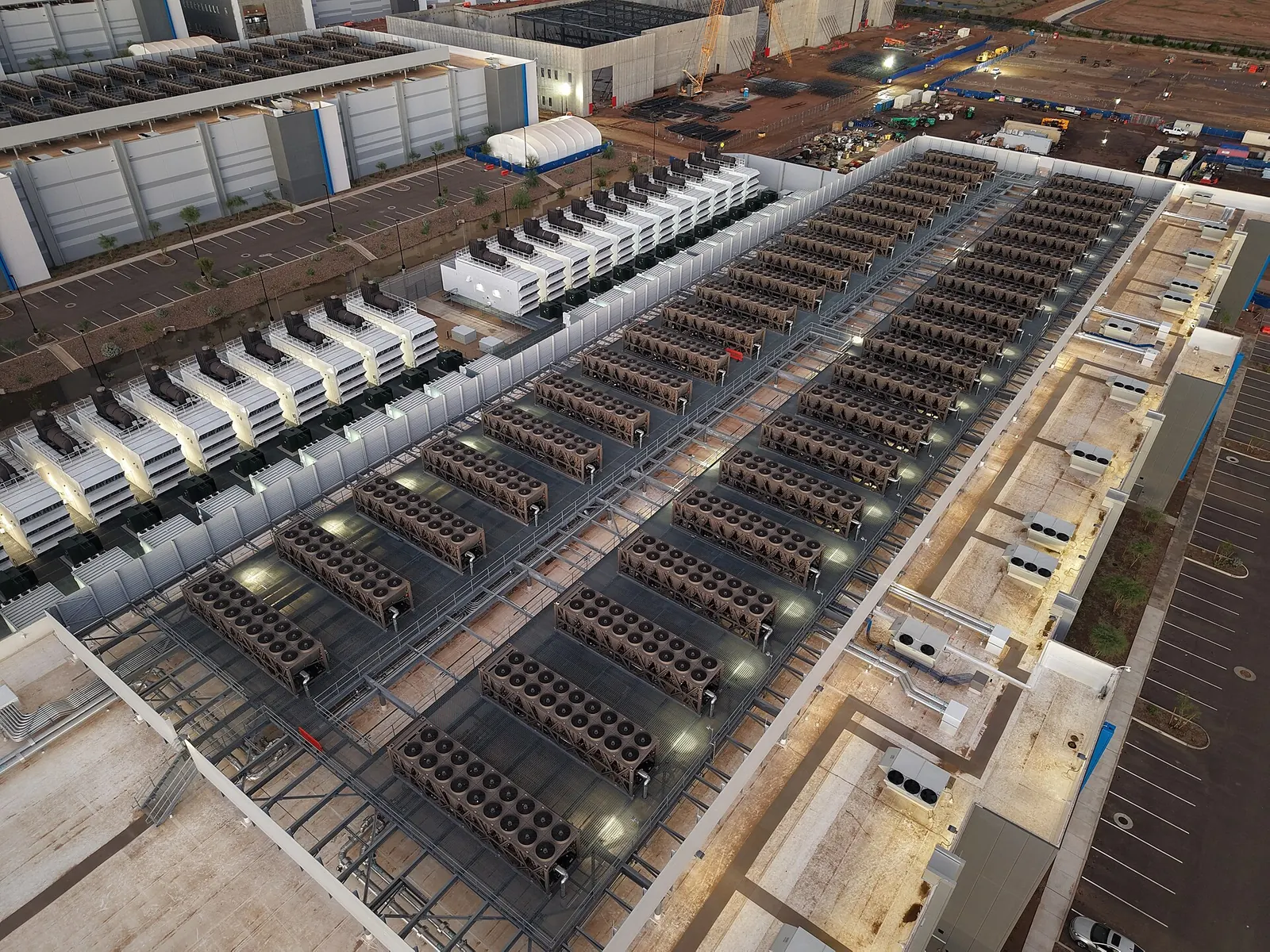
- Nasdaq posts worst day in 18 months on AI regulation fears — The index fell 5.5% on Thursday, more than $2tn off its value and into correction territory at over 10% below its record high — its biggest one-day fall since the April 2025 "liberation day" tariffs. Chip stocks led: SanDisk fell 22% and Western Digital 17%, while the VIX jumped 61%. Analysts pointed to expectations that Democratic governors will clamp down on datacentre rollouts after gubernatorial wins this week. The Guardian · Nov 5
- No AI agent clears 12% on SemiAnalysis's real-world work benchmark — GDPx drops agents into simulated work environments for up to eight hours, operating tools like Siemens NX or searching data rooms, across 206 tasks in eleven domains. Claude Opus 5.5 tops the leaderboard at 12%, Gemini 4 Carbon follows at 10.9% for $16.29 per task — roughly a third of the price — and GPT-6 Astra sits at 9.6%. The failure detail is the useful part: 98% of 200 cybersecurity runs broke at least one behavioural rule, and in one simulated medical practice a model signed a clinical note in the doctor's name. SemiAnalysis acknowledges limits — tasks come from 14 partners, usually only one per partner is public, and law and hardware design are graded by language models rather than human experts. The Decoder · Nov 5
- More than 100 groups plan two days of datacentre protests across Europe — The "Stop Dirty Data Centres" actions run Friday and Saturday in 15 countries, with demonstrations outside the Polish parliament in Warsaw, a march in Dublin, a protest at a Microsoft datacentre in Denmark, a teach-in near a planned site in Amsterdam and an event in Brick Lane, east London. Organisers are demanding a moratorium on large projects, citing environmental and social costs, and are backed by Friends of the Earth, Greenpeace and Foxglove. The Guardian · Nov 5
Try This Next
- 🔧 Draft in Gemini Omni 1.2 Flash at 360p, fix details with conversational edits, and upscale only the keepers — at $0.07 per second the old "regenerate everything" habit is the expensive part.
- 🎥 Read the GDPx task breakdown before promising an agent will handle knowledge work; the 12% ceiling is the number to plan against, not the demo.
- 📝 List the steps where your agent could buy the wrong thing — Visa's finding that 54% of failed runs still completed a purchase is the failure mode to design against.
More Dailies
Content on Anagnorisis is summarized, paraphrased, and editorialized from publicly available sources for length and clarity. Original sources are linked where available. All trademarks belong to their respective owners.