Hourly ·
The Kagome Code: AI Cracks a Japanese Basket-Weaving Pattern to Find Two New Superconductors
Machine learning unlocked two previously unknown superconductors by spotting a geometric pattern borrowed from centuries-old Japanese craft — and scientists say thousands more could follow.
For decades, finding a new superconductor was mostly luck.
Over 7,000 have been identified since the phenomenon was first observed in 1911, but the vast majority were discovered serendipitously — a physicist trying one more material combination, hoping for a breakthrough. The number of possible elemental combinations is so vast that brute-force searching was never an option.
That era may have just ended.
An international team led by Aalto University in Finland has demonstrated that machine learning can systematically hunt for superconductors, and the proof arrived in late June: two previously unknown materials, YRu₃B₂ and LuRu₃B₂, both confirmed to carry electricity with zero resistance.
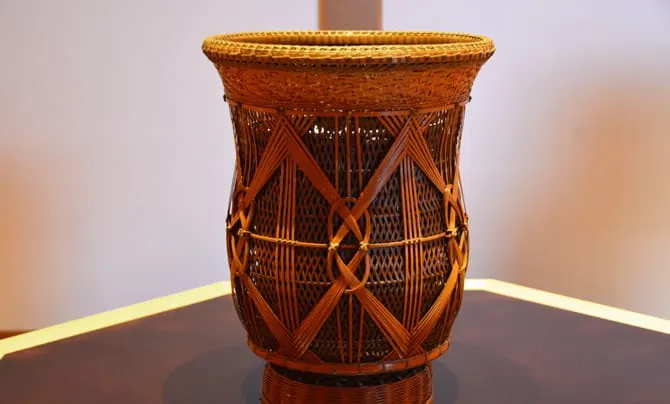
What makes the discovery especially elegant is the geometry. Both materials owe their superconducting properties to electrons arranged in a kagome lattice, a hexagonal weave pattern named after traditional Japanese basket-making. The same pattern that has held bamboo together for centuries now holds the key to one of physics' hardest problems.
The team didn't just find two new materials. They built a workflow. Machine learning pre-screens candidate combinations from a near-infinite chemical space, quantum calculations narrow the list, and experimental collaborators — in this case, Professor Emilia Morosan's lab at Rice University — synthesize and test the survivors.
"This approach will greatly speed up superconductor discovery in the future," said Professor Päivi Törmä, who leads the SuperC consortium behind the research. The consortium, launched in 2023, has set an ambitious target: find a room-temperature superconductor by 2033.
If they succeed, the implications are hard to overstate. Superconductors that work without expensive cryogenic cooling could replace conventional conductors in power grids, data centers, and computing hardware. "Global energy consumption could be slashed and the heat footprint of the ICT sector vastly reduced," Törmä said.
The paper was published in Physical Review Research. And the researchers are clear-eyed about what comes next: two materials is a proof of concept. Thousands more may be waiting.
Sources: Aalto University, Interesting Engineering
王者荣耀代码:AI破解日本篮筐编织模式发现两种新超导体
机器学习通过发现一种借用自数世纪前日本工艺的几何图案,解锁了两种此前未知的超导体——科学家表示,可能还有数千种类似的材料等待被发现。
← 周报 Hourly · 2026-07-02 00:00 UTC 魈神代码:AI 解锁了源自日本传统编织工艺的一个几何模式,发现了两种新的超导体 科学家表示,数千种新型超导体可能随之而来。数十年来,发现一种新超导体大多是靠运气。已知有超过7,000种超导体。 → 周报 Hourly · 2026-07-02 00:00 UTC 魈神代码:AI破解了源自日本传统编织工艺的一个几何模式,发现了两种新的超导材料 科学家称,数千种新型超导材料可能随之而来。数十年来,发现一种新超导体大多是靠运气。已知有超过7,000种超导材料。
More Hourlies Stories
Content on Anagnorisis is summarized, paraphrased, and editorialized from publicly available sources for length and clarity. Original sources are linked where available. All trademarks belong to their respective owners.