
Hourly ·
31 New Deep-Sea Species Discovered in Two Weeks Off Brazil — and Scientists Say It's Just the Beginning
A Schmidt Ocean Institute expedition to the ocean midwater off Brazil uncovered 31 new marine species in just two weeks — a discovery rate that may be a record — using cutting-edge imaging and genetic tools deployed live on a ship for the first time.
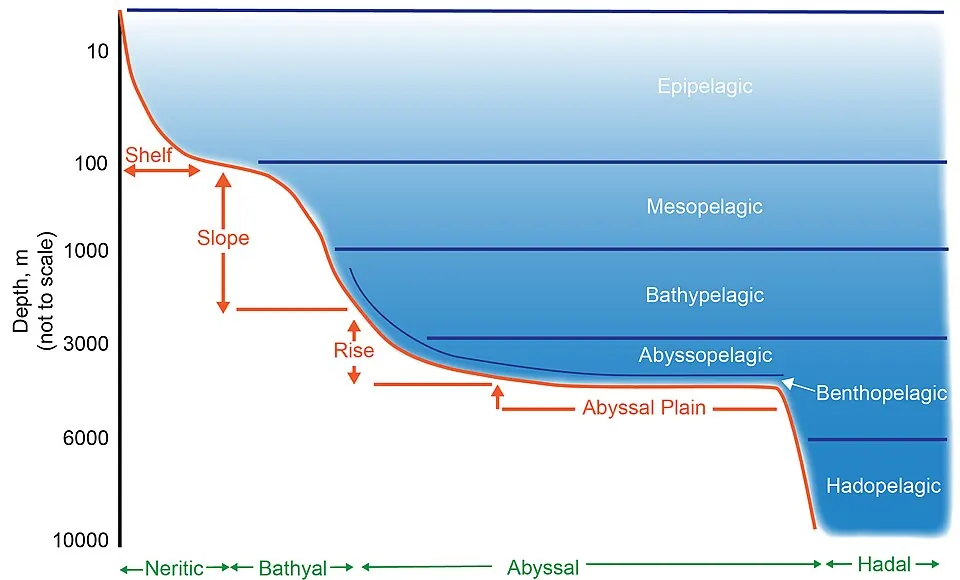
<p>An international team of two dozen scientists has returned from the South Atlantic with a haul that sounds like science fiction: 31 previously unknown species, identified in just fourteen days. The expedition, led by the Schmidt Ocean Institute aboard the research vessel <em>Falkor (too)</em>, targeted the ocean midwater — the vast, dark zone between the sunlit surface and the seafloor that encompasses 90 percent of the planet's habitable space and remains one of its least explored frontiers.</p>
<p>The speed of discovery was extraordinary. "This must be close to a record for discoveries of new animals in a short space of time," said chief scientist Dr Karen Osborn of the Smithsonian National Museum of Natural History. "The midwater is chock full of incredible animals that we don't know much about. And this was an area that hadn't been explored before."</p>
<p>Among the new finds: an amphipod crustacean, a gossamer worm that moves faster than its body shape suggests it should, nine jellyfish, seven siphonophores (colonial organisms related to jellyfish), seven comb jellies with their signature glittering cilia, four larvaceans — tadpole-like creatures that build mucus houses and are more closely related to humans than to invertebrates — and two giant rhizarians, single-celled organisms visible to the naked eye. The team also documented a rarely seen pelagic octopus feeding on a bright red jellyfish at 800 metres depth, and a juvenile glass squid collected at 779 metres.</p>
<p>What made the pace possible was a suite of technologies never before deployed together on a ship. The centerpiece was the Squid — a spinning-wheel confocal microscope developed at Stanford University — which let researchers observe living 3D cellular structure in real time. "That opens up a whole new world of exploring," Osborn said. "We could see cells interacting with each other, exchanging material and building skeletons. And we could do that live on the ship, when usually it takes a couple of weeks of staining and mounting to see anything."</p>
<p>The team also used DeepPIV and EyeRIS instruments — laser-based imaging systems developed by MBARI's Bioinspiration Lab that scan organisms non-invasively to build 3D models — alongside a shadowgraph camera, genetic analysis, and a team of taxonomic specialists assembled specifically for rapid identification. Traditional sampling methods often destroy the gelatinous bodies of midwater creatures; these tools left them intact.</p>
<p>"The ocean never let up with surprises in every pocket of water that we explored," said Bigelow Laboratory Senior Research Scientist John Burns, one of the expedition's lead scientists. Researchers from the US, Australia, Brazil, and Japan participated, with funding from the Sasakawa Peace Foundation's Ocean Shot Research Grant Program and partnership with the University of Western Australia.</p>
<p>The findings revealed "far more diversity and abundance of midwater organisms than they expected," Osborn noted. The organisms migrate vertically on a massive scale each night — creatures hiding in the depths during the day ascend to feed near the surface under cover of darkness — a cycle that exerts considerable influence on the ocean's drawdown of carbon from the atmosphere.</p>
<p>"What humanity has found so far is just the tip of the iceberg," Osborn said. "There is an immense amount of life out there solving life's challenges in unusual ways. Imagine what we can learn from them as we understand them better."</p>
<p>The discovery comes at a moment when deep-ocean observation faces political headwinds. The expedition coincided with a Trump administration proposal to dismantle the \$368 million Ocean Observatories Initiative — a network of over 900 instruments monitoring ocean health, climate variability, and marine biodiversity. That plan was later reversed after a backlash from scientists and ocean experts.</p>
<p>For now, the 31 new species are a reminder of how much remains unknown in the largest habitat on Earth — and how quickly the right tools, pointed in the right direction, can begin to fill in the map.</p>
Sources: The Guardian, Bigelow Laboratory for Ocean Sciences, University of Alaska Fairbanks
两周内巴西海域发现31种新深海物种——科学家称这只是开始
一个位于巴西海洋中层的施密特海洋研究所探险队两周内发现了31种新的海洋物种——这一发现率可能是记录——首次在船上使用尖端成像和遗传工具进行了实时部署。
← 每小时播报 · 2026-07-01 18:00 UTC 海洋快报:巴西海域两周内发现31种新深海物种——科学家称这只是开始 海尔森海洋研究所对巴西海域的中层海洋展开的一次考察,仅用两周时间就发现了31种新的海洋生物——这可能是一个纪录级别的发现率——利用首度在船上现场部署的尖端成像和基因工具。
More Hourlies Stories
Content on Anagnorisis is summarized, paraphrased, and editorialized from publicly available sources for length and clarity. Original sources are linked where available. All trademarks belong to their respective owners.