
Hourly ·
Six Mind-Controlling 'Zombie Fungi' Found in Mexico's Forests, One Named for Guillermo del Toro
Researchers at the University of Guadalajara document six species of fungi that hijack ants and march them to their deaths — the first ever described for Mexico.
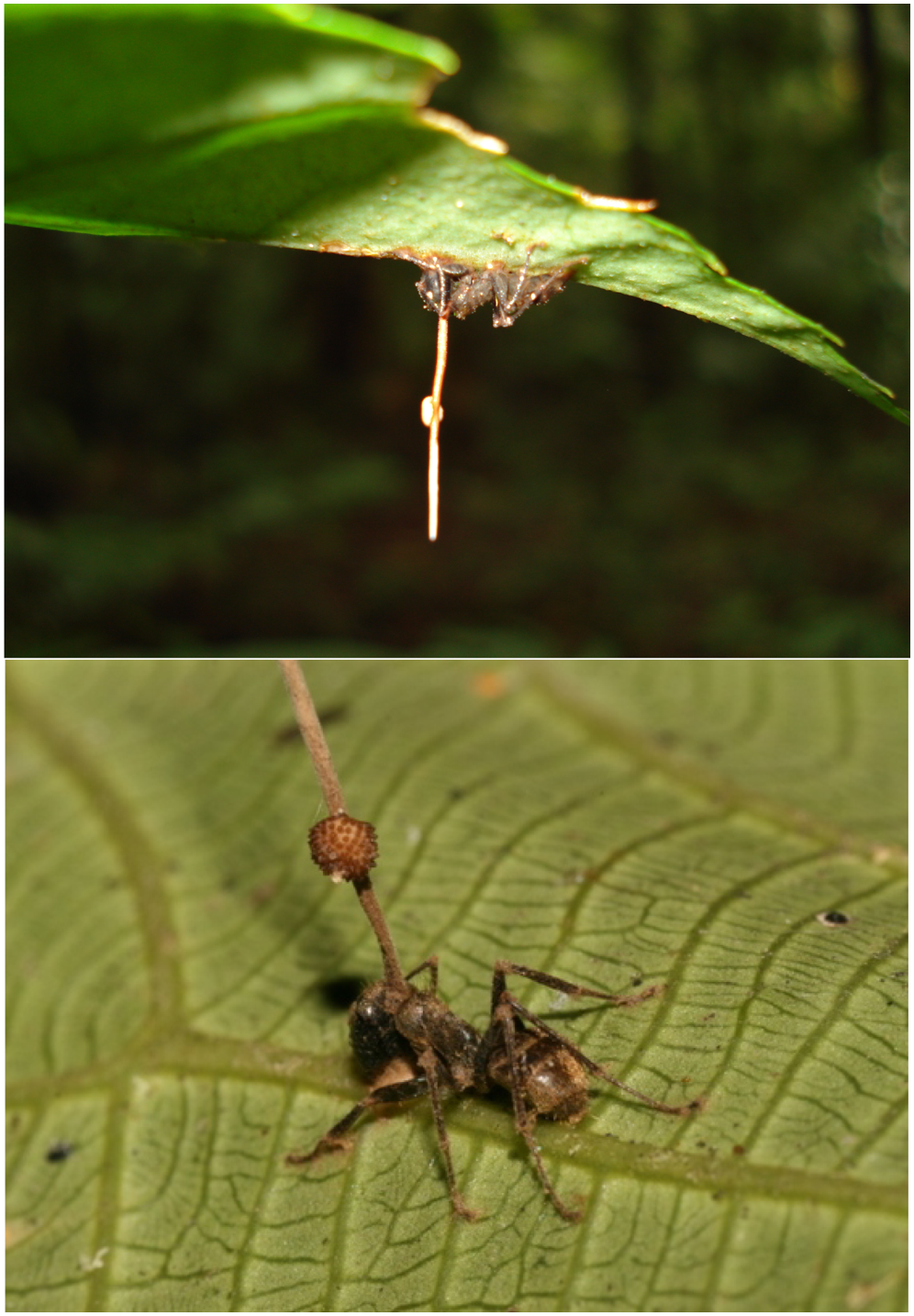
Deep in the tropical forests of Jalisco, a University of Guadalajara scientist has documented something that reads like horror fiction: six species of "zombie fungi" that infect ants and spiders, hijack their nervous systems, and march them to their deaths.
César Ballesteros, a researcher at the university's Center for Biological and Agricultural Sciences, identified the six entomopathogenic fungi — the first such species ever described for Mexico. The fungi release specialized metabolites that interfere with an ant's nervous system, making it walk erratically before steering it toward places researchers call "cemeteries": spots with the light and humidity the fungus needs to spread.
There, the ant makes its final move, clamping its jaws and legs onto bark, leaves, or the underside of a rock. The ant dies, and the fungus grows out of the body to release spores and reach new hosts.
Ballesteros named one of the new species Ophiocordyceps deltoroi, honoring filmmaker Guillermo del Toro — a Jalisco native, a University of Guadalajara graduate, and a lifelong chronicler of monsters. "He resembles the characters he has created in his career," the researcher said.
The pop-culture link runs deeper than the tribute. This kind of parasitic fungus is what inspired the video game and HBO series The Last of Us, where a fungal infection turns humans into zombie-like hosts.
Beyond the spectacle, the find is a milestone for Mexican science. Before this work, only a single "Mexican cordyceps" — one that attacks butterflies — had been described for the country. The six new species are exclusive to Mexico. And some of these fungi produce compounds being studied for potential use against cancer, tuberculosis, and multiple sclerosis.
Sources: ABC, Diario Libre
六種腦控式「行屍真菌」在墨西哥 forests中發現,其中一種以吉爾伯托・多拉托命名
大学城瓦拉亚贾斯的研究人员记录了六种入侵蚂蚁并驱使它们走向死亡的真菌——这是墨西哥首次描述。
← 小時報 小時版 · 2026-08-15 05:00 UTC 六種會操控心智的“僵尸真菌”在墨西哥森林中被發現,一種還以哥倫比亞導演 Guillermo del Toro 命名 美國加來瓦達加多柏大學的研究人員記錄了六種會劫持螞蟻並帶至死亡的真菌——這是在墨西哥首次描述的。 影像來源:David P. Hughes, Maj-Britt Pontoppidan,CC BY 2.5 ( license ) 深深地 在墨西哥森林中 发现 六种 会操控心智的 “ 僵尸 真菌 ” —— 这是 首次 描述 的 在墨西哥
More Hourlies Stories
Content on Anagnorisis is summarized, paraphrased, and editorialized from publicly available sources for length and clarity. Original sources are linked where available. All trademarks belong to their respective owners.