Hourly ·
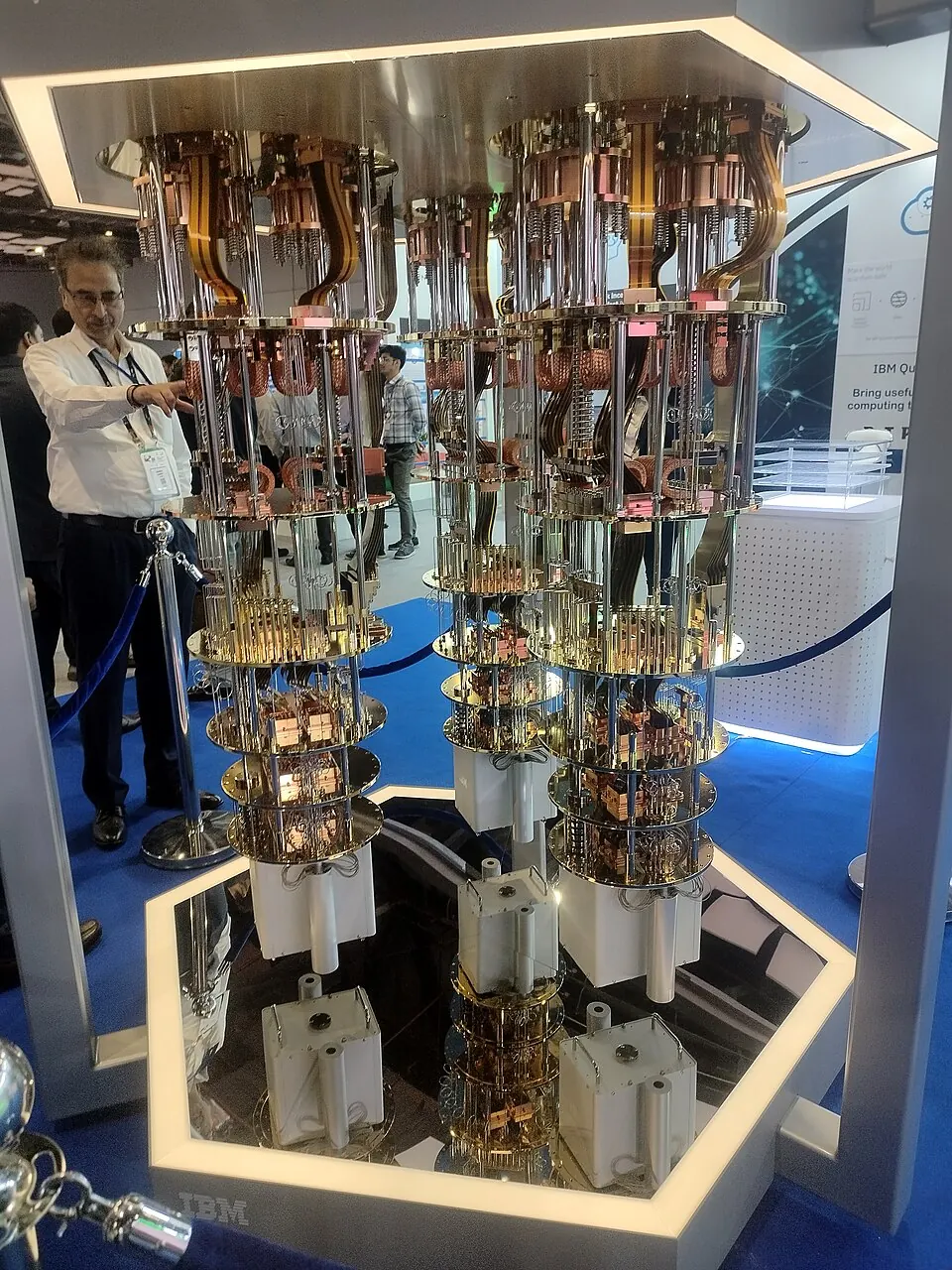
Nature Paper Casts Fresh Doubt on Microsoft's Quantum Breakthrough Claims
A UK physicist's critique in Nature questions whether Microsoft really created the Majorana particle at the heart of its quantum computing ambitions — reigniting a years-long scientific dispute.
Microsoft's claim to have created an exotic quasi-particle central to its quantum computing strategy is facing renewed skepticism from a UK physicist in a paper published by the journal Nature.
Dr. Henry Legg of the University of St Andrews, a long-term critic of Microsoft's quantum research, argues that a software tool the company used to validate its findings contained coding errors and lacked sufficient accuracy. Legg also asserts that Microsoft has still not proven it successfully created a Majorana zero mode — a theoretical particle first proposed in 1937 that underpins Microsoft's entire approach to building a fault-tolerant quantum computer.
"Last year Microsoft claimed they had built the equivalent of a precision Swiss watch," Legg told the BBC. "However when I opened the case to examine the mechanism, I found what looked like a chaotic jumble of mismatched parts. Something was making noise, but it didn't look like the breakthrough Microsoft had claimed."
Microsoft has pushed back. Dr. Chetan Nayak, the company's Technical Fellow and Corporate Vice President for Quantum Hardware, said Microsoft's "thorough rebuttal was accepted and published by Nature" and maintained that the software tool Legg criticized did not interpret the measurements behind the company's conclusions. Microsoft is also sharing its data with DARPA for independent arbitration, though it has declined to release some data publicly, citing commercial sensitivity.
This is not the first controversy. In 2021, a paper from a Microsoft-backed lab claiming evidence of Majorana particles was retracted. In 2025, Nature's editors appended a striking note to Microsoft's paper: "The results in this manuscript do not represent evidence for the presence of Majorana zero modes in the reported devices."
Despite the criticism, Microsoft has pushed forward aggressively. It has since released a second-generation Majorana chip which it says is 1,000 times more reliable than its predecessor, and executives have stated that powerful quantum computers are now "years, not decades" away. The stakes are enormous: quantum computing is already a multi-billion-dollar industry, and whoever solves fault-tolerant qubits first could unlock capabilities far beyond any classical supercomputer.
The dispute highlights a fundamental tension in quantum research: the race to commercialize is outpacing the scientific community's ability to independently verify extraordinary claims. As Legg's paper demonstrates, Nature's peer review process continues to serve as a critical checkpoint — even when the claimant is one of the world's most valuable companies.
Sources: BBC News
Nature论文再次质疑微软量子突破 claims
英国物理学家在《自然》杂志中的批评质疑微软是否真的创建了其量子计算雄心的核心Majorana粒子——重新点燃了一年多来的科学争论。
【每日快报】《自然》杂志质疑微软量子突破 科学界争议再起 一位英国物理学家在《自然》杂志中对微软声称制造出其量子计算雄心的核心奇异准粒子——Majorana费米子— ——提出了新的质疑,这引发了多年来的科学争论。微软声称已经成功制造了这种核心的奇异准粒子,它是其量子计算愿景的关键部分。
More Hourlies Stories
Content on Anagnorisis is summarized, paraphrased, and editorialized from publicly available sources for length and clarity. Original sources are linked where available. All trademarks belong to their respective owners.