Hourly ·

Light Chips, Deep Pockets, and China's AI Capital Rush
From valleytronic light-chips in Melbourne to DeepSeek's $7.4B war chest in Hangzhou — the AI race is manifesting at every layer simultaneously this June.
The AI story in late June 2026 is no longer just about models. It's about the full stack — from the physics of new computing substrates to the geopolitics of who gets funded and who gets to go public.
The Physics Layer: Light-Powered Computing
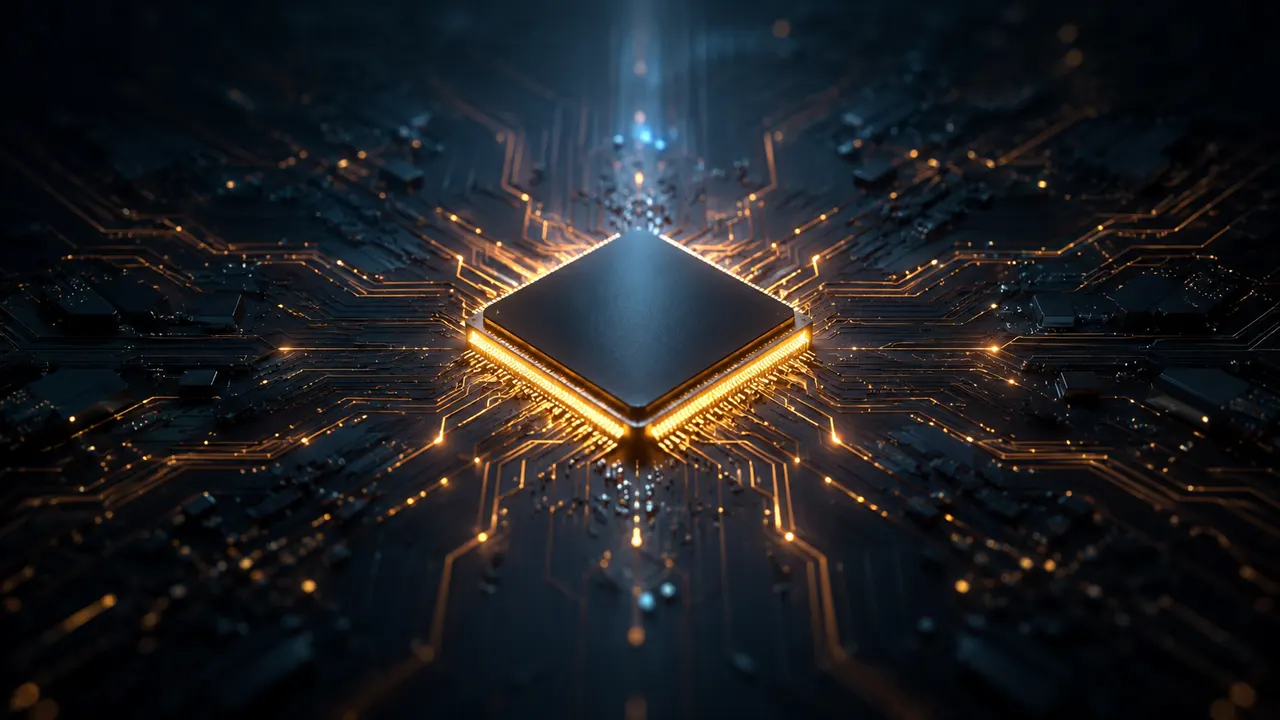
Researchers at Monash University in Australia have built the world's first fully integrated "valleytronic" chip — a device that generates, steers, and reads information carried by light, all on a single piece of silicon. Published June 2, the chip encodes data using a quantum property of light called the valley degree of freedom, using atomically thin materials and nanoscale structures. The promise: ultra-fast, energy-efficient computing that could accelerate both classical AI and quantum systems. Instead of pushing electrons through copper, you're routing photons through valleys — a fundamentally different physics for the post-Moore era.
The Capital Layer: DeepSeek's $7.4 Billion War Chest
Two weeks later, the other end of the stack lit up. DeepSeek — the Hangzhou-based AI lab that shocked the world with its cost-efficient reasoning models — closed its first-ever external funding round: $7.4 billion at a valuation above $50 billion, making it China's most valuable AI startup. Investors include Tencent and battery giant CATL. The catch, as Forbes noted: DeepSeek had previously prided itself on lean, scrappy independence. Now it has institutional money, institutional expectations, and all the pressures that come with a unicorn valuation. The question isn't whether DeepSeek can build — it's whether it can build on someone else's timeline.
The Policy Layer: China Opens the IPO Gates
On June 17, the Shanghai Stock Exchange published new rules explicitly designed to fast-track IPOs for "future industry" startups — quantum technology, nuclear fusion, brain-computer interfaces, and large language model companies. China's top securities regulator called it a "major task." The signal is unambiguous: Beijing wants its AI and deep-tech champions listing at home, not in New York. Combined with the DeepSeek raise, a pattern is emerging — China is building a domestic capital pipeline for AI that runs parallel to Silicon Valley's venture ecosystem.
Three stories, three layers of the same architecture. Melbourne rewrites the physics. Hangzhou raises the capital. Shanghai builds the exit ramp. The AI stack isn't just getting taller — it's getting its own dedicated infrastructure, and it's happening everywhere at once.
Sources: ScienceDaily — Monash University Valleytronics Chip, Forbes — DeepSeek $7.4B Fundraise, Reuters — China IPO Support for Future Industries
光芯片,深口袋,中国的AI资本竞赛
从墨尔本的谷得普光芯片到杭州深见科技的74亿美元战资——今年6月,人工智能竞赛正以每一层同时显现。
六月,AI的故事不再只是关于模型。从墨尔本的谷地光芯片到杭州DeepSeek高达74亿美元的投资战壕——这一季度里,中国在人工智能领域的竞赛正在各个层面同时显现。图片:- G.F. Nesbitt & Co., 喷墨打印机,公共领域(许可) 2026年六月的AI故事已不仅仅是关于模型。
More Hourlies Stories
Content on Anagnorisis is summarized, paraphrased, and editorialized from publicly available sources for length and clarity. Original sources are linked where available. All trademarks belong to their respective owners.