
Hourly ·
Largest 2D Map of the Universe Released: 5.6 Trillion Pixels, 4 Billion Cosmic Objects
The DESI Legacy Imaging Surveys team has released the largest-ever 2D map of the universe, containing 5.6 trillion pixels and nearly 4 billion stars and galaxies across 75% of the sky. Built from 263,000+ telescope exposures over 13 years, the publicly accessible map will guide dark energy research and serve as a reference for next-generation observatories.
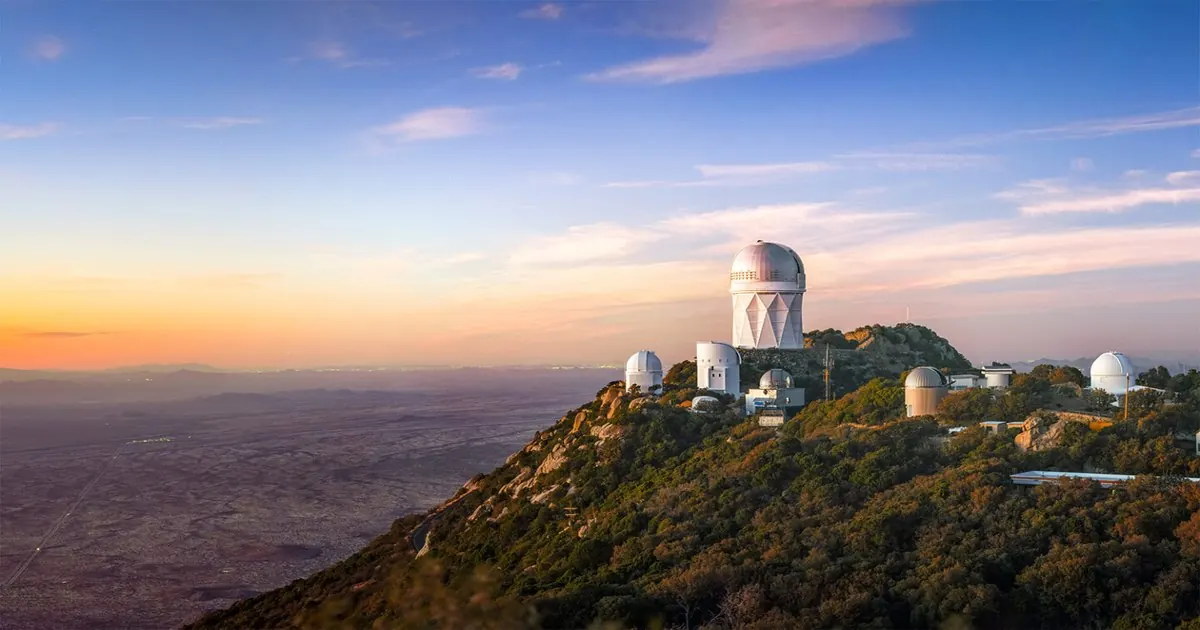
Astronomers have released the most comprehensive 2D color map of the universe ever created — a 5.6-trillion-pixel mosaic charting nearly 4 billion stars, galaxies, and other celestial objects across roughly three-quarters of the sky.
The map, produced by the DESI Legacy Imaging Surveys collaboration and released August 11, combines 263,407 individual telescope exposures captured over 2,285 nights spanning 13 years. More than 160 scientists contributed to data collection, with a core team of 20 producing the final dataset.
"It's part of the fabric of astronomy research now," said David Schlegel, co-lead of the Legacy Surveys and scientist at Lawrence Berkeley National Laboratory. "When you're working with astronomical objects today, you often start by pulling up the Legacy Imaging Viewer to see what you're looking at."
The map is publicly viewable through the Legacy Survey Sky Viewer, and researchers expect it will remain the most comprehensive 2D map of the universe for years to come. It covers the sky in both visible and near-infrared light, providing a deep view of the extragalactic universe unobscured by the dust and stars of the Milky Way.
The 2D map serves a critical purpose beyond cartography: it is the foundational imaging layer for the Dark Energy Spectroscopic Instrument (DESI), which completed its original five-year 3D survey in April 2026. DESI's early results have already produced surprising hints that dark energy — the mysterious force driving the universe's accelerating expansion — may be weakening over time, a finding that could reshape cosmology.
"But the skies belong to everyone, and this survey gives everyone the chance to explore the sky and marvel at its wonders," said Arjun Dey, co-lead of the Legacy Surveys and astronomer at NSF's NOIRLab.
To date, more than 1,800 scientific papers have referenced the Legacy Surveys data. As next-generation observatories like the Vera C. Rubin Observatory and NASA's Nancy Grace Roman Space Telescope come online, the map will serve as a foundational reference for comparing new observations.
Sources: Berkeley Lab, Sci.News
最大二维宇宙地图发布:56万亿像素,40亿星体
DESI 大规模宇宙二维图发布,包含560亿像素和近40亿星系及恒星,覆盖天空75%,由13年来26万三千多次望远镜观测数据构建,公开地图将指导暗能量研究并作为下一代天文台的参考。
← 小时精选 小时 · 2026-08-12 08:00 UTC 国际大新闻:发布迄今最大规模的二维宇宙地图,包含5.6万亿像素及近4亿颗恒星和星系,覆盖天空75%。此项由DESI遗产成像调查团队发布的公开可访问地图,是在长达13年期间收集了来自263,000多台望远镜曝光数据的基础上构建而成。
More Hourlies Stories
Content on Anagnorisis is summarized, paraphrased, and editorialized from publicly available sources for length and clarity. Original sources are linked where available. All trademarks belong to their respective owners.