Hourly ·
ITER's Superconducting Heart — Fusion Reactor Magnet Assembly Begins in France
The world's largest fusion experiment crosses a decisive threshold: all major superconducting magnets are complete and assembly has begun inside the tokamak pit at Cadarache, France. Thirty-five nations are betting $20+ billion that this machine can bottle a star.
In the south of France, a machine designed to replicate the physics of the Sun has just received its backbone.
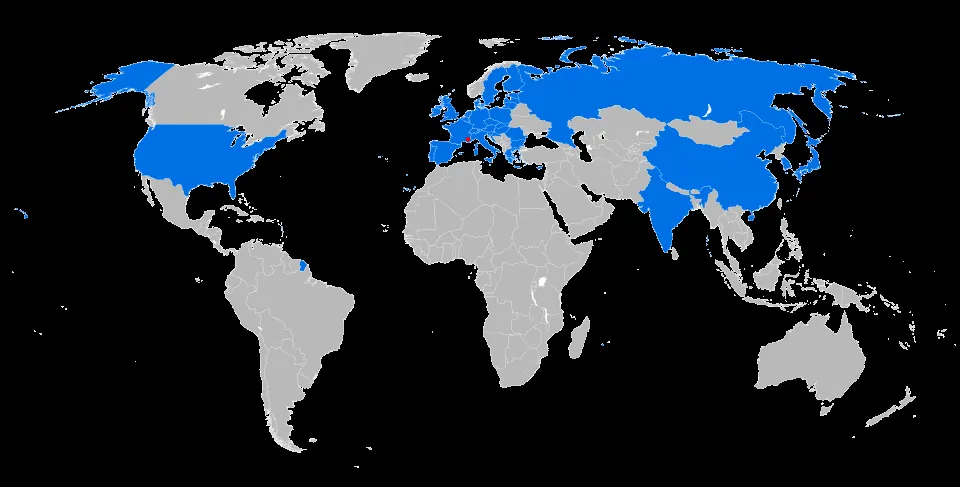
The ITER project — the International Thermonuclear Experimental Reactor — has completed all major components of its colossal superconducting magnet system and begun assembly inside the tokamak pit at Cadarache. The milestone marks the beginning of the end of a two-decade construction effort involving 35 nations, from the European Union to China, India, Japan, South Korea, Russia, and the United States.
At the centre of the achievement is the Central Solenoid, ITER's most powerful magnet — a six-module, thousand-tonne behemoth designed to deliver the pulsed electrical currents that initiate and sustain the superheated plasma within the doughnut-shaped tokamak chamber. Its final module was completed in the United States and is now ready for integration. Separately, the PF6 coil — a 350-tonne circular magnet manufactured by China's Institute of Plasma Physics — was lowered into the tokamak pit on 21 April, becoming the first of six poloidal field coils to be installed.
When fully operational, ITER aims to produce 500 megawatts of fusion power from just 50 megawatts of input — a tenfold energy return that would make it the first fusion device to achieve net energy gain. The plasma will be heated to 150 million degrees Celsius, ten times hotter than the Sun's core. Unlike nuclear fission, fusion produces no long-lived radioactive waste and carries no risk of meltdown.
The project has weathered years of cost overruns and schedule delays, but the head of the project recently confirmed that ITER is now both on budget and on schedule, with machine assembly in full swing. First plasma is targeted for the coming years, with deuterium-tritium fusion experiments — the real test — planned for 2035.
In an era of geopolitical fragmentation, ITER stands as a rare counterexample: a genuinely global scientific undertaking where rival powers still find common cause. Whether the reactor ultimately delivers on its promise of limitless clean energy remains an open question — but the magnets that will try to answer it are now in place.
Sources: Innovation News Network, World Nuclear News, NucNet
ITER心——法国开始组装聚变反应堆磁体 assembly
全球最大的融合实验跨越关键门槛:所有主要超导磁铁已完成,正在卡达克法国托克马克坑内组装。35个国家押注200多亿美元认为这台机器能“捕捉”恒星。
ITER的超导心脏——聚变反应堆磁体组装在法国开始 全球最大的聚变实验迈过一个关键节点:所有主要的超导磁体已经完成,并已经开始组装,位于法国卡达勒克的托卡马克坑内。已有35个国家押注200多亿美元,认为这台机器能够“捕捉”一颗星星。图片
More Hourlies Stories
Content on Anagnorisis is summarized, paraphrased, and editorialized from publicly available sources for length and clarity. Original sources are linked where available. All trademarks belong to their respective owners.