Hourly ·
How a 1956 Antitrust Ruling Unleashed Silicon Valley — and Why Today's AI Data Grab Is Its Mirror Image
In 1956, AT&T was forced to open 7,820 Bell Labs patents to the public, sparking Shockley Semiconductor, Fairchild, Intel, and the entire Silicon Valley ecosystem. Today, AI frontier labs are running the play in reverse — converting the internet's public corpus into private infrastructure without consent or compensation.
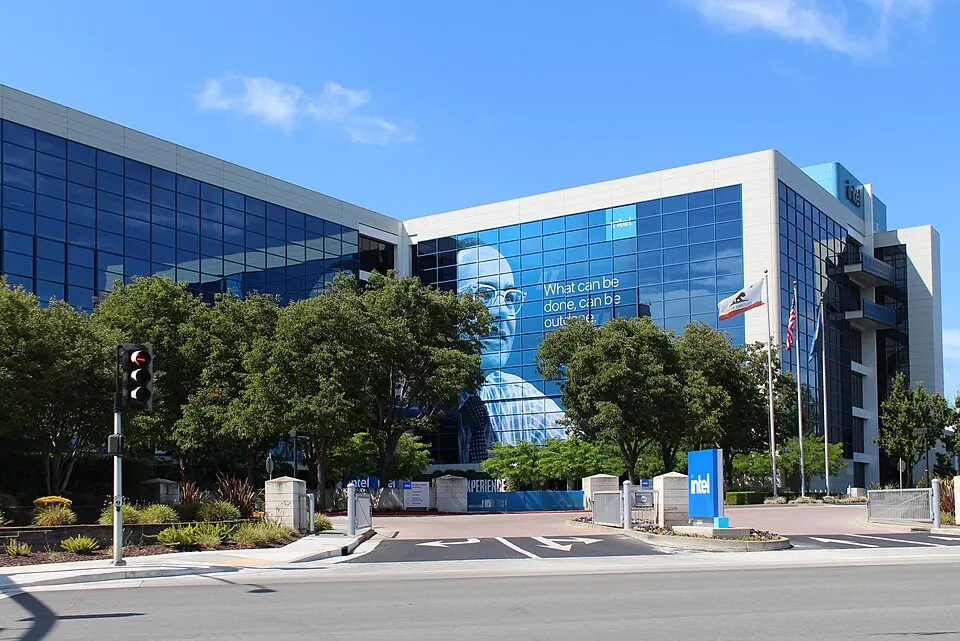
In January 1956, AT&T signed away exclusive rights to every single one of its 7,820 unexpired patents — royalty-free — to any American firm that asked. It was the largest forced technology transfer in U.S. history. Bell Labs, then the world's most prolific research engine, had already produced the transistor, the solar cell, information theory, and radio astronomy. UNIX, CCD image sensors, and the first communications satellite were still to come.
The antitrust settlement was meant to curb monopoly power. Instead, it detonated an innovation bomb. Within a few years, those released patents generated nearly six billion dollars in follow-on value outside telecom — most of it from startup companies. The chain ran from Shockley Semiconductor to Fairchild to Intel. Gordon Moore later called the consent decree "one of the most important events in the history of the semiconductor industry."
Now the same dynamic is running in reverse, and at civilizational scale.
Frontier AI labs — OpenAI, Anthropic, Google, Meta — have scraped the entire public internet to train their models. Every blog post, every code commit, every forum argument, every artist's portfolio. A corpus built collectively over three decades, by billions of people who never consented to this use case because the use case did not exist when they posted.
The legal system is scrambling. In June 2025, Judge Alsup ruled in Bartz v. Anthropic that training on legally acquired books was "quintessentially transformative" — but building a training library from pirated books was "inherently, irredeemably infringing." Anthropic faced up to seventy billion dollars in theoretical damages and settled for 1.5 billion, the largest copyright settlement in U.S. history. It granted no future licenses and clarified no law.
In Kadrey v. Meta, Judge Chhabria found training similarly transformative but warned that LLMs' ability to flood a market with AI-generated work "will often cause plaintiffs to decisively win" future fair use cases. The legal ground is shifting beneath the labs' feet.
The deeper question is structural. In 1956, a public institution — the U.S. government — forced a private monopoly to release its intellectual property to the public. In 2026, private companies are absorbing the public's intellectual output and converting it into closed infrastructure worth hundreds of billions. The internet was a public good. The models trained on it are club goods — you pay for access, and the terms change at the owner's discretion.
The essay's author, Cameron Armstrong, proposes a practical remedy: a Corpus Royalty. A collective payment flowing back from AI companies to the public whose data built the models. Not replacing copyright litigation, but solving for the "unattributable long tail of creativity" — the billions of posts, comments, and contributions that cannot organize or negotiate individually.
The AT&T case teaches us that forcing knowledge into the commons can birth entire industries. The AI case asks whether letting private actors drain the commons will eventually starve it. The internet is not a mine. It is topsoil. And topsoil takes a very long time to regenerate.
Sources: AEA Web, Yale Economics
1956年反垄断判决如何催生硅谷——如今的AI数据争夺是其镜像
1956年,AT&T被迫向公众开放7820贝尔实验室的专利,从而引发了Shockley半导体、F Fairchild以及整个硅谷生态系统。如今,AI前沿实验室正在逆转这一进程——将互联网的公共资源转化为私人基础设施,而无需任何同意或补偿。
← 每小时更新 · 2026-07-06 02:00 UTC 因1956年反垄断裁决而诞生的硅谷,如今AI前沿实验室正在以一种镜像的方式重演这一历史。 1956年时,美国电话电报公司(AT&T AT&T)被迫向公众开放其贝尔实验室的7,820项专利,这引发了Shockley Semiconduct Semiconductor、Fairchild和整个硅谷生态系统的发展。今天,人工智能研究领域正以相反的方式运行——将互联网资源转化为其镜像。
More Hourlies Stories
Content on Anagnorisis is summarized, paraphrased, and editorialized from publicly available sources for length and clarity. Original sources are linked where available. All trademarks belong to their respective owners.