Hourly ·
Jim Keller's Fab2 Brings the 'Fab Fab' to Texas, Betting Small Can Beat Big
Jim Keller and Sam Zeloof's chip startup rebrands to Fab2, relocates to Texas, and reveals a plan to mass-produce small semiconductor fabs — a direct counterproposal to the megafab era.
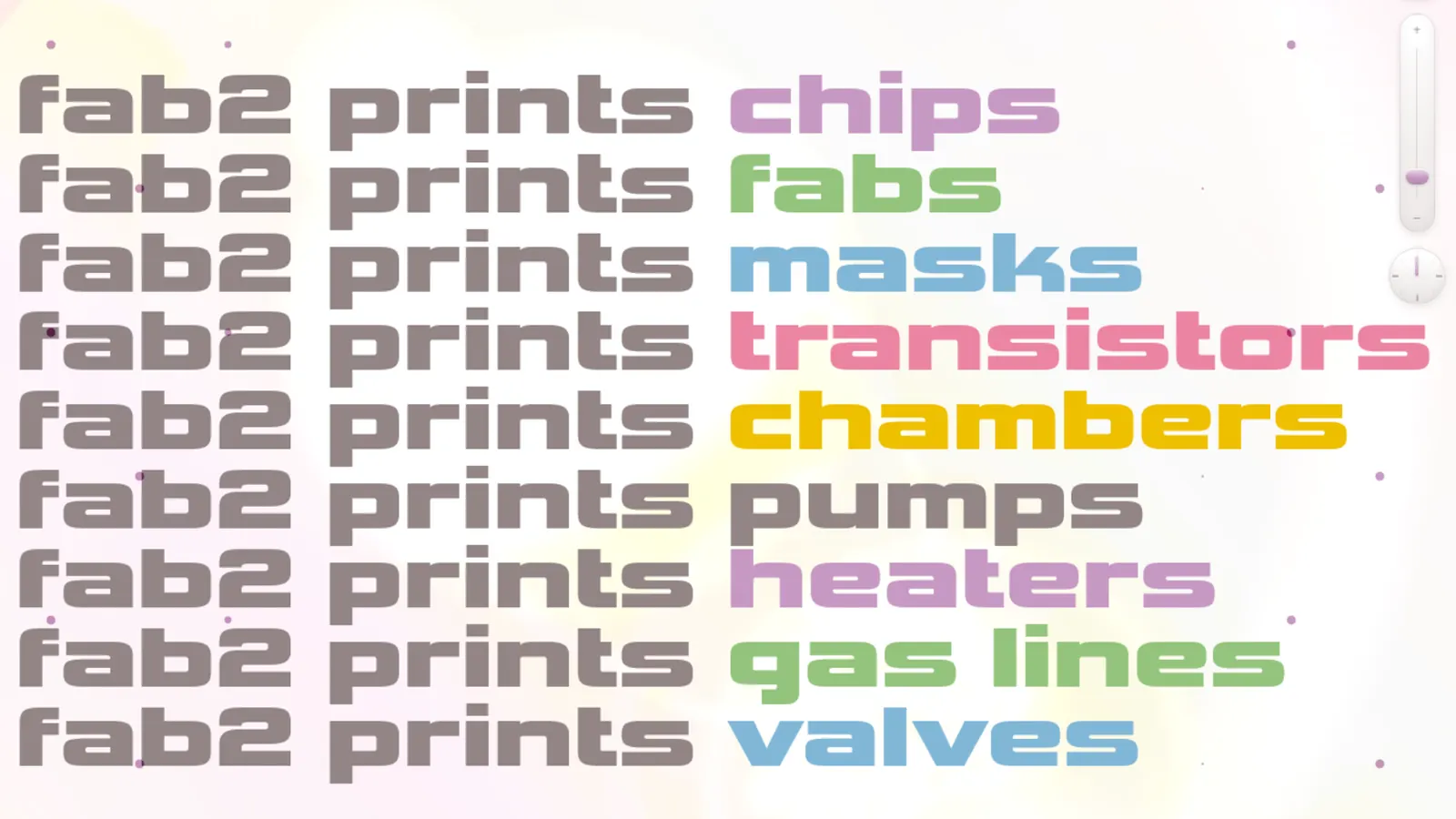
Jim Keller and Sam Zeloof's semiconductor startup has dropped the Atomic Semi name and emerged as Fab2, relocating from San Francisco to Texas with a radical proposition: factories that manufacture other factories.
The idea is a "fab fab" — a factory whose product is not chips but complete, small-scale semiconductor fabrication lines. Every tool inside those fabs, from pumps and valves to lithography systems and vacuum chambers, is designed and built in-house. Fab2 then assembles those tools into machines, the machines into entire fabs, and aims to mass-produce the fabs themselves.
The model targets small, software-defined fabs that pattern chips far smaller than a standard 300mm wafer, turning prototypes around in hours rather than months. Sam Zeloof first proved this was possible as a teenager, fabricating lithographic chips in his parents' garage down to roughly 300nm features. He co-founded the company with Keller in 2022, and the pair have now scaled the vision to three Texas facilities: a 120,000 square foot headquarters in Austin, a 30,000 square foot "fab fab" in Lockhart, and the original 25,000 square foot "garage fab" retained in San Francisco.
The tradeoff is throughput. Electron-beam lithography writes patterns directly rather than projecting through a mask, meaning a single patterning step can take far longer than an EUV scanner needs to expose an entire wafer. That makes it ideal for prototyping and low-volume runs but unsuitable for high-volume commercial foundry work.
Fab2's arrival in Texas places it in interesting company. Elon Musk's Terafab, announced in March, is a single Austin megafab targeting a terawatt of annual compute at a cost of up to $119 billion. The two are not competitors — Fab2 sells speed and small fabs, Terafab is built for volume — but they represent competing answers to the question of how America should expand chipmaking capacity: consolidate in massive campuses, or distribute production across many replicable small fabs.
The startup raised a $15 million seed round in 2023 led by the OpenAI Startup Fund at a roughly $100 million valuation, with angel backing from Naval Ravikant, Nat Friedman, and Fred Ehrsam. It currently lists around 84 employees and has shifted its hiring focus to Texas after four years in California.
Sources: Tom's Hardware
Jim 澈尔的 Fab2 带来了 “Fab Fab” 到德州,押注小规模能胜过大規模
吉姆·克尔和萨姆·佐洛夫的芯片初创公司改名为Fab2,并搬迁至德克萨斯州,公布了一项计划,旨在大规模生产小型半导体晶圆厂——直接针对巨型工厂时代的提案。
← 周报 周二 · 2026-07-05 22:00 UTC 奇克尔(Jim Keller)的Fab2带来了“晶圆厂的晶圆厂”到德克萨斯州,小规模也能胜过大规模奇克尔(Jim Keller)和萨姆·佐洛夫(Sa (Sam Zeloof)的芯片创业公司更名为Fab2,并迁址至德克萨斯州,公开了一项计划,在大批量生产小型半导体晶圆厂方面迎头赶上——这直接是对大型晶圆厂时代的反提案。奇克尔(Jim Keller)和萨姆·佐洛夫(Sam Zeloof)的芯片创业公司已经放弃了“原子”(Ato ”(Atomic)。
More Hourlies Stories
Content on Anagnorisis is summarized, paraphrased, and editorialized from publicly available sources for length and clarity. Original sources are linked where available. All trademarks belong to their respective owners.