Hourly ·
Forget Range Anxiety: China's Solid-State Battery Wave Arrives in 2027
BYD, SAIC Motor, and a wave of Chinese manufacturers are locking in 2027 for all-solid-state EV batteries — sulfide-based cells that promise 1,000 km range, faster charging, and prices starting under $14,000.
The solid-state battery future has a date: 2027.
After years of "breakthroughs" that never left the lab, China's largest automakers are now putting hard timelines on all-solid-state electric vehicle batteries — and the numbers are aggressive.
BYD aims to begin pilot production of sulfide-based all-solid-state batteries in 2027, with mass production scaling through 2030. Chief scientist Lian Yubo confirmed in April that the company's solid-state program has reached "a critical breakthrough stage," though he cautioned that engineering complexity, cost control, and production yields remain real obstacles.
The company backed its timeline with a patent filing in May — a composite solid electrolyte membrane that combines inorganic particles with a polymer fiber network, designed to improve both ionic conductivity and mechanical strength. It's the kind of unglamorous, deeply technical work that signals real engineering progress.
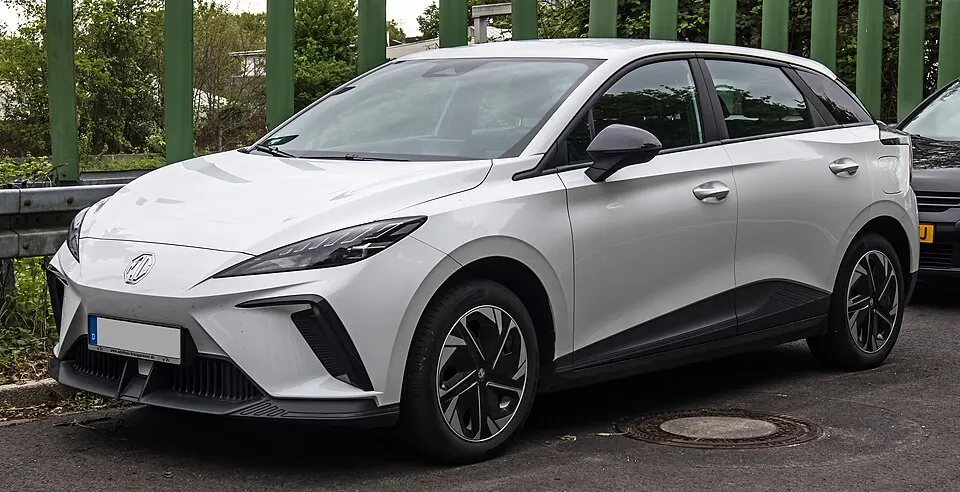
SAIC Motor — China's largest automaker by volume — is moving even faster. The state-owned giant already ships the MG4 with semi-solid-state batteries, making it the world's first mass-produced semi-solid EV. Now SAIC and its partner Qingtao Energy have built an all-solid-state prototype under the Guangqi brand and plan mass production in 2027. The battery boasts an energy density above 400 Wh/kg — enough for over 1,000 kilometers of range on a single charge. Nikkei Asia reports the vehicle will be priced from 90,000 yuan, roughly $13,300.
That price point matters. Solid-state batteries eliminate the flammable liquid electrolyte in conventional lithium-ion cells, dramatically reducing fire risk while enabling faster charging and longer life. If SAIC can deliver at that price, the technology leapfrogs from premium niche to mass market almost overnight.
The broader picture is a Chinese battery ecosystem firing on all cylinders. Beyond BYD and SAIC, CATL, NIO, and GAC are running parallel solid-state programs. The country's dominance in lithium-iron-phosphate battery manufacturing — which already powers most affordable EVs globally — gives it a production scale advantage that will be hard for competitors to match when solid-state lines come online.
The 2027 window may slip — Lian Yubo's candor about the bottlenecks is worth taking seriously. But for the first time, multiple major manufacturers are converging on the same timeframe with working prototypes, filed patents, and priced products. The solid-state EV is no longer a science project. It's a production target.
Sources: Electrek, CarNewsChina, Nikkei Asia
中国固态电池浪潮将于2027年到来:忘掉里程焦虑
比亚迪、上汽和一波中国制造商锁定2027年全固态电动车电池——基于硫化物的电池承诺行驶1000公里续航,更快充电,并且价格低于14000美元。
← 每日热文 · 2026-06-30 20:00 UTC 忘却里程焦虑:中国的固态电池浪潮将于2027 2027年到来 BYD、上汽集团以及一系列中国制造商锁定2027年全固态电动车电池——基于硫化物的电芯,承诺行驶1000公里的距离、更快的充电速度和价格低于14,000美元。固态电池的未来已定:2027年。在数年的“突破”之后。 →
More Hourlies Stories
Content on Anagnorisis is summarized, paraphrased, and editorialized from publicly available sources for length and clarity. Original sources are linked where available. All trademarks belong to their respective owners.