Hourly ·
Claude Code Burns 5× More Tokens Than OpenCode Before Reading Your Prompt
A detailed measurement finds Anthropic's coding agent sends 33,000 tokens of overhead before every request — nearly 5× more than the open-source OpenCode. The gap widens with subagents and real-world configs.
A new measurement from Systima puts hard numbers on something every AI-coding power user has felt in their billing dashboard: Claude Code is dramatically hungrier than it needs to be.
When asked to reply with a single word, Claude Code dispatched roughly 33,000 tokens of system prompt, tool schemas, and scaffolding before the user's 22-character prompt even arrived. OpenCode, the open-source alternative, sent about 7,000 tokens for the same task. That is a 4.7× overhead gap — and it compounds fast.
Systima ran both harnesses on the same model (Claude Sonnet 4.5), the same machine, and the same tasks, splicing a logging proxy between each harness and the model endpoint to capture every byte. The 27 tools in Claude Code's default arsenal account for roughly 24,000 of those 33,000 tokens. OpenCode ships with 10 tools weighing about 4,800 tokens.
The real damage shows up mid-session. Claude Code re-wrote its full prompt-cache prefix in the middle of identical tasks, producing up to 54× more cache-write tokens than OpenCode. Cache writes bill at a premium — 1.25× the base input rate — which explains why usage meters climb even when the model isn't doing more work.
Configuration layers make it worse. A 72KB instruction file adds over 20,000 tokens to every single request for both harnesses. Five MCP servers add another 5,000 to 7,000. Subagents are the biggest multiplier: a task that cost 121,000 tokens done directly ballooned to 513,000 tokens when fanned out to two subagents — a 4.2× increase, because every subagent pays its own bootstrap and the parent then ingests its transcript. Under a real production configuration, Systima measured Claude Code at roughly 75,000 tokens and OpenCode at 91,000 tokens before a single word of the user's prompt.
The Hacker News discussion has already gathered nearly 500 points, with developers comparing experiences across both tools. One bright spot for Claude Code: its aggressive tool-call batching can close the gap on multi-step tasks. A write-run-test-fix loop came out at ~121,000 tokens for Claude Code against ~132,000 for OpenCode, because Claude Code packed everything into three requests while OpenCode made nine. The meter starts higher — how the session unfolds determines who spends more.
The measurement methodology itself is worth noting. All 185 captured request/response records were written into a tamper-evident, SHA-256 hash-chained audit trail, which Systima open-sourced as a tool for EU AI Act Article 12 compliance logging. If you run agentic coding tools in production and cannot answer "what exactly did we send to the model last Tuesday," that is the gap worth closing first.
Sources: Systima, Hacker News discussion
Claude的代码比OpenCode多烧5倍token在读取你的提示前
详细的测量发现Anthropic的编码代理在每请求前发送33,000个额外费用 token——几乎是开源OpenCode的五倍。子代理和现实世界配置间的差距进一步扩大。
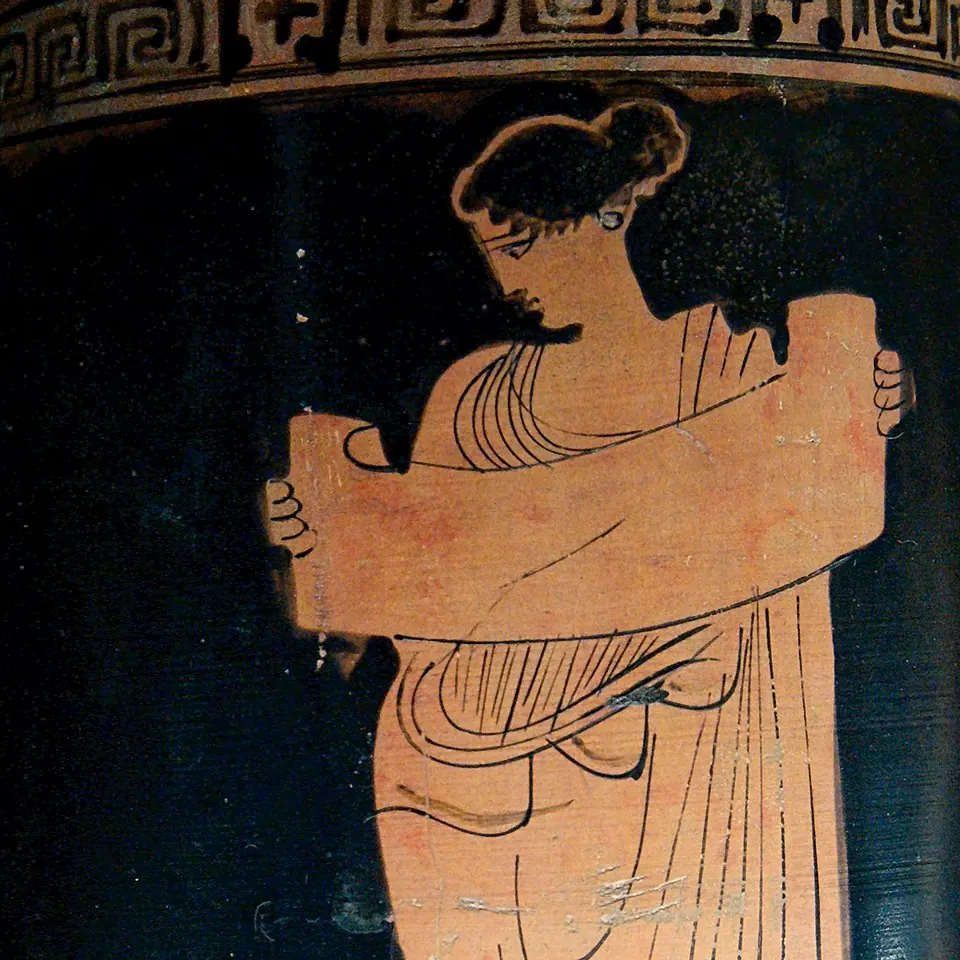
← 小时精选 小时 · 2026-07-13 04:00 UTC 卡卢格·马林《克莱门特代码燃烧》 发现Anthropic的编码代理在发送每个请求前发送了33,000个字节的额外开销——比开源的Op OpenCode多出近5倍。随着子代理和实际世界配置的应用,差距进一步扩大。 图片:克卢甘马林《克莱门特代码燃烧》,公共领域(许可证) 新的一项测量发现 →
More Hourlies Stories
Content on Anagnorisis is summarized, paraphrased, and editorialized from publicly available sources for length and clarity. Original sources are linked where available. All trademarks belong to their respective owners.