Hourly ·
SpaceX Starship Deploys First Starlink V3 Satellites on Third Launch Attempt
After two scrubbed attempts, Starship Flight 13 successfully deployed 20 next-generation Starlink satellites in space — but the Super Heavy booster met a hard ending in the Gulf of Mexico.
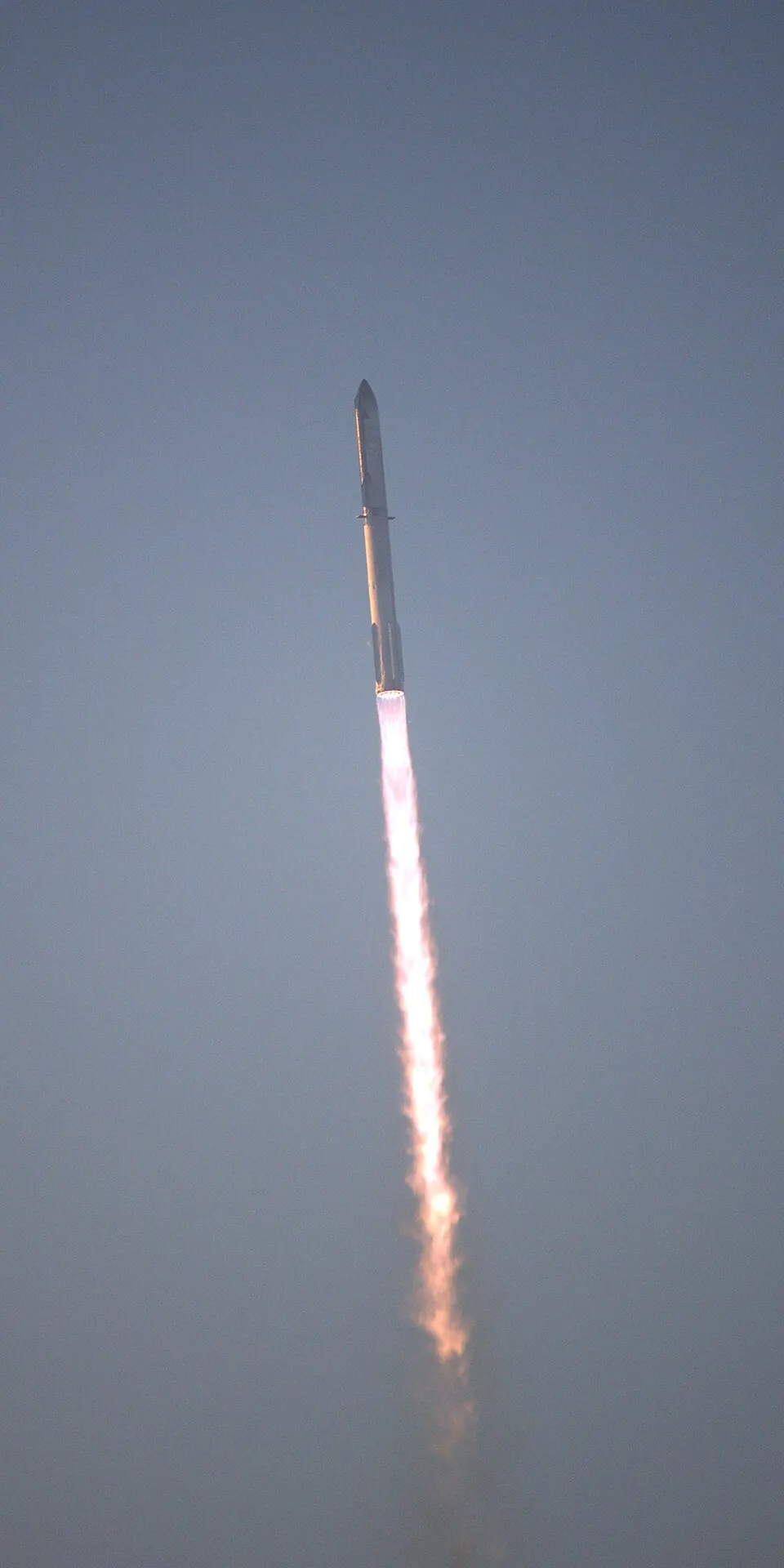
SpaceX's Starship, the world's most powerful rocket at 407 feet tall, completed its thirteenth test flight on Friday, July 24, succeeding on its third launch attempt after a last-second engine abort on July 16 and a weather scrub from Tropical Storm Bertha on July 23.
Lifting off at 6:51 p.m. EDT from Starbase, Texas, the megarocket flew for just over an hour on a suborbital trajectory. For the first time in the program's history, Starship deployed 20 next-generation Starlink Version 3 satellites into space. SpaceX engineers confirmed communication with every satellite via radio frequency and laser links before the payloads demised on reentry roughly 20 minutes later — as planned for this suborbital test mission.
The Ship upper stage marked another first: a successful in-space engine relight of a single Raptor engine, a core capability needed for future orbital missions. It then guided itself through reentry using its four flaps, executed a landing flip with all three Raptor engines, and achieved what SpaceX called its softest-ever splashdown in the Indian Ocean. The vehicle came to rest intact, offering the first clear views of a post-flight heatshield still in one piece.
Not everything went smoothly. The Super Heavy booster, after a clean hot-staging separation and boostback burn with all 33 engines — a first for the V3 configuration — had only five of its planned thirteen Raptor engines ignite for the landing burn. The booster hit the Gulf of Mexico harder than intended, with its onboard camera feed cutting out on impact. SpaceX spokesperson Dan Huot acknowledged the issue during the live webcast.
The flight represents real progress toward NASA's Artemis IV mission in 2028, which requires Starship to carry astronauts to the lunar surface. But two critical milestones remain: completing a full Earth orbit and demonstrating in-orbit propellant transfer between two Starships.
Sources: SpaceCoastDaily, IBTimes, Space.com
星船首次在第三次尝试中部署首批Starlink V3卫星
在两次尝试失败后,星舰飞行13成功在太空部署了20颗下一代星链卫星——但超重型助推器在墨西哥湾遭遇了挫折。
← 周四周报 · 2026-07-25 16:00 UTC SpaceX 星舰 第三次发射尝试成功部署首批星链 V3 卫星 SpaceX 的星舰 成为了世界上功率最大的飞行器,但其超级重型助推器在墨西哥湾遭遇了挫折。 图片:Osunpokeh,CC BY-SA 4.0 ( 许可证 ) SpaceX 的星舰,即世界最强大的飞行器之一,在第三次尝试中成功发射了 20 颗下一代星链卫星,但这颗超级重型助推器却在墨西哥湾遭遇了挫折。
More Hourlies Stories
Content on Anagnorisis is summarized, paraphrased, and editorialized from publicly available sources for length and clarity. Original sources are linked where available. All trademarks belong to their respective owners.