Hourly ·

Microsoft's Majorana 2 Quantum Chip Just Got 1,000× More Reliable
Microsoft unveils Majorana 2, a topological quantum chip whose qubits now survive for 20 seconds — not milliseconds — cutting the roadmap to a commercially viable machine from 2037 to 2029. Physicists remain skeptical, but the numbers are hard to ignore.
The quantum computing race just gained a new kind of urgency — and it doesn't run on superconducting loops or trapped ions.
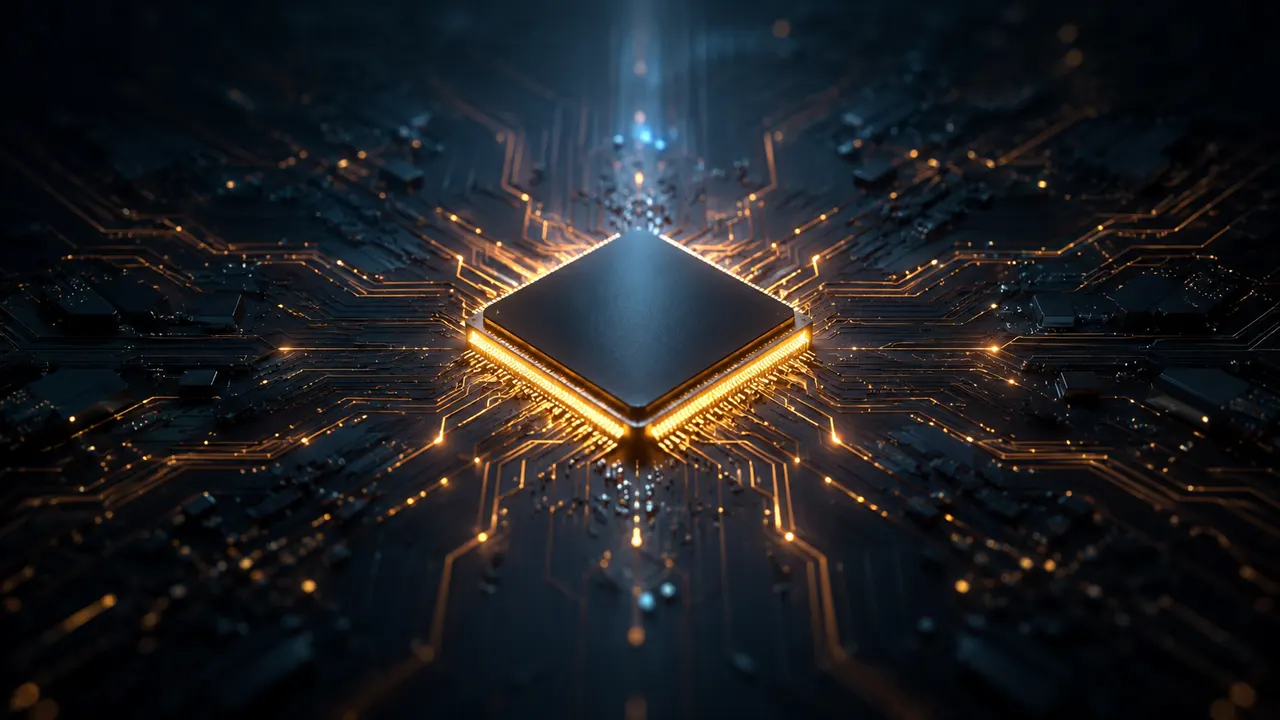
Microsoft has unveiled Majorana 2, the second generation of its topological quantum chip, claiming a staggering 1,000-fold improvement in qubit reliability over its predecessor. Where the first Majorana chip struggled to keep qubits stable for milliseconds, Majorana 2 keeps them alive for an average of 20 seconds — with some instances lasting as long as a full minute. In quantum terms, that's the difference between a phone battery that dies by lunch and one that lasts three years.
The chip, announced by CEO Satya Nadella on June 2, contains 12 topological qubits built on an entirely new materials stack. Operations clock in at one microsecond, and each qubit measures roughly one-hundredth of a millimeter — small enough that Microsoft now believes it can scale to the millions of qubits needed for commercially useful work.
And that timeline just got cut in half. Microsoft now targets 2029 for a scalable quantum computer capable of solving real-world problems — down from its original 2037 estimate. "We will have a quantum machine in 2029 that can solve commercially viable, reasonable problems," said Zulfi Alam, corporate vice president of Microsoft Quantum.
The breakthrough didn't come from physics alone. Microsoft credits Microsoft Discovery, its agentic AI platform for scientific R&D, with accelerating the materials design and testing cycle. The same AI system is now being made generally available to external customers and as a free downloadable app for GitHub Copilot users — a signal that Microsoft sees AI-assisted science as a product, not just an internal tool.
The stakes are enormous. A fault-tolerant quantum computer could crack problems in drug discovery, materials science, energy production, and climate modeling that remain mathematically intractable for classical hardware. Google, IBM, and a dozen startups are racing toward the same horizon, each betting on different qubit architectures.
But the skepticism isn't going away. Nature's Davide Castelvecchi reports that researchers remain unconvinced, noting Microsoft's history of controversial claims dating back to a retracted 2018 paper and the lukewarm reception of Majorana 1 in 2025. Paul Stevenson, a physics professor at the University of Surrey, called the timeline "plausible" — with the crucial caveat: "if its research lived up to its claims."
Henry Legg, a physicist at the University of Basel, and others argue that Microsoft still hasn't released enough data to prove its topological qubits are what the company says they are. The 20-second lifetime is impressive on paper, but verifying it requires independent replication — something Microsoft has been slow to enable, citing commercial confidentiality.
Whether Majorana 2 is the real deal or another false start hinges on a quasi-particle first predicted in the 1930s by the Italian physicist Ettore Majorana. Finding it, stabilizing it, and building a computer around it has consumed two decades of Microsoft research and billions of dollars. If it works, the payoff is a quantum architecture that is inherently more error-resistant than any rival approach. If it doesn't, it's one of the most expensive bets in the history of computing.
For now, the trajectory is undeniable. A year ago, Microsoft's qubits died in milliseconds. Today, they live for 20 seconds. Next year's chip — Majorana 3 — will need to show another leap, and the year after that, another. The 2029 deadline is aggressive, but the slope is steep.
Sources: BBC News, Nature, Microsoft Newsroom
微软Majorana 2量子芯片现在更加可靠,比以前强1000倍
微软公布Majorana 2拓扑量子芯片,现在其量子位能存活20秒而非毫秒级,这将商业可行的机器到达时间从2037提前到2029年。物理学家依然持怀疑态度,但这些数字难以忽视。
量子計算競賽剛剛加速。微软宣布推出Majorana 2,一種拓扑量子芯片,其量子位現在能夠 survive 持續 20 秒 — 不是毫秒級 — 將商用化的目標時間從 2037 提前至 202 2029 年。物理學家仍存保留觀點,但這些數字難以忽視。量子計算競賽剛剛加速。
More Hourlies Stories
Content on Anagnorisis is summarized, paraphrased, and editorialized from publicly available sources for length and clarity. Original sources are linked where available. All trademarks belong to their respective owners.