Hourly ·
Magnon Breakthrough Could Shrink Quantum Computers to the Size of a Penny
Physicists at the University of Vienna have extended the lifetime of magnons — tiny magnetic waves that carry quantum information — by nearly 100 times, reaching 18 microseconds. The advance, published in Science Advances, could pave the way for quantum computers no larger than a 1-cent coin.
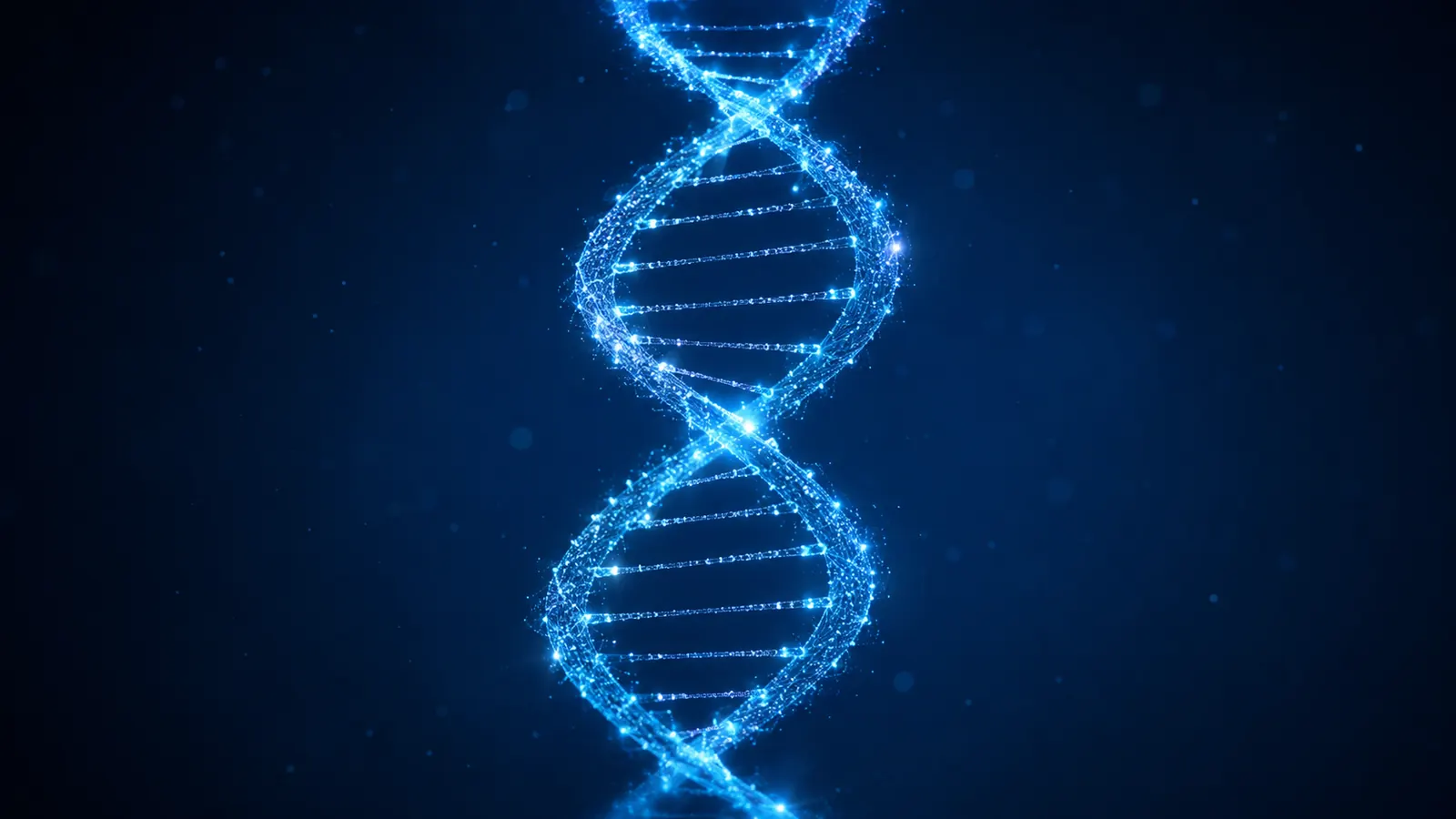
A team of physicists at the University of Vienna has cracked one of the longest-standing obstacles in quantum computing: keeping magnons alive long enough to be useful.
Magnons are tiny waves of magnetization that ripple through solid magnetic materials, much like waves spreading across a pond. Unlike photons that move through empty space, magnons travel inside magnetic solids — and their wavelengths can shrink to just a few nanometers, meaning entire circuits could fit onto chips smaller than a fingernail.
The problem has always been their lifespan. Magnons typically decay within a few hundred nanoseconds, far too short to reliably store or transfer quantum information.
The Vienna team, led by Andrii Chumak, changed that by combining two strategies. First, they used short-wavelength magnons, which are naturally less sensitive to surface defects. Second, they cooled ultra-pure spheres of yttrium iron garnet (YIG) to just 30 millikelvin — a fraction of a degree above absolute zero — inside a mixed-phase cryostat, freezing out the thermal processes that normally destroy magnons.
The result: magnon lifetimes of up to 18 microseconds, nearly 100 times longer than any previous observation. At that scale, magnons stop behaving like fleeting signals and begin to resemble dependable carriers of quantum information, comparable to the superconducting qubits used in today's leading quantum processors.
Perhaps more importantly, the team discovered that the lifetime limit is not imposed by physics — it is imposed by material purity. By testing three YIG spheres of different quality, they found that the purer the crystal, the longer the magnons survived. Even the least pure sample outperformed every previous experiment. That means future gains are a manufacturing problem, not a fundamental one.
The practical implications are significant. Long-lived magnons could serve as a "quantum bus" — a shared pathway connecting hundreds of qubits across a chip, solving one of the hardest scaling challenges in quantum computing. Because magnons naturally interact with photons, phonons, and other quasiparticles, they could also act as universal translators between different quantum systems that currently cannot communicate with each other.
The experiments were carried out by doctoral researcher Rostyslav Serha, with collaborators from the University of Colorado Colorado Springs and institutions in Germany, the United States, and Ukraine. The findings were published in Science Advances.
Sources: ScienceDaily, SciTechDaily, IBTimes Singapore
量子計算縮小至一分硬幣大小的Magnon突破有可能实现
物理学家在维也纳大学将磁子——携带量子信息的微小磁波——的寿命延长了近100倍,达到18微秒。这一进展发表在《科学 Advances》杂志上,可能为制造比一元硬币还小的量子计算机铺平道路。
← 小时精选 小时 | 2026-07-02 18:00 UTC 磁子突破可能使量子计算机缩小到硬币大小 牛津大学的物理学家已将磁子——携带量子信息的小型磁波——的寿命延长了近100倍,达到18微秒。该进展发表在《科学进展》上,可能为打造仅比一分硬币还大的量子计算机铺平道路。 →
More Hourlies Stories
Content on Anagnorisis is summarized, paraphrased, and editorialized from publicly available sources for length and clarity. Original sources are linked where available. All trademarks belong to their respective owners.