Hourly ·
IBM Achieves First Quantum Computation of Fusion Materials
IBM, Oak Ridge National Laboratory, and Cleveland Clinic have performed the first-ever molecular simulations of fusion fuel materials on a quantum computer, marking a breakthrough for clean energy.
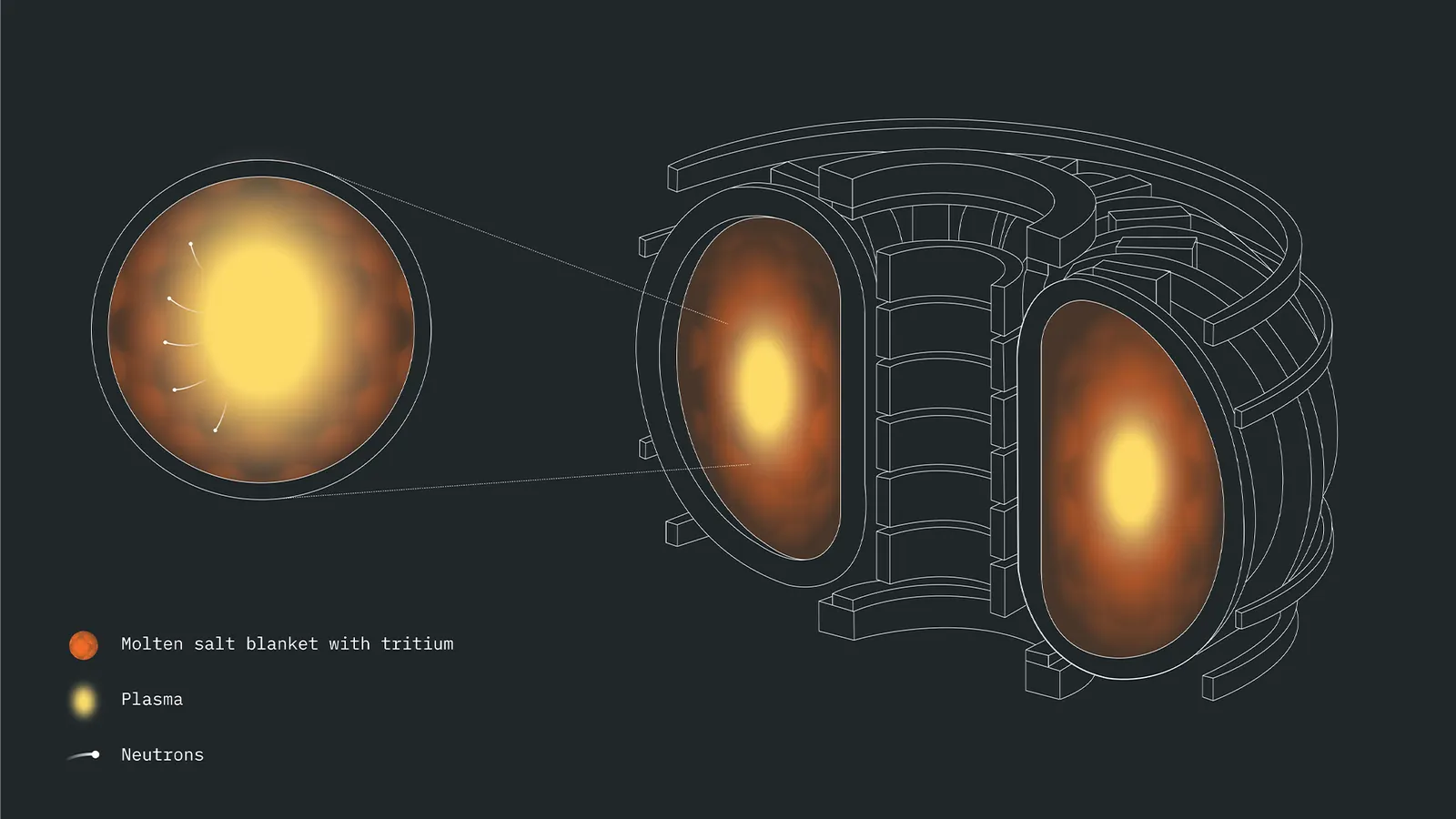
IBM, Oak Ridge National Laboratory, and Cleveland Clinic have achieved the first known quantum computation of fusion reactor materials — simulating nine molecular configurations of FLiBe, a molten salt crucial for producing tritium fuel in fusion power plants.
The team used IBM's 156-qubit Heron quantum processor coupled with ORNL's classical supercomputing infrastructure to model the atomic behavior of the lithium-beryllium-fluorine compound. These calculations are computationally intractable for classical systems alone and represent a foundational step toward solving the tritium supply bottleneck that has long constrained fusion energy development.
"This work builds on our advances in simulating complex biological systems at scale, including proteins spanning 12,635 atoms, and extends those techniques into materials science," said Kenneth Merz, staff scientist at Cleveland Clinic.
The research contributes directly to the Department of Energy's Genesis Mission, which aims to unify high-performance computing, AI, and quantum computing across the 17 national laboratories. IBM Director of Research Jay Gambetta told Nextgov that "we're going to see quantum applications accelerate because of this type of work."
The results, published on arXiv, demonstrate that quantum-centric supercomputing — the fusion of quantum, classical, and AI systems — is now a practical scientific tool for problems that have long challenged chemists, engineers, and materials scientists.
Sources: IBM Newsroom, Nextgov
IBM 实现首次融合材料的量子计算
IBM 及橡樹國家實驗室與克利夫蘭診所已在量子電腦上進行史上首次等離子燃料材料的分子模擬,標誌清潔能源領域的重大突破。
量子计算领域的重要突破:IBM、橡树岭国家实验室与克利夫兰诊所首次在量子计算机上模拟了核聚变燃料材料。这一成就标志着清洁能源领域的重大进展。IBM、橡树岭国家实验室和克利夫兰诊所已经在量子计算机上进行了历史上第一次的分子模拟研究,涉及核聚变燃料材料。这不仅是技术上的里程碑,也为清洁能源的发展奠定了基础。
More Hourlies Stories
Content on Anagnorisis is summarized, paraphrased, and editorialized from publicly available sources for length and clarity. Original sources are linked where available. All trademarks belong to their respective owners.