
Hourly ·
Dead SpaceX Rocket to Crash Into Moon at 5,000 MPH
A defunct Falcon 9 upper stage, abandoned in high-Earth orbit since 2025, is on course to slam into the Moon on August 5 at more than 5,000 miles per hour — only the second time a human-made object has unintentionally struck the lunar surface.
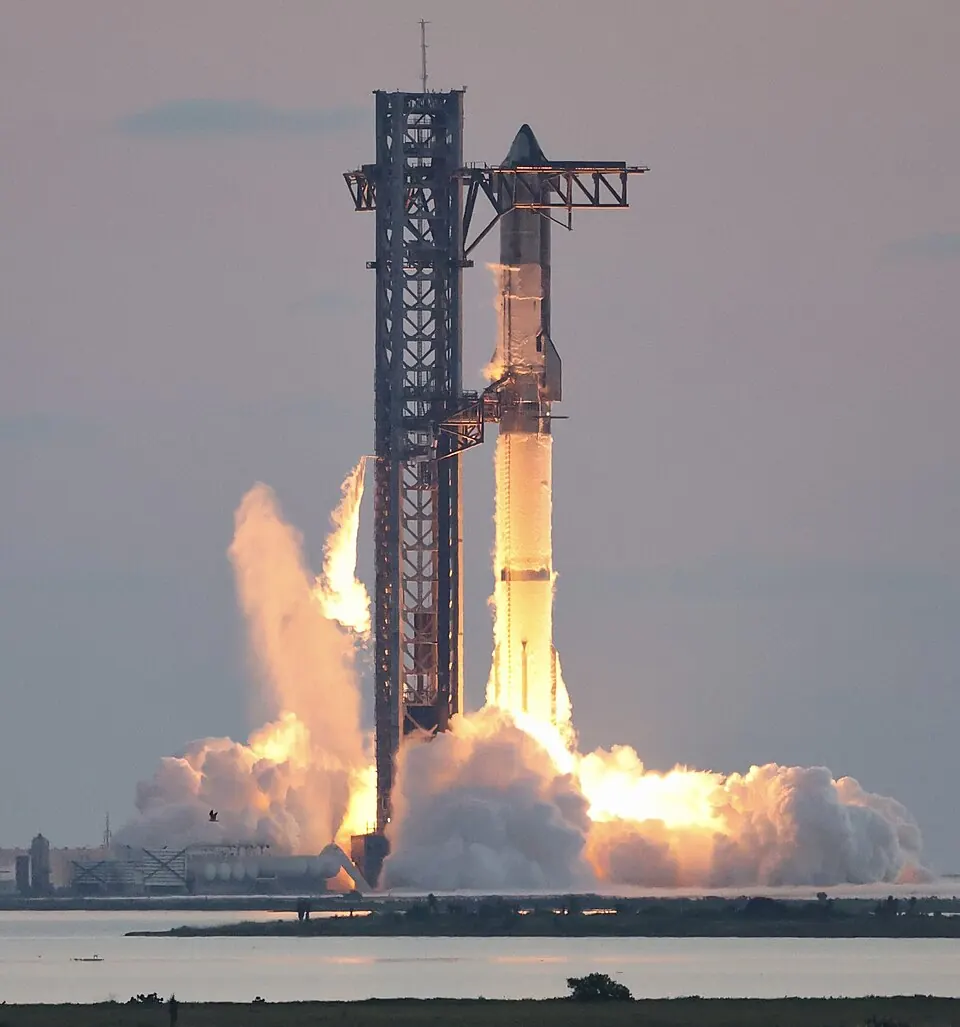
A discarded piece of a SpaceX Falcon 9 rocket — roughly the size of a five-story building — will plow into the Moon on Wednesday, August 5, at approximately 2:35 a.m. ET, according to trajectory analysis by space-tracking software developer Bill Gray.
The impact is expected to release some 11.8 gigajoules of energy and excavate a fresh crater at least 17 meters wide near the Einstein Crater, on the sunlit near-side of the Moon. That side is facing Earth and partially illuminated at the time of impact, raising the possibility — however slim — that the debris plume could be glimpsed through ground-based telescopes.
The rogue rocket stage is the upper portion of a Falcon 9 that successfully propelled two lunar landers and a suite of scientific instruments toward the Moon in January 2025. Once its mission was complete, the stage was left in a decaying high-Earth orbit. Over eighteen months, gravitational perturbations nudged it onto an irreversible collision course.
NASA's Lunar Reconnaissance Orbiter (LRO) will sweep the region before and after the strike to map surface changes. "After the impact, we might have a little bit more knowledge of where it is," said Brent Garry, LRO project scientist at NASA Goddard. "We can do some additional targeting about a week after the impact."
This will be only the second known case of an unintentional rocket impact on the Moon. While the lunar surface bears countless natural craters, the upcoming strike offers a rare controlled-equivalent experiment — scientists know the mass, velocity, and composition of the impactor, making it a valuable data point for planetary geology.
SpaceX has not commented publicly on the impending collision.
Sources: NPR / KAZU, Space.com
死火箭太空X将 crash 至月球速 5000 英里每小时
一个自2025年起就废弃在高地球轨道上的失效猎鹰9号 upper级火箭级,预计于8月5日以超过每小时5000英里的速度撞击月球——只有人类制造的物体无意中撞击月面的第二次。
← Hourlies Hourly · 2026-08-03 00:00 UTC Dead SpaceX Rocket to Crash Into Moon at 5,000 MPH A defunct Falcon 9 upper stage, abandoned in high-Earth orbit since 2025, is on course to slam into the Moon on August 5 at more than 5,000 miles per hour — only the second time a human-made object has unintentionally struck the lunar surface. Image: Steve Jurvetson , CC BY 2.0 ( license ) A discarded piece
More Hourlies Stories
Content on Anagnorisis is summarized, paraphrased, and editorialized from publicly available sources for length and clarity. Original sources are linked where available. All trademarks belong to their respective owners.