
Hourly ·
Climate Change Could Nearly Triple Europe's Wildfire Burned Area by Century's End
A Potsdam Institute study projects Europe's annual wildfire footprint could nearly triple under a high-emissions scenario, but better fire management could cut losses sharply.
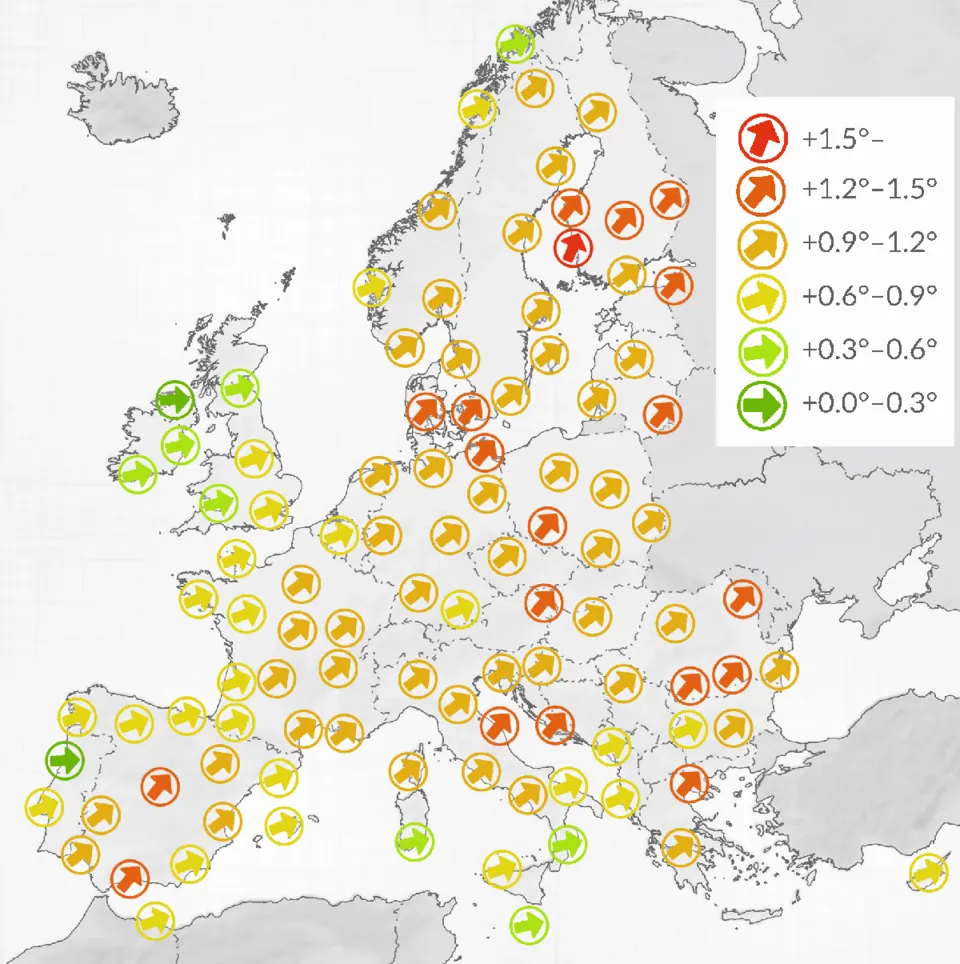
Wildfires could burn through nearly three times as much of Europe each year by the end of the century under a high-emissions scenario, according to a new study led by the Potsdam Institute for Climate Impact Research (PIK) and published Thursday in Global Change Biology.
Researchers project that annual burned area across the continent could rise by about 39% under a low-emissions scenario and by roughly 192% during 2070–2100 compared with the 2000–2030 average, as climate change delivers hotter, drier, and windier fire conditions.
"Climate change is driving up fire activity across Europe as hot, dry and windy conditions become more severe," said Maik Billing, a PIK researcher and the study's lead author.
The findings arrive amid another punishing fire season. Around 550,000 hectares had already burned across the European Union as of mid-August — roughly 2.5 times the 20-year average — and France has logged record-breaking fires.
The outlook isn't purely bleak. The study found improved fire prevention, early detection, and firefighting could reduce burned areas by 92% under 1.8°C of warming and by 72% even under roughly 3.6°C of warming, though the authors caution those gains may prove optimistic in a much hotter climate.
Sources: Anadolu Agency | The Guardian | Straits Times
气候变化可能使欧洲百年末期的野火烧毁面积 nearly 双倍
Potsdam研究所的研究预测,在高排放情景下,欧洲每年的火灾足迹可能几乎翻三倍,但更好的消防管理可以大幅减少损失。
【小时天】· 2026-08-20 11:00 UTC:气候变化可能使欧洲的野火烧毁面积在本世纪末几乎增加三倍。一份来自普拉萨德研究所的研究预测,在高排放情景下,欧洲每年的野火足迹可能会几乎增加三倍,但更好的防火管理能够大幅减少损失。 图片来源:Leonard Wallentin/Journalism++/EDJNet,版权CC BY 4.0
More Hourlies Stories
Content on Anagnorisis is summarized, paraphrased, and editorialized from publicly available sources for length and clarity. Original sources are linked where available. All trademarks belong to their respective owners.