
Hourly ·
Astronomers Discover a Rocky 'Mega-Earth' 23 Times More Massive Than Earth
A dense, rocky exoplanet two and a half times Earth's width but 23 times its mass is forcing astronomers to rethink how planets form.
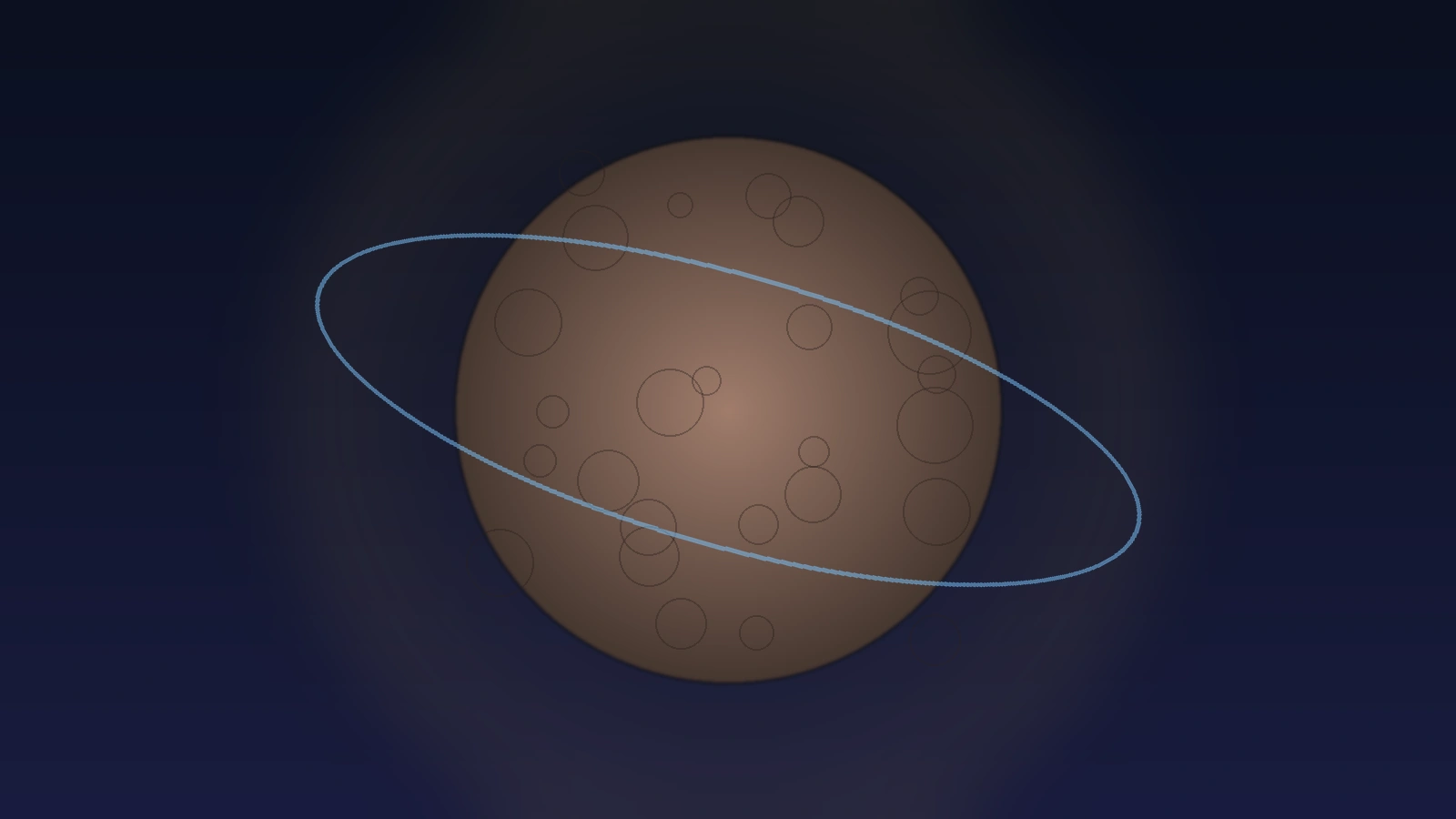
Astronomers have confirmed a rocky exoplanet that, by current theory, should not exist: GJ 523b is only about 2.5 times wider than Earth, yet it packs roughly 23 times our planet's mass — a density close to that of solid iron.
First flagged as a candidate by NASA's TESS satellite and confirmed with the WIYN telescope at Kitt Peak, the world circles its star every 17.75 days. The system is young, at an estimated 170 million years old, and the planet appears to follow a highly tilted, near-polar orbit.
The puzzle is that planets this massive are expected to accumulate thick hydrogen-and-helium envelopes, the way Jupiter and Saturn did once their cores passed roughly 20 Earth masses. GJ 523b sits beyond that threshold yet shows little gas — a "mega-Earth" that stayed mostly rock. "This isn't what we expected at all," lead author Max Kroft of the University of Wisconsin–Madison said.
Two leading explanations are on the table: the planet formed with a thick atmosphere that was later stripped away, or it was born from a collision between two planets that blasted away their gas. The team proposes a formal "mega-Earth" class for such ultra-dense worlds, hoping a larger sample will reveal whether they are rare oddities or part of a broader population.
Sources: Space.com | UW–Madison | arXiv
astronomers发现一个岩石构成的“巨型地球”,质量是地球的23倍
一颗稠密的岩石行星,两倍半地球宽度但质量是其23倍,迫使天文学家重新思考行星是如何形成的。
### 厘秒新闻 · 2026-08-19 15:00 UTC 天文学家发现一颗岩石“超级地球” 比地球宽约23倍,但比地球重23倍 密度极高的岩石类外行星GJ 523b的发现正迫使天文学家重新考虑行星是如何形成的。天文学家已证实了一颗宽度约为地球两倍半、质量为地球23倍的岩石类系外行星:根据当前理论,这颗行星不应存在。
More Hourlies Stories
Content on Anagnorisis is summarized, paraphrased, and editorialized from publicly available sources for length and clarity. Original sources are linked where available. All trademarks belong to their respective owners.