Hourly ·
AI Designs 16 New Viruses From Scratch to Fight Drug-Resistant Bacteria
Stanford researchers used AI models Evo 1 and Evo 2 to design functional bacteriophages from scratch — a breakthrough for phage therapy that also raises pressing biosecurity questions.
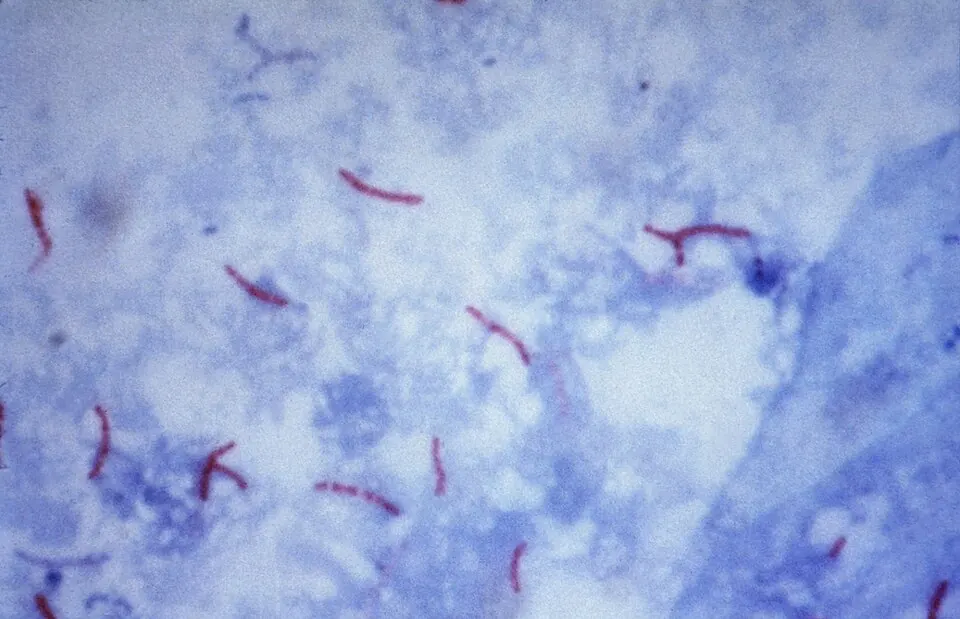
Researchers from Stanford University and the Arc Institute have crossed a striking threshold in generative biology: they used AI to design entirely new viral genomes from scratch — and 16 of them turned out to be functional, self-replicating viruses.
The AI models, Evo 1 and Evo 2, were trained on DNA sequences the way large language models learn from text. The team focused on a bacteriophage called ΦX174 — a virus that infects E. coli and cannot harm humans. After fine-tuning the models on thousands of related viral genomes, they generated hundreds of candidate sequences. Out of 285 designs tested in the lab, most failed. But 16 survived and could infect bacteria, reproduce, and produce new viral particles.
Some of the AI-designed phages performed better than the natural ΦX174 in competition experiments. A cocktail of the synthetic viruses managed to overcome bacterial resistance that had defeated natural phages entirely — a result that points toward phage therapy, a century-old approach gaining renewed urgency as antibiotic-resistant infections claim more lives each year.
The study, published in the journal Science, also carries an uneasy footnote. Evo 2 is fully open-source. Anyone can download it. Turning a computer-generated sequence into a functioning organism still requires lab equipment and genuine expertise — but that distance is shrinking. Biosecurity researchers have warned that the ability to design viral genomes is advancing faster than the governance meant to control it. The concern is not that this experiment created something dangerous — it's that increasingly capable biological AI will lower the barrier for others who might try.
The 16 phages in this study are harmless to humans. But the proof of concept is now public, and unlike an AI-generated image, a successful genome can become something that reproduces.
Sources: Ars Technica, ZME Science, The Guardian
AI从零设计出十六种新病毒以对抗耐药菌
斯坦福研究人员利用AI模型Evo 1和Evo 2从头设计功能性噬菌体——这是噬菌体疗法的一个突破,也引发了紧迫的生物安全问题。
← 小时精选 小时 | 2026-08-11 08:00 UTC AI 设计出 16 种新病毒以对抗耐药细菌 斯坦福大学的研究人员使用 Evo 1 和 Evo 2 这两个 AI 模型从零开始设计功能性噬菌体——这在噬菌疗法上是一个突破,同时也引发了紧迫的生物安全问题。 图片来源:CDC/Dr. George P. Kubica,公有领域(许可) 斯坦福大学的研究人员
More Hourlies Stories
Content on Anagnorisis is summarized, paraphrased, and editorialized from publicly available sources for length and clarity. Original sources are linked where available. All trademarks belong to their respective owners.