Hourly ·
2,500-Year-Old Etruscan Ritual Well Yields Bronze Offerings and Human Remains
A sacred well at the Etruscan city of Kainua has yielded two gleaming bronze votive statues and the skeletons of two adults, revealing how the city was consecrated at its founding and ritually sealed centuries later.
Archaeologists working at the Etruscan city of Kainua, near Marzabotto in northern Italy, have opened a 2,500-year-old sacred well — and its contents tell a two-act story about how the city was born and, later, deliberately closed.
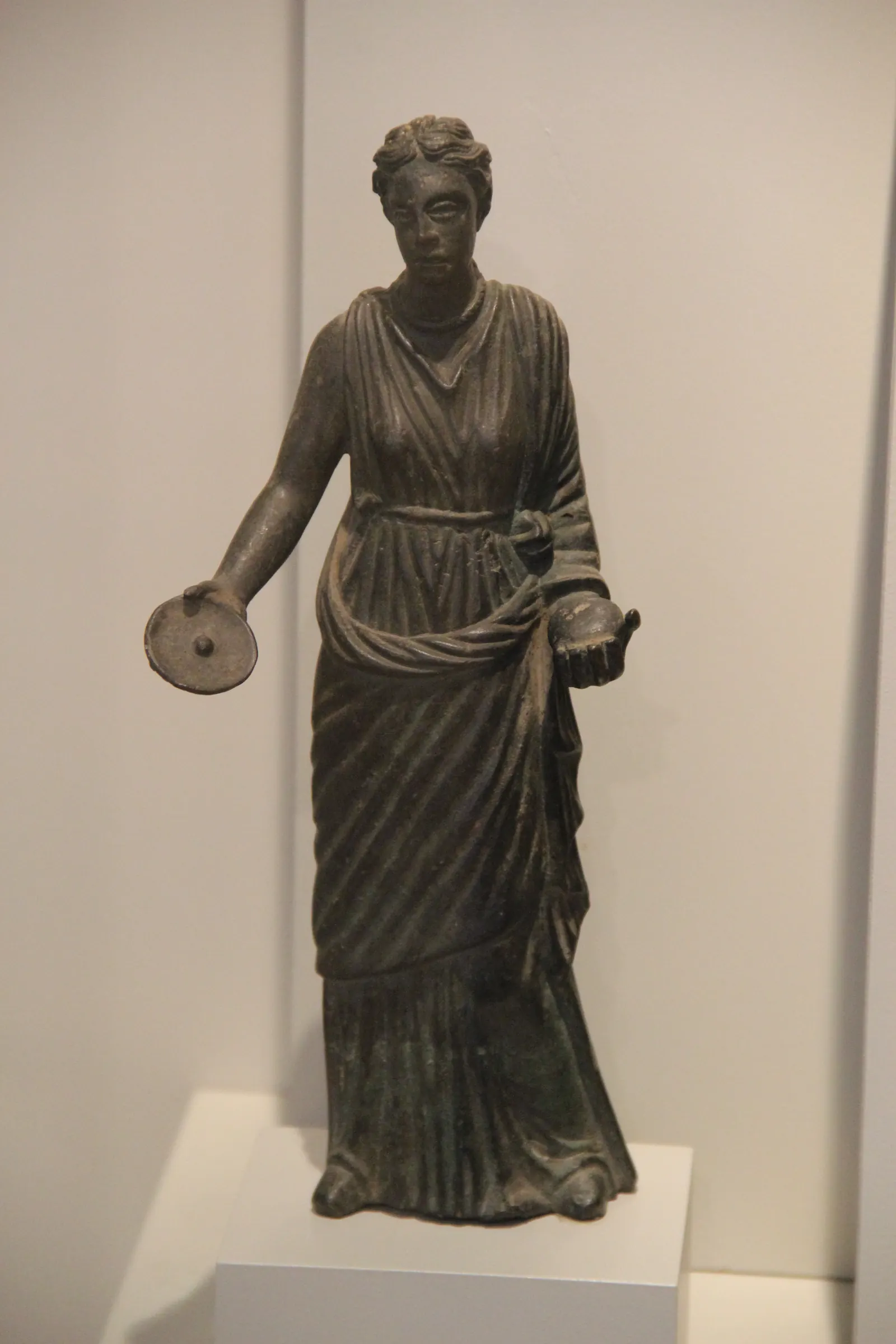
At the bottom of the shaft, inside the sanctuary of the goddess Uni, the team recovered two finely cast bronze female figurines and a rare bronze plate that still carried its original metallic sheen. HeritageDaily reports the objects were votive offerings laid down during the city's foundation rites, between the late sixth and early fifth centuries BCE.
Resting above them were the skeletons of two adults — evidence of a separate, later ceremony that marked the well's closure and the end of its use. "The bronze figurines and plate represent votive offerings placed during the solemn consecration of the well," said Elisabetta Govi, the University of Bologna archaeologist who directed the dig. "In contrast, two adult human skeletons... appear to relate to a later ritual."
The well sits in Kainua's sacred precinct, beside two monumental temples dedicated to Tinia and Uni — the Etruscan equivalents of Zeus and Hera — and a cult to Vei, a fertility goddess. Researchers say the structure was never just a water source: it doubled as a ritual monument tied to the city's founding and to the sacred role of water in Etruscan religion.
The discovery capped the University of Bologna's 39th excavation season at the site, extended by two weeks in 2026 through a cooperation agreement with the reopened MNEMA National Etruscan Museum of Marzabotto. The University of Bologna says the newly recovered artefacts will go on public display once conservation and analysis are complete.
二千五百年前埃特鲁斯 Canon祭井出土青铜献品和人类遗骸
一座秘鲁特里尼泰城基努亚的圣井出土了两尊闪耀的青铜供奉雕像和两名成人骨架,揭示了这座城市在创立时就被神圣封印,并数百年后再次进行宗教仪式封印的事实。
← 24小时新闻·2026-08-19 23:00 UTC,五千年古埃特鲁里亚祭祀井出土青铜供品和人类遗骸 在位于马尔兹附近的埃特鲁利亚古城凯尼亚乌发现的神圣水井中,出土了两尊熠熠生辉的铜制祭品雕像以及两名成年人的骨骼,揭示了这座城市在其建立之初是如何被圣化,并在数百年后通过仪式封印的过程。考古学家正在对位于马尔兹附近的埃特鲁利亚古城凯尼亚乌进行研究,该水井出土的青铜供品和人类遗骸显示,这座古城在创立之初便进行了神圣化的祭典,并在此后通过一系列的仪式封印过程得以巩固其圣洁地位。
More Hourlies Stories
Content on Anagnorisis is summarized, paraphrased, and editorialized from publicly available sources for length and clarity. Original sources are linked where available. All trademarks belong to their respective owners.