
Hourly ·
Serbia's Vučić Concedes Defeat to a Student Movement That Began With a Collapsed Roof
After 12 years in power, Aleksandar Vučić admitted his party lost Sunday's snap election. Preliminary results put the Student List near 138 seats to the SNS's 104, on turnout not seen since Yugoslavia broke apart.
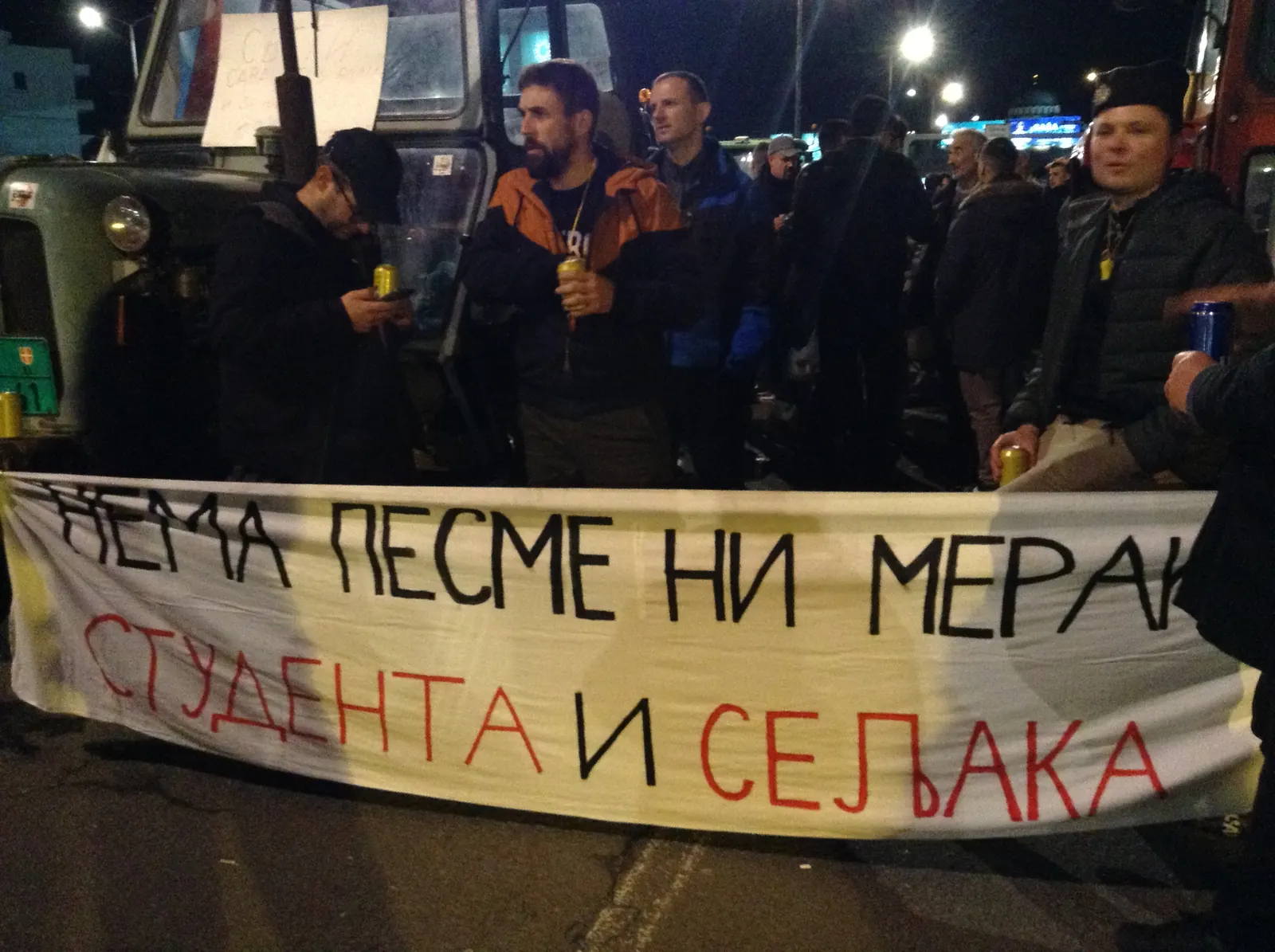
The concrete canopy of a railway station in Novi Sad came down on 1 November 2024 and killed 16 people. It took two years, months of marches, and one snap election before the question that collapse raised — who approved the work, who inspected it, who covered it up — was answered by voters instead of a prosecutor.
On Sunday night, Aleksandar Vučić conceded. "We still do not have final results," he told supporters at the headquarters of his Serbian Progressive Party in Belgrade. "On the basis of a sample, it is clear that we have lost these elections." He said the Student List would take between 135 and 140 seats and his own party 105. A representative sample by the pollsters CeSID and Ipsos put the students on 138 and the SNS on 104, with the remaining seats likely to go to parties representing ethnic minorities.
If those numbers hold, a movement with no obvious leader, no party machine and no experience of government will hold a majority in a 250-seat parliament.
Turnout did the work. By 7pm local time, two hours before polls closed, 67.6 per cent of voters had cast a ballot — the highest since Yugoslavia broke apart in 1992. Queues outside polling stations ran for up to two hours. Serbs voted in Ljubljana, Munich, Paris, Los Angeles and Chicago. The students' final rally in Belgrade last week drew an estimated 150,000 people, and the size of it made the arithmetic visible before a single vote was counted.
The Student List — "Students Win" — grew out of the campus protests that followed the Novi Sad collapse. Evidence pointed to slipshod construction, fraud and corruption, and the tragedy became the proof of a broader argument about how the country was being run. The movement spent two years turning that argument into an organisation. For Sunday's vote it fielded 250 candidates for the 250 seats, drawn from across Serbian society: doctors, actors, academics, farmers, athletes.
Its lead candidate, Ilija Srdanović, told BBC Serbian: "This will be a free state." He said the anti-corruption movement hoped to "free the country from tyranny." In Belgrade, crowds danced, honked horns and set off fireworks. "Serbia is free," one student told the BBC. "It's a miracle." In Novi Sad, the city where it started, the centre was packed. "Everything is going to get better now," David Vasić said.
The manifesto is narrower than the mood. Purge officials who broke the rules and cracked down on protesters. Stop party loyalists from running public enterprises. Free the public broadcaster from political control. The slogan was a question — "Serbia or Mafia?" — and the campaign was fought in places Vučić had owned for a decade, with students going door to door in rural areas that had long been strongholds of his party.
Vučić did not lose because he was outspent or out-organised. He had the broadcasters, the ministries and the state institutions, and he had spent 12 years building them into a machine. Barred from a third presidential term, he resigned the presidency last month and campaigned to return as prime minister, the post he left in 2017. He backs Serbia's candidacy for the European Union while refusing to sanction Russia over its invasion of Ukraine, and he presented himself as the only figure who could balance the West against Moscow and Beijing. He promised higher pensions and public sector salaries. He repeatedly accused the students of being stooges of foreign powers; they dismissed it. He and his party have denied corruption, repeatedly.
The result is also a warning about how it was won. International and local monitors reported detentions, surveillance and cyber-attacks against activists in the run-up to the vote. On polling day, monitoring groups recorded cases of ballots being photographed, signs of vote-buying and carousel voting. A majority of 138 seats is enough to govern and not enough to rewrite a constitution, which needs two-thirds. The broadcasters, the judiciary, the police and the public companies are still staffed by the people the students ran against.
Comparisons to Hungary came quickly. Six months ago Vučić's ally Viktor Orbán lost an election to a challenger who had built a movement out of the same raw material — the conviction that a system had stopped pretending to be fair. Whether that becomes a regional pattern or a single rupture will be decided in the institutions the students now inherit, not on the night of the count.
The roof fell because someone signed something. Permits were issued, inspections were passed, money moved, and the paper trail was either lost or never made. The movement that formed around that question asked, for two years, who signed. On Sunday the people asking were handed the pens. A majority does not by itself produce an answer. It only gives you the authority to go looking for one.
Sources: BBC News, The Guardian
塞尔维亚的武契奇承认学生运动的失败起因于一场 collapsed 的屋顶
在权力长达12年后,阿什肯纳兹·沃丘其承认他所在的党在周日的不完全选举中失利。初步结果显示,学生阵线接近138席,而SN党为104席,选 turnout 近年来未见。
塞尔维亚的武契奇承认学生运动在12年执政后失败 学生名单获近138席 比NS近104席 预计投票率将超过南斯拉夫分裂时的水平 图片来源:埃米尔贾希耶维奇 CC BY 4. 0
More Hourlies Stories
Content on Anagnorisis is summarized, paraphrased, and editorialized from publicly available sources for length and clarity. Original sources are linked where available. All trademarks belong to their respective owners.