Hourly ·
Scientists Build the First Synthetic Cell From Scratch — It Grows, Replicates, and Divides
University of Minnesota researchers led by Kate Adamala have built "SpudCells" — the first synthetic cells assembled entirely from non-living chemical components that can grow, replicate their DNA, and divide, marking a milestone in synthetic biology.
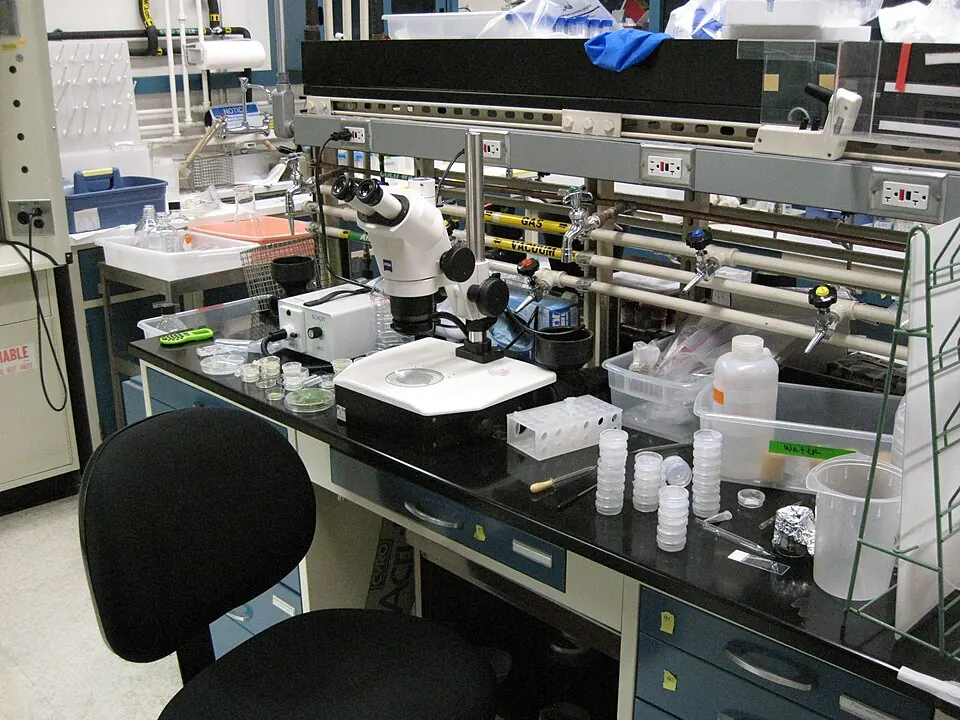
In a breakthrough that edges synthetic biology closer to creating life from non-life, scientists at the University of Minnesota have built the first cell entirely from scratch that can grow, replicate its DNA, and divide into daughter cells.
Led by synthetic biologist Kate Adamala, the team assembled what they call "SpudCells" — tiny, quivering spheres no wider than a few thousandths of a millimeter — using only non-living chemical components: water-filled liposomes, synthetic DNA, and a soup of molecular machinery including enzymes, ribosomes, and ATP.
The result, posted to bioRxiv on July 1, is the first demonstration of a complete cell cycle in a synthetic system. SpudCells grow by fusing with minuscule "feeder" liposomes, transcribe their DNA into RNA, manufacture proteins, copy their genome, and physically split — all without a single natural cell involved.
"It is not as robust, as fast, or as good at most of its functions as a natural cell," Adamala said, "but it is proof of principle that molecules can reconstitute behaviours that up until now we only associated with natural living cells."
The team even demonstrated evolutionary dynamics: SpudCells engineered with a genetic growth advantage rapidly outcompeted the original versions in the same solution.
The cells are not alive. They cannot manufacture their own ATP and are entirely dependent on the nutrient-rich fluid they float in. When they divide, they frequently pass on the wrong amount of DNA to daughter cells. But as a chassis — a fully understood platform built from a known chemical ingredient list — they open doors that natural cells keep locked.
"If we want to be able to engineer biology, we really have to understand exactly the blueprint, every component of it, so we know what we're changing," Adamala said.
The name SpudCell deliberately echoes Sputnik and the dawn of the space age. Adamala offered a second reason: "I'm mostly made of potatoes."
Jack Szostak, the Nobel laureate who studies the origins of life at the University of Chicago and was not involved in the research, called it "an impressive step," adding: "I don't know of any other effort to put together an artificial cell from biological components that has progressed so far."
The work is not yet peer-reviewed. But the implications span from practical — engineered cells that manufacture drugs, biofuels, and new materials — to the existential: a laboratory window into how inanimate chemistry might have first crossed the threshold into life.
Sources: The Guardian, Quanta Magazine, CNN
科学家人工合成第一个细胞——它可以生长、复制并分裂
Minnesota大学研究人员凯特·阿达玛领导构建了“SpudCells”——首个由非生命化学成分组装的合成细胞,能够生长、复制DNA并分裂,标志着合成生物学的一个里程碑。
← 周报 周五 · 2026-07-03 04:00 UTC 科学家构建首个人工合成细胞 — 它能生长、复制并分裂:明尼苏达大学研究人员凯特·亚当拉博士领导的团队制造出了“SpudCells”— “SpudCells”——这是由非生命化学成分组装而成的第一个人工细胞,它能够生长、复制DNA以及分裂,标志着合成生物学的一个里程碑。图片:
More Hourlies Stories
Content on Anagnorisis is summarized, paraphrased, and editorialized from publicly available sources for length and clarity. Original sources are linked where available. All trademarks belong to their respective owners.