Hourly ·
Nobel Prize in Medicine Goes to the Three Scientists Who Taught Light to Switch Brain Cells On
Karl Deisseroth, Peter Hegemann and Georg Nagel share the 2026 Nobel Prize in Physiology or Medicine for optogenetics, a way to switch individual nerve cells on and off with light.
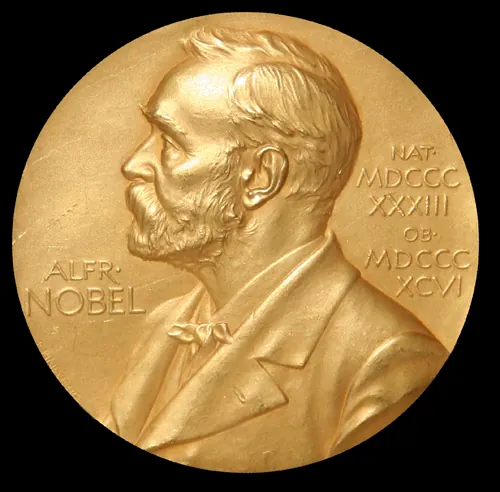
Three scientists who turned a light-sensing protein from a pond alga into a switch for the brain have won the 2026 Nobel Prize in Physiology or Medicine.
The Nobel Assembly at the Karolinska Institute in Stockholm said on Monday that Karl Deisseroth, of the Howard Hughes Medical Institute and Stanford University, Peter Hegemann of Humboldt University of Berlin, and Georg Nagel of the University of Würzburg will share the award equally. The prize is worth 12 million Swedish kronor, about 900,000 pounds.
The citation honors "their discoveries concerning light-gated ion channels and optogenetics" - a technique that lets researchers switch individual nerve cells on or off with pulses of light. The Nobel committee says the method has revealed how nerve cells shape memories, feelings and behaviour, and has laid "the foundation of a new era in neuroscience."
It began with simple curiosity. In the early 1990s, Hegemann wanted to know how Chlamydomonas, a single-celled green alga, could swim toward a light source so quickly. Measuring the electrical signals in the alga's eyespot, he found a response arriving in about half a millisecond - more than twenty times faster than the roughly 10 milliseconds it takes the human eye to turn light into a signal. He proposed that a single protein both captured the light and acted as an ion channel, an idea met with skepticism at the time.
Around the turn of the millennium, Hegemann and Nagel took the decisive step. They injected candidate algal genes into frog egg cells, which began producing two unknown proteins. Exposed to blue light, the proteins opened and let charged ions flood in - exactly the light-gated ion channel Hegemann had imagined. They named the proteins channelrhodopsin-1 and -2 and published the finding in 2003.
Karl Deisseroth picked up the baton. He had trained as a doctor and worked in a psychiatric clinic, where he was struck by how little he could offer patients with depression or schizophrenia. He wanted to study nerve cells in a living brain. After obtaining the DNA for channelrhodopsin-2 from Nagel, his lab inserted the gene into rat nerve cells in a dish; under blue light, the cells fired. That work was published in 2005. Two years later, his team delivered the gene into a specific set of neurons in mice and threaded a thin optical fibre through the skull, using light to move the animals' whiskers. The year before, the method had been given its name: optogenetics.
The technique has since spread to laboratories around the world. By switching on one cell type at a time, researchers can map which neurons drive a behaviour or store a memory - a cause-and-effect view of the brain that older methods could only guess at.
It has also begun to reach patients. In one trial, doctors used a harmless virus to deliver channelrhodopsin instructions into the retinas of a man who had gone blind from retinitis pigmentosa, then fitted him with goggles that convert the world around him into pulses of light. The approach partially restored his sight.
"This is truly wonderful news," said Botond Roska of the Institute of Molecular and Clinical Ophthalmology Basel, who co-led that study. "I hope this helps to boost all efforts on optogenetic vision restoration to bring back vision to blind patients."
Stanford president Jonathan Levin said the discoveries carry profound implications "not only for understanding the human brain, but for opening possibilities into new treatments for neurological and psychiatric disorders."
The 2026 award is the 117th time the medicine prize has been given. Of the 235 laureates it has honored, only 14 have been women, and none have been Black.
Sources: NobelPrize.org, The Guardian, NobelPrize.org press release
2013年諾貝爾醫學獎授予三位教導光能開啓腦細胞的科學家
卡尔·迪塞尔霍特、彼得·赫甘曼和乔治·纳格尔因光学遗传学在2026年获得诺贝尔生理学或医学奖,这是一种通过光线开关单个神经细胞的方法。
诺贝尔生理学或医学奖授予三位科学家,教会光如何开启和关闭脑细胞卡尔·迪塞尔霍特、彼得·赫格尔曼和乔治·纳格尔分享了2026年诺贝尔生理学或医学奖,以光遗传学为例,在个体神经细胞上开启和关闭。图片来源:资料图:Jonathunder(1873-1966) (授权)奖章:Erik Lindberg(1873-1966)
More Hourlies Stories
Content on Anagnorisis is summarized, paraphrased, and editorialized from publicly available sources for length and clarity. Original sources are linked where available. All trademarks belong to their respective owners.