
Hourly ·
First Exomoon Detection Challenges Cosmic Labels
Astronomers using ESO's Very Large Telescope have made the first plausible detection of an exomoon — a Jupiter-mass object orbiting a brown dwarf in the CD-35 2722 system, published today in Nature.
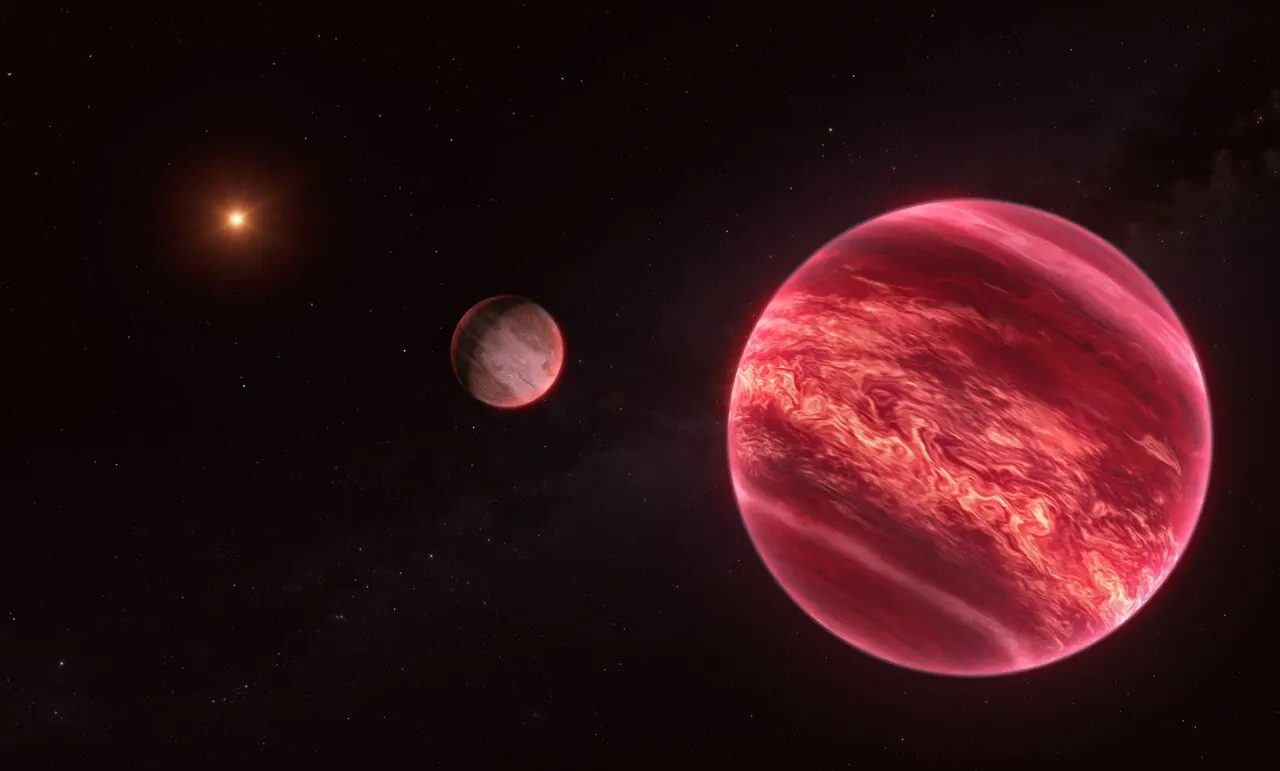
Astronomers using the European Southern Observatory's Very Large Telescope (VLT) in Chile have reported the first plausible detection of an exomoon — an object that challenges the very definitions of planet and moon.
The team, led by ESO student Kevin Hoy, discovered a Jupiter-mass object orbiting a brown dwarf that itself orbits the star CD-35 2722. Published today in Nature, the finding represents the strongest evidence yet for a natural satellite outside our Solar System.
"The satellite we report is a giant gaseous body orbiting a highly massive companion, itself several times the mass of Jupiter," said Alice Zurlo, director of the Millennium Nucleus of Young Exoplanets and their Moons. "We have a clear delineation between the planets and the Sun in the Solar System, so defining things like moons is simple. In the CD-35 2722 system, we are blurring the lines."
The team used the radial velocity method — the same technique that found the first exoplanet around a Sun-like star — to detect tiny wobbles in the brown dwarf caused by the orbiting object. The system, located roughly 80 light-years away, hosts a star about half the Sun's mass.
With over 6,000 exoplanets now confirmed, exomoons have remained stubbornly elusive. The discovery opens a new window into how planetary systems form and evolve. ESO's upcoming Extremely Large Telescope (ELT), with its 39-metre mirror, is expected to detect even smaller exomoons in the coming decade.
第一颗exo行星的检测挑战了宇宙标签
天文学家利用ESO的Very Large Telescope首次 plausible 探测到一个exomoon——一个围绕棕矮星CD-35 2722系统中轨道运行的质量与 Jupiter 相似的大质量物体,今日发表于Nature。
### 微小时 | 2026-07-23 20:00 UTC 首次系外卫星探测挑战:ESO甚大望远镜发现一颗木星质量的系外行星绕着棕矮星运转,发表于《自然》杂志。 天文学家利用欧洲南方天文台(ESO)的甚大望远镜(VLT),发现了首例系外卫星——一个位于CD-35 2722系统的棕矮星周围环绕一颗木星质量的天体,今天在《自然》上发表。 ESO/M. Kornmesser 天文学家利用欧洲南方天文台(ESO)的甚大望远镜(VLT),发现了首例系外卫星——一个位于CD-35 2722系统的棕矮星周围环绕一颗木星质量的天体,今天在《自然》上发表。
More Hourlies Stories
Content on Anagnorisis is summarized, paraphrased, and editorialized from publicly available sources for length and clarity. Original sources are linked where available. All trademarks belong to their respective owners.