
Hourly ·
FCC Approves First Reflect Orbital Satellite to Test Sunlight-on-Demand from Orbit
The FCC has approved Eärendil-1, a satellite with an 18-meter mirror designed to reflect sunlight onto nighttime regions of Earth. Astronomers and environmentalists are sounding alarms over the proposed 50,000-satellite constellation, warning it could triple night-sky brightness.
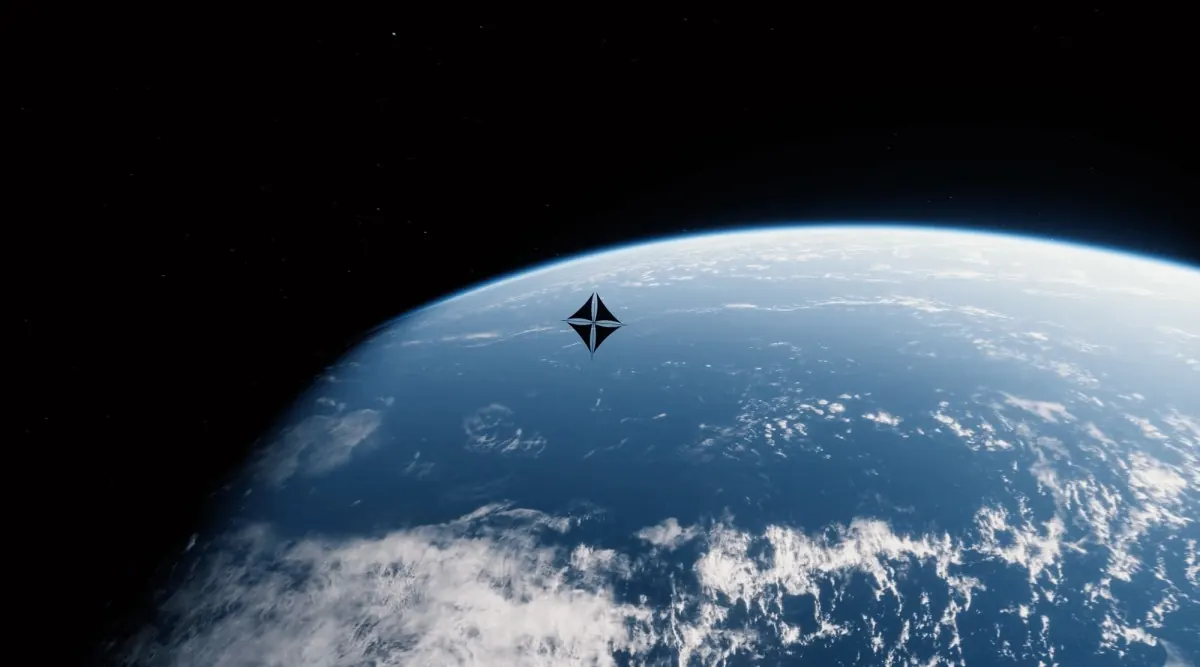
The Federal Communications Commission on July 9 formally authorized the launch of Eärendil-1, a satellite developed by Reflect Orbital that will deploy an 18-meter thin-film reflector in low Earth orbit to bounce sunlight down to the surface after dark.
The 142-kilogram spacecraft is scheduled to launch later this year into an orbit 600 to 650 kilometers in altitude, where it will test the ability to direct reflected sunlight to specific areas for several minutes at a time. The company says it has fielded interest for applications ranging from construction sites to search-and-rescue operations, and proposes using such satellites to beam sunlight onto solar farms to boost energy production after sunset.
"We're grateful to the FCC for recognizing the importance of testing novel technologies in space," Reflect Orbital CEO Ben Nowack said in a statement. "This license is the first step toward rigorously testing our technology's efficacy and the safeguards we have developed."
Criticism has been swift and sharp. The European Southern Observatory, which operates several major telescopes in Chile, said the full 50,000-satellite constellation Reflect Orbital has proposed would increase background sky brightness at its facilities by a factor of three to four, severely limiting the ability of telescopes to detect faint objects. At a National Academies meeting in June, Tony Tyson, chief scientist of the Vera C. Rubin Observatory, called the plans "even crazier" than the broadband satellite constellations astronomers have been grappling with for years. "Imagine the sky full of moons," he said.
The FCC's application docket drew nearly 1,900 public comments, most of them critical. Environmental groups have warned that reflected light from thousands of orbital mirrors could disrupt the diurnal cycles of plants and animals. In its order, however, the FCC concluded that impacts on astronomy and the environment fall outside its jurisdiction, arguing it is "in the public interest to make spectrum available to encourage companies to test new and innovative space activities."
The authorization came one day after environmental and scientific groups formally petitioned the FCC to perform a programmatic environmental review for orbital data center constellations — a sign that the regulatory battle over what belongs in low Earth orbit is only beginning.
Sources: SpaceNews, MSN/The Daily Galaxy
FCC批准首个轨道卫星测试轨道上阳光即用技术
FCC批准Eärendil-1,一台配备18米镜面的卫星,设计反射阳光照亮地球夜空地区。天文学家和环保人士对即将推出的5万卫星星座提出警告,称这可能使夜空亮度增加三倍。
### 半小时报·2026-07-12 10:00 UTC FCC批准第一颗反射卫星测试轨道上白天能源 FCC已批准Eärendil-1,一颗配备有18米镜面的卫星,旨在将阳光反射到地球上的夜间区域。天文学家和环保人士对即将推出的5万颗卫星星座发出警告,称这可能使夜空亮度增加三倍。
More Hourlies Stories
Content on Anagnorisis is summarized, paraphrased, and editorialized from publicly available sources for length and clarity. Original sources are linked where available. All trademarks belong to their respective owners.